
Close Menu
    Facebook X (Twitter) Instagram
    SciTechDaily
    • Biology
    • Chemistry
    • Earth
    • Health
    • Physics
    • Science
    • Space
    • Technology
    Facebook X (Twitter) Pinterest YouTube RSS
    SciTechDaily
    Home»Earth»Klyuchevskoy Erupts: Eurasia’s Tallest Active Volcano Spews Ash 40,000 Feet Into the Air
    Earth

    Klyuchevskoy Erupts: Eurasia’s Tallest Active Volcano Spews Ash 40,000 Feet Into the Air

    By Lindsey Doermann, NASA Earth ObservatoryNovember 9, 2023No Comments3 Mins Read
    Facebook Twitter Pinterest Telegram LinkedIn WhatsApp Email Reddit
    Share
    Facebook Twitter LinkedIn Pinterest Telegram Email Reddit
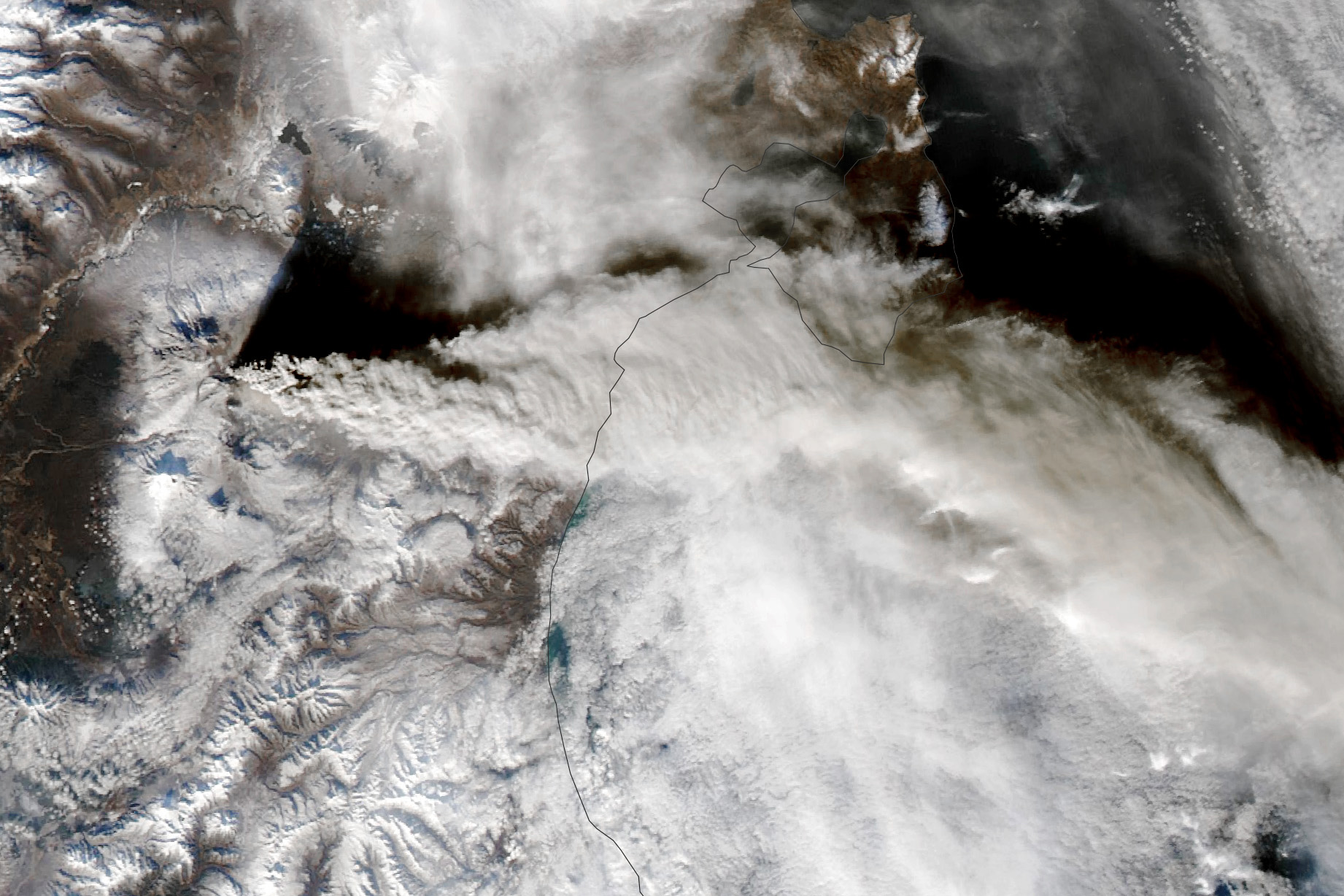
    Klyuchevskoy Volcanic Plume November 2023 Annotated
    Satellite image of the Klyuchevskoy volcano on Russia’s Kamchatka Peninsula acquired on November 1, 2023, by NASA’s Aqua satellite.

    Eurasia’s tallest active volcano spewed ash that drifted hundreds of kilometers.

    Eruption activity escalated at the Klyuchevskoy volcano on Russia’s Kamchatka Peninsula in autumn 2023. When the MODIS (Moderate Resolution Imaging Spectroradiometer) sensor on NASA’s Aqua satellite acquired this image on November 1, 2023, the ash plume from Klyuchevskoy (also Kliuchevskoi) rose as high as 12 kilometers (40,000 feet) above sea level. The plume extended 1,600 kilometers (1,000 miles) to the east-southeast, reported the Kamchatka Volcanic Eruption Response Team (KVERT).

    The false-color image below offers a detailed look at the lava flows and ash plume emanating from the volcano. It was acquired by the OLI (Operational Land Imager) on Landsat 8 on November 1, 2023. The hot lava gives off a shortwave infrared signal that makes it appear red in this band combination (6-5-3). Clouds appear blue, contrasting with the gray, roiling plume.
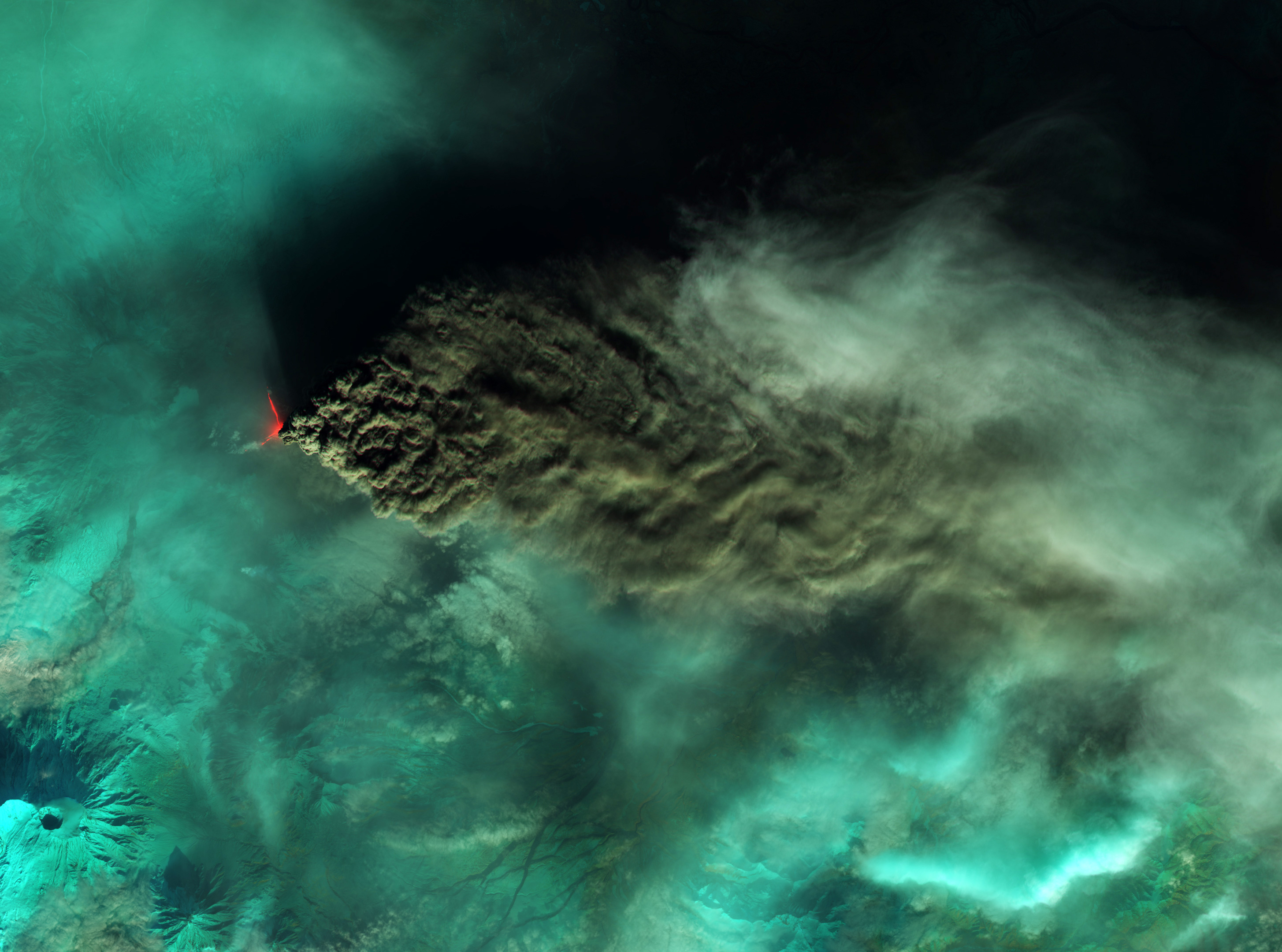
    Klyuchevskoy Lava Flow Ash Plume November 2023 Annotated
    False-color image acquired on November 1, 2023, by the Operational Land Imager on Landsat 8 offers a detailed look at the lava flows and ash plume emanating from the Klyuchevskoy volcano.

    As a precaution, authorities ordered the closure of schools in two nearby towns, according to news reports. The aviation color code was elevated to red, the highest warning level, due to the significant emissions of ash into the atmosphere.

    Located along the Pacific Ring of Fire, the Kamchatka Peninsula is home to more than 300 volcanoes, including several that are frequently active. The current eruption at Klyuchevskoy, Eurasia’s tallest active volcano, has been ongoing since June 2023, when KVERT noted the start of Strombolian eruptions. Explosive eruptions and lava flows continued in the ensuing months. Landsat 8 captured an image of a tamer eruptive phase, along with activity at neighboring volcano Bezymianny, in mid-October 2023.

    Klyuchevskoy Volcano

    The Klyuchevskoy volcano, also known as Kliuchevskoi, is a towering stratovolcano located on the Kamchatka Peninsula in Russia. As the highest mountain in the Kamchatka region and the tallest active volcano in Eurasia, Klyuchevskoy stands 4,754 meters (15,597 feet) tall. Its steep, conical shape is a classic characteristic of stratovolcanoes, which are composed of multiple layers of hardened lava, tephra, and volcanic ash from its periodic eruptions.

    Klyuchevskoy’s first recorded eruption occurred in 1697, and it has been highly active ever since, with a pattern of frequent, often strombolian, eruptions that produce both effusive lava flows and explosive activity. The volcano is part of the Pacific Ring of Fire, a hotbed for seismic and volcanic activity due to the movement of tectonic plates. Klyuchevskoy’s eruptions are often accompanied by large ash plumes that pose a significant hazard to air travel and have implications for local communities and the environment.

    The volcano is continuously monitored by the Kamchatka Volcanic Eruption Response Team (KVERT), which tracks its activity, issues warnings, and studies the volcano to better understand its behavior and mitigate the risks associated with its eruptions. Klyuchevskoy is not only a subject of scientific interest but also a prominent feature of the Kamchatka Peninsula’s landscape, contributing to the region’s geological diversity and natural beauty.

    NASA Earth Observatory images by Wanmei Liang and Lauren Dauphin, using MODIS data from NASA EOSDIS LANCE and GIBS/Worldview, and Landsat data from the U.S. Geological Survey.

    Never miss a breakthrough: Join the SciTechDaily newsletter.
    Follow us on Google and Google News.

    NASA NASA Earth Observatory Popular Volcano
    Share. Facebook Twitter Pinterest LinkedIn Email Reddit

    Related Articles

    Massive Tonga Volcano Plume Reached the Mesosphere – 36 Miles Into the Atmosphere

    Island Obliterated: Dramatic Changes at Hunga Tonga-Hunga Ha’apai

    Hunga Tonga Island Obliterated – NASA Satellites Capture Massive Blast

    A Wolf Awakens in the Galápagos Islands at Night

    Mount Michael, Volcano Track or Plume? 1,000-Meter-Tall Active Stratovolcano Puts On a Show

    Volcanic Eruption Continues at La Palma – Effects Being Felt From Above and Below

    “Smoking Mountain” – An Outburst From Popocatépetl Volcano in Mexico

    Young Volcanic Island Nishinoshima Belches Ash and Lava As It Grows in the Pacific

    Unusual “Volcano Track” Clouds Investigated

    Leave A Reply Cancel Reply

    • Facebook
    • Twitter
    • Pinterest
    • YouTube

    Don't Miss a Discovery

    Subscribe for the Latest in Science & Tech!

    Trending News

    The Universe Is Expanding Too Fast and Scientists Can’t Explain Why

    “Like Liquid Metal”: Scientists Create Strange Shape-Shifting Material

    Early Warning Signals of Esophageal Cancer May Be Hiding in Plain Sight

    Common Blood Pressure Drug Shows Surprising Power Against Deadly Antibiotic-Resistant Superbug

    Scientists Uncover Dangerous Connection Between Serotonin and Heart Valve Disease

    Scientists Discover a “Protector” Protein That Could Help Reverse Hair Loss

    Bone-Strengthening Discovery Could Reverse Osteoporosis

    Scientists Uncover Hidden Trigger Behind Stem Cell Aging

    Follow SciTechDaily
    • Facebook
    • Twitter
    • YouTube
    • Pinterest
    • Newsletter
    • RSS
    SciTech News
    • Biology News
    • Chemistry News
    • Earth News
    • Health News
    • Physics News
    • Science News
    • Space News
    • Technology News
    Recent Posts
    • Scientists Overcome Major Quantum Bottleneck, Potentially Transforming Teleportation and Computing
    • Quantum Physics’ Strangest Problem May Hold the Key to Time Itself
    • Scientists Create “Liquid Gears” That Spin Without Touching
    • The Simple Habit That Could Help Prevent Cancer
    • Forgotten Medicinal Plant Shows Promise in Fighting Dangerous Superbugs
    Copyright © 1998 - 2026 SciTechDaily. All Rights Reserved.
    • Science News
    • About
    • Contact
    • Editorial Board
    • Privacy Policy
    • Terms of Use

    Type above and press Enter to search. Press Esc to cancel.