
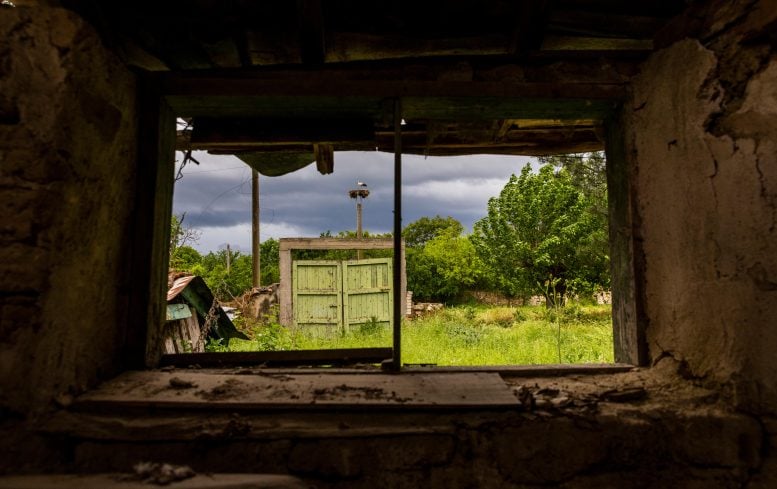
Land abandonment presents both conservation opportunities and risks, requiring strategic management.
As individuals increasingly migrate from the countryside to urban areas in search of improved economic opportunities, or when farming ceases to be profitable, the lands that once flourished under their care are often left unused. A new perspective piece in Science underlines the potential dual role these abandoned lands can play as both a potential boon and a hazard for biodiversity. The article also underscores the importance of incorporating these deserted lands into the strategies for global restoration and biodiversity conservation.
Over the past half-century, there’s been a notable shift in global demographics, with more people moving from rural areas to cities. Currently, 55% of the global population resides in or around urban areas. This trend is projected to increase, with urban populations expected to account for nearly 68% of the worldwide population by 2050.
There are of course a multitude of reasons for people to leave their rural lives behind and move to urban areas, including socioeconomic and political change, declining subsistence farming, and environmental factors. One effect of this continuous decrease in rural populations is that the land they leave behind leads to a rise in the number of abandoned fields and pastures, forestry areas, mines, factories, and even entire human settlements.
IIASA researcher Gergana Daskalova and Johannes Kamp, a researcher at the University of Göttingen in Germany, took a closer look at abandoned land – in other words, land on which human activities have ceased – to explore how biodiversity is influenced, and what this means for ecology and conservation.
“The factors that drive depopulation and consequently also land abandonment are intensifying due to issues like climate change and the rapidly changing geopolitical landscape. The Russian invasion of Ukraine, for example, has already created new abandonment hotspots. Abandonment is a globally important process. The scale at which this is happening around the world urged us to put the spotlight on the places people have left behind as a potential source of future solutions for conservation, while also protecting human livelihoods,” Daskalova explains.
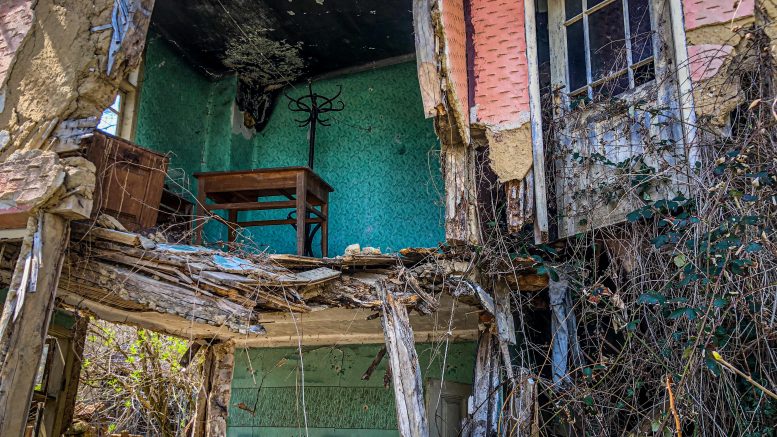
According to the authors, the exact amount of abandoned land around the world is unknown, but it is estimated that it could comprise up to 400 million ha globally, which is an area roughly half the size of Australia. Most of this abandoned land is in the Northern Hemisphere, of which around 117 million ha falls within the former Soviet Union.
Biodiversity Benefits of Land Abandonment
The effect that abandoned areas have on biodiversity can be both positive and negative. The biggest wins are likely to be achieved where areas that were previously intensively farmed and where biodiversity was low, are abandoned. The first changes that will probably be observed in these areas would be the return of plant life, birds, and invertebrates that can survive in recently disturbed ecosystems. If the abandonment of these crop fields is coupled with people leaving the area or with wildlife reintroductions, this can lead to rewilding with the possible return of large herbivores and even carnivores. The authors however point out that not all abandoned land will recover without help, and that some of the land that was previously intensively farmed will never return to what it once was.
Land abandonment can also have negative impacts in terms of biodiversity, as well as on human culture and tradition. In areas that have traditionally been used for low-intensity, or subsistence farming over a long period of time, for instance, the close ties between the people and the land have created interdependent ecosystems that break down after people move away, thus leading to the loss of locally rare species or the proliferation of only one or two dominant species at the expense of others.
“Because abandonment usually happens out of sight, there is still so much we do not know about its imprint on the planet. We are currently working in Bulgaria, the quickest depopulating country in the world, to determine what types of plants, birds, and other biodiversity return to villages long after the last house lights have been turned off,” Daskalova notes.
Any gains in biodiversity on abandoned land can, unfortunately, be very quickly undone when land is recultivated or repurposed and, according to the authors, there is growing pressure to find new industrial uses for abandoned land, such as large-scale bioenergy, wind-, and solar energy production, often in just over a decade after abandonment.
Striking a Balance Between Conservation and Economic Needs
The authors further highlight that finding the best use for abandoned land will involve balancing benefits for conservation, human livelihoods, and sustainability. It is therefore crucial that biodiversity change on abandoned land be included in regional and global assessments, policies, and scenarios and where abandoned land is reused, care should be taken to ensure that economic needs are balanced with restoration and conservation goals.
“It is important for future models and scenarios aimed at predicting the positive versus negative effects of abandonment on biodiversity to take into account whether the land is likely to remain abandoned and what the feedbacks between abandonment, biodiversity, human values, and livelihoods entail. As global conversations around this topic continue, we can look to abandoned lands as the product of centuries of interactions between people and nature, and create incentives not just for conservation, but also for land stewardship and the preservation of both social and ecological values,” Daskalova concludes.
Reference: “Abandoning land transforms biodiversity” by Gergana N. Daskalova and Johannes Kamp, 11 May 2023, Science.
DOI: 10.1126/science.adf1099
Never miss a breakthrough: Join the SciTechDaily newsletter.
Follow us on Google and Google News.
2 Comments
It’s a shame that mainstream news outlets would characterise this as some mini apocalypse, whilst really it’s nothing.
As an example “the dying Japan” is to drop it’s population from 125 to 85 milion by 2070. 85 million is hardly dying, is it?
But since economic growth is a pyramid scheme, it makes sense that they would panic
Okay, looks like my Halloween costume just dropped. Tax appraisers will want to put in some full size Milky Ways or actual chocolate maybe.