
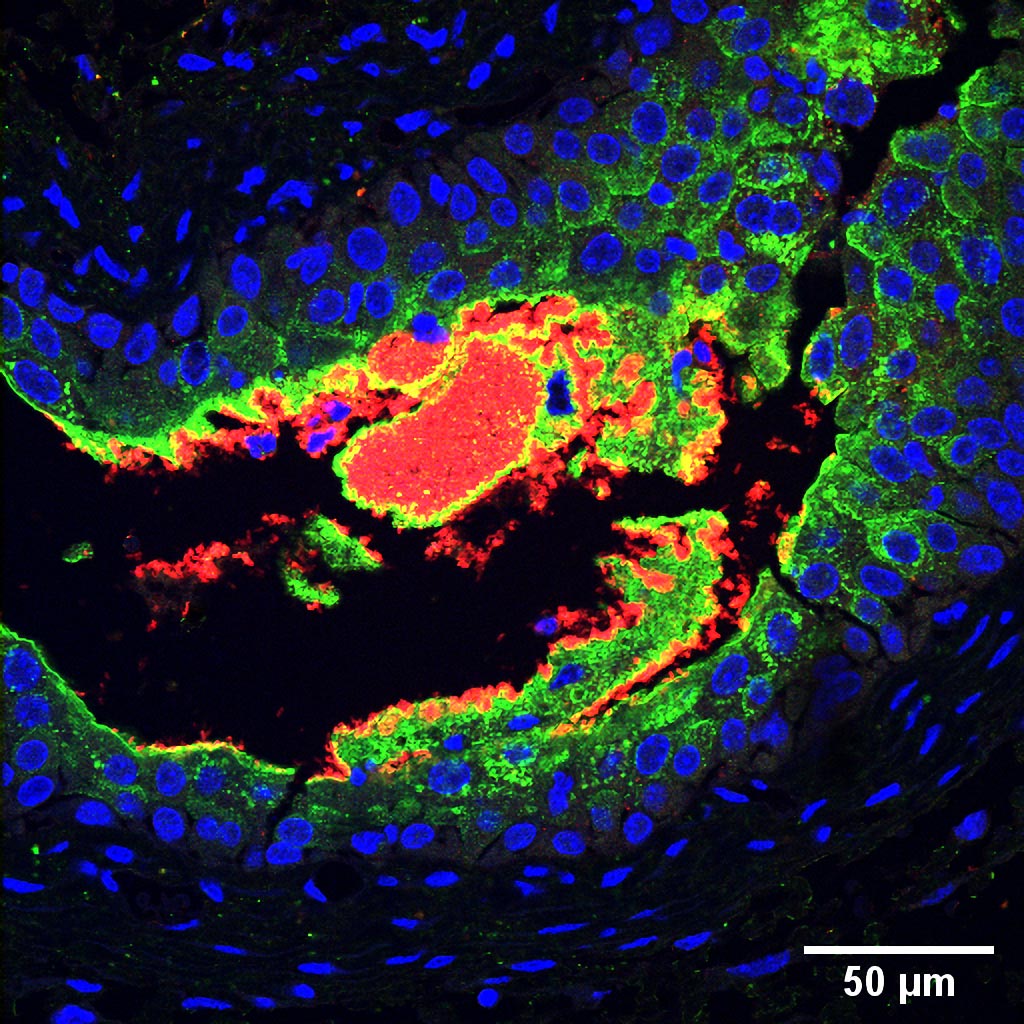
Both type 1 and type 2 diabetes are associated with lowered immunity and recurrent infections. Scientists at Karolinska Institute in Sweden have discovered that the immune system of people with diabetes has lower levels of the antimicrobial peptide psoriasin. This compromises the urinary bladder’s cell barrier, increasing the risk of urinary tract infection.
Diabetes is a common disease that affects health in many ways. It results from a lack of insulin and/or decreased insulin action. Insulin is a hormone that regulates glucose (sugar) and thus energy to the cells. When a person has type 1 diabetes, the body stops producing insulin, while in type 2 diabetes, the cells have become less sensitive to insulin, which contributes to high blood glucose levels.
One effect of diabetes is that it compromises the innate immune system. This leaves many people with increased susceptibility to regular infections, such as urinary tract infections (UTI)s caused by E. coli bacteria. In people with diabetes, these are more likely to lead to general blood poisoning (sepsis) originating in the urinary tract.
An Endogenous Antibiotic
Scientists at Karolinska Institute have now investigated whether glucose levels in people with diabetes (type 1, type 2, or pre-diabetes) are linked with psoriasin, an endogenous antibiotic that is a part of the innate immune system. Their study was published today (September 20) in the journal Nature Communications.
Using urine, urinary bladder cells, and blood serum samples from patients, the investigators analyzed levels of psoriasin and other peptides necessary for ensuring that the bladder mucosa remains intact and protects against infection. The results were then verified in mice and urinary bladder cells with and without infection.
“We found that high glucose concentrations reduce the levels of the antimicrobial peptide psoriasin, while insulin has no effect,” says Annelie Brauner. She led the study and is a professor at the Department of Microbiology, Tumor and Cell Biology, Karolinska Institute. “People with diabetes have lower levels of psoriasin, which weakens the cells’ protective barrier function and increases the risk of bladder infection.”
Oestrogen Therapy Reduced Bacterial Population
Professor Brauner’s research group has previously shown that treatment with estrogen restores the protective function of bladder cells in humans and mice and thereby helps to regulate the immune response to a UTI. The researchers, therefore, tested how estrogen treatment affects infected cells exposed to high glucose concentrations. They found that the treatment boosted levels of psoriasin and reduced bacterial populations, indicating that the treatment may have an effect also among patients with diabetes.
“We now plan to probe deeper into the underlying mechanisms of infections in individuals with diabetes,” says the study’s lead author Soumitra Mohanty. He is a researcher in the same department at Karolinska Institute. “The ultimate goal is to reduce the risk of infection in this growing patient group.”
Reference: “Diabetes downregulates the antimicrobial peptide psoriasin and increases E. coli burden in the urinary bladder” by Soumitra Mohanty, Witchuda Kamolvit, Andrea Scheffschick, Anneli Björklund, Jonas Tovi, Alexander Espinosa, Kerstin Brismar, Thomas Nyström, Jens M. Schröder, Claes-Göran Östenson, Pontus Aspenström, Hanna Brauner and Annelie Brauner, 20 September 2022, Nature Communications.
DOI: 10.1038/s41467-022-32636-y
The study was conducted in collaboration with the Karolinska University Hospital, Region Stockholm, Capio and Uppsala University in Sweden, and Universitätsklinikum Schleswig-Holstein in Germany. It was largely financed by the Olle Engkvist Foundation, Region Stockholm (ALF funding), the KI Research Foundation, the Swedish Society of Medicine, the Swedish Society for Medical Research (SSMF), the Clas Groschinsky Memorial Foundation, the Åke Wiberg Foundation and the Magnus Bergvall Foundation. There are no reported conflicts of interest.
Never miss a breakthrough: Join the SciTechDaily newsletter.
Follow us on Google and Google News.