

A student at WVU identified a fungus in morning glories that makes LSD-related compounds. Named Periglandula clandestina, it may advance research in medicine and psychedelics.
A West Virginia University microbiology student has made a discovery with significant potential for pharmaceutical development. The student found a long-sought fungus that produces compounds similar to the semisynthetic drug LSD, which is used to treat conditions such as depression, post-traumatic stress disorder, and addiction.
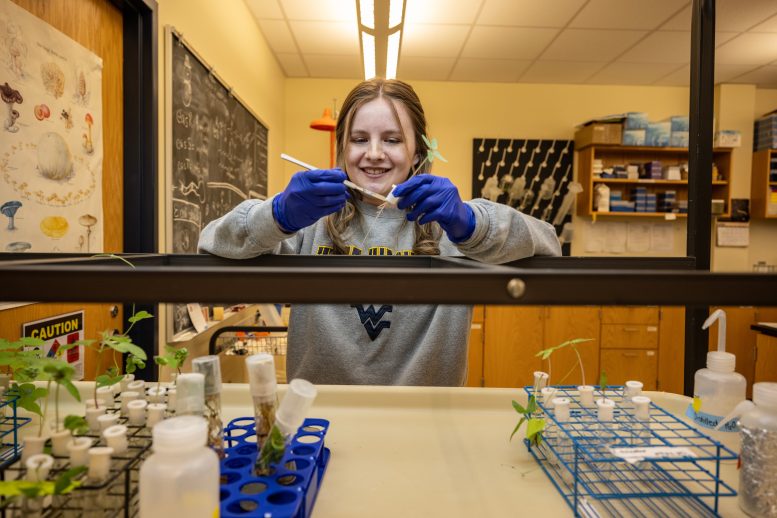
Corinne Hazel, an environmental microbiology major and Goldwater Scholar from Delaware, Ohio, discovered the new fungal species growing in morning glory plants. She named it Periglandula clandestina.
Hazel made the discovery while working in the lab with Daniel Panaccione, Davis-Michael Professor of Plant and Soil Sciences at the WVU Davis College of Agriculture and Natural Resources. She was researching how morning glories release protective chemicals known as “ergot alkaloids” through their roots when she found signs of the fungus.
“We had a ton of plants lying around and they had these tiny little seed coats,” she said. “We noticed a little bit of fuzz in the seed coat. That was our fungus.”
Confirming a scientific milestone
The researchers collected a DNA sample and sent it for genome sequencing, a process funded by a WVU Davis College Student Enhancement Grant that Hazel had secured. The results confirmed the discovery of a new species, and the genetic sequence is now stored in a public gene bank with Hazel’s name attached.
“Sequencing a genome is a significant thing,” Panaccione said. “It’s amazing for a student.”
Morning glory plants form a symbiotic relationship with fungi that produce ergot alkaloids—the same class of compounds that Swiss chemist Albert Hofmann modified when he developed LSD in the late 1930s.
Hofmann hypothesized that a fungus in morning glories produced alkaloids similar to those in LSD, but the species remained a mystery until Hazel and Panaccione’s discovery. They published their findings in Mycologia.
“Morning glories contain high concentrations of similar lysergic acid derivatives that give them their psychedelic activities,” Panaccione said. “This inspired Hofmann and others to investigate morning glories for the presence of a hidden fungus related to the ergot fungus that might be the source of these chemicals. They found very similar chemicals, but they could never find the fungus itself.”
Pharmaceutical promise of ergot alkaloids
Ergot alkaloids are made exclusively by fungi. In addition to morning glories, they’re often found growing on grains like rye. They can be poisonous to humans and livestock and, when used therapeutically, can have unwanted side effects. Still, some clinicians use them to treat conditions like migraines, dementia, uterine hemorrhaging and Parkinson’s disease.
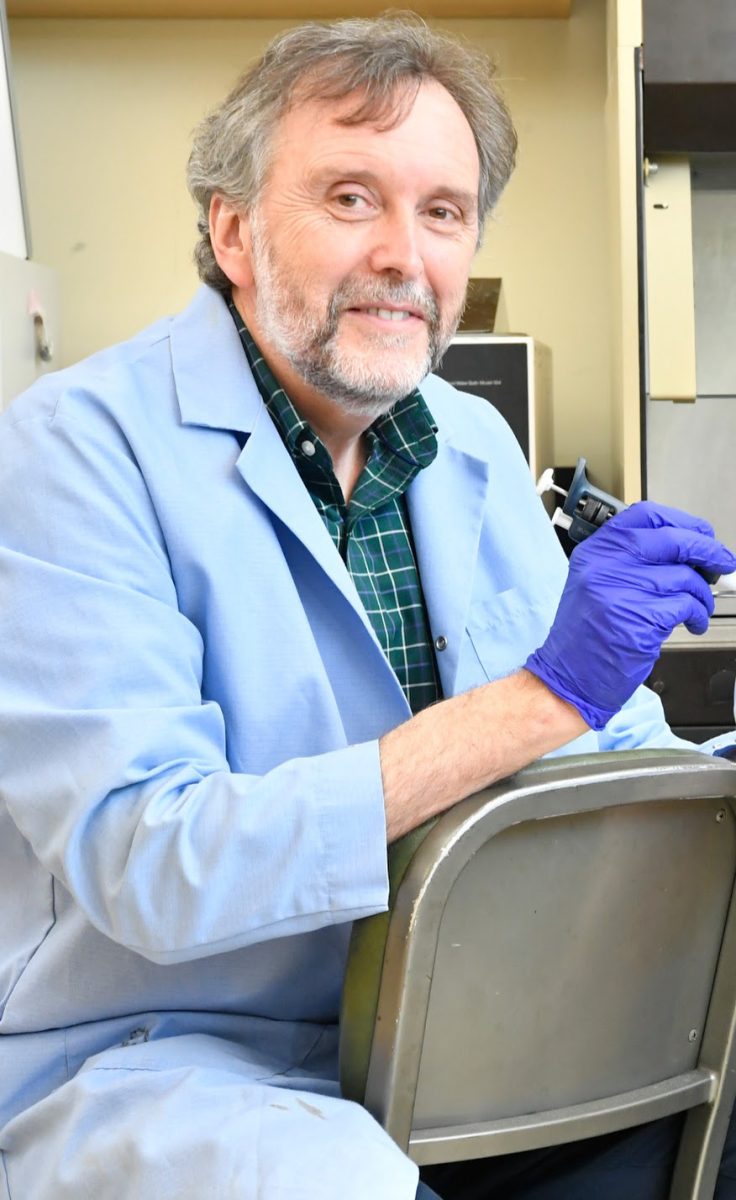
Periglandula clandestina is highly efficient at making ergot alkaloids in large quantities, a characteristic that may play a role in future pharmaceuticals. The discovery of the fungus opens a host of potential research avenues, Panaccione said.
“Many things are toxic. But if you administer them in the right dosage or modify them, they can be useful pharmaceuticals. By studying them, we may be able to figure out ways to bypass the side effects. These are big issues for medicine and agriculture.”
Perfect name for a hidden fungus
The researchers dubbed the fungus “Periglandula clandestina” for its ability to have eluded investigators for decades.
“I think that’s the perfect name,” Panaccione said. “And I love that we did this project together. Corinne has a ton of talent. It’s about students recognizing the opportunities, seizing them, and having the skill and the brain power to bring this work to fruition.”
Hazel is now studying the most effective ways to culture the slow-growing fungus and is interested in whether other morning glory species may also contain ergot alkaloids from a fungal symbiote that has yet to be described.
“I’m lucky to have stumbled into this opportunity,” she said. “People have been looking for this fungus for years, and one day, I look in the right place, and there it is. I’m very proud of the work that I’ve done at WVU.”
Reference: “A new species of Periglandula symbiotic with the morning glory Ipomoea tricolor” by Corinne M. Hazel and Daniel G. Panaccione, 22 April 2025, Mycologia.
DOI: 10.1080/00275514.2025.2483634
Funding: WVU Davis College Student Enhancement Grant
Never miss a breakthrough: Join the SciTechDaily newsletter.
Follow us on Google and Google News.