

A surprise solar storm turned a NASA simulation into a real-world space weather crisis. As the Gannon geomagnetic storm struck Earth, it disrupted satellites, grounded flights, heated the atmosphere to extreme temperatures, and even shook up Mars.
Auroras danced in skies far from the poles, satellites scrambled to stay in orbit, and a new radiation belt was discovered. Scientists are still uncovering the storm’s secrets, which could shape how we prepare for the Sun’s volatile moods in the future.
Simulating the Sun’s Threat
One year ago, NASA and about 30 other U.S. government agencies came together for a special simulation. Their mission? To prepare for a powerful threat from space, not an asteroid or alien invasion, but something much closer to home: the Sun.
The event, called the Space Weather Tabletop Exercise, was designed as a training scenario. Experts would walk through what might happen if a massive solar storm disrupted Earth’s magnetic field. These storms, known as geomagnetic storms, can knock out satellites, scramble GPS signals, overload power grids, and expose astronauts to harmful radiation. The goal of the simulation was to improve coordination and readiness in case one ever struck for real.
Then something unexpected happened.
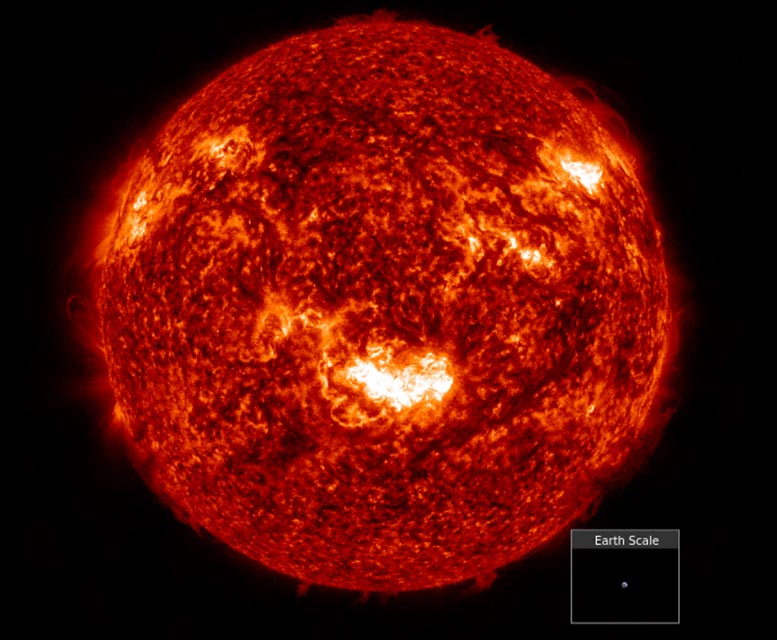
“The plan was to run through a hypothetical scenario, finding where our existing processes worked and where they needed improvement,” said Jamie Favors, director of NASA’s Space Weather Program at NASA Headquarters in Washington. “But then our hypothetical scenario was interrupted by a very real one.”
On May 10, 2024, a real G5-class geomagnetic storm, the strongest category, hit Earth. It was the most severe in over 20 years. Named the Gannon storm, in honor of renowned space weather scientist Jennifer Gannon, the event did not cause widespread damage. Still, it offered a rare, real-world test case. One year later, scientists are learning a great deal from it, and using those insights to better prepare for future solar storms.
A real solar storm hit during a NASA drill, revealing just how disruptive space weather can be—from scrambled satellites and glowing skies to deep Martian effects. The Gannon storm’s data is proving invaluable. Credit: NASA/Joy Ng
Related:
Ground-Level Disruptions
The Gannon storm had effects on and off our planet.
On the ground, some high-voltage lines tripped, transformers overheated, and GPS-guided tractors veered off-course in the Midwestern U.S., further disrupting planting that had already been delayed by heavy rains that spring.
“Not all farms were affected, but those that were lost on average about $17,000 per farm,” said Terry Griffin, a professor of Agricultural Economics at Kansas State University. “It’s not catastrophic, but they’ll miss it.”

Turbulence in the Sky
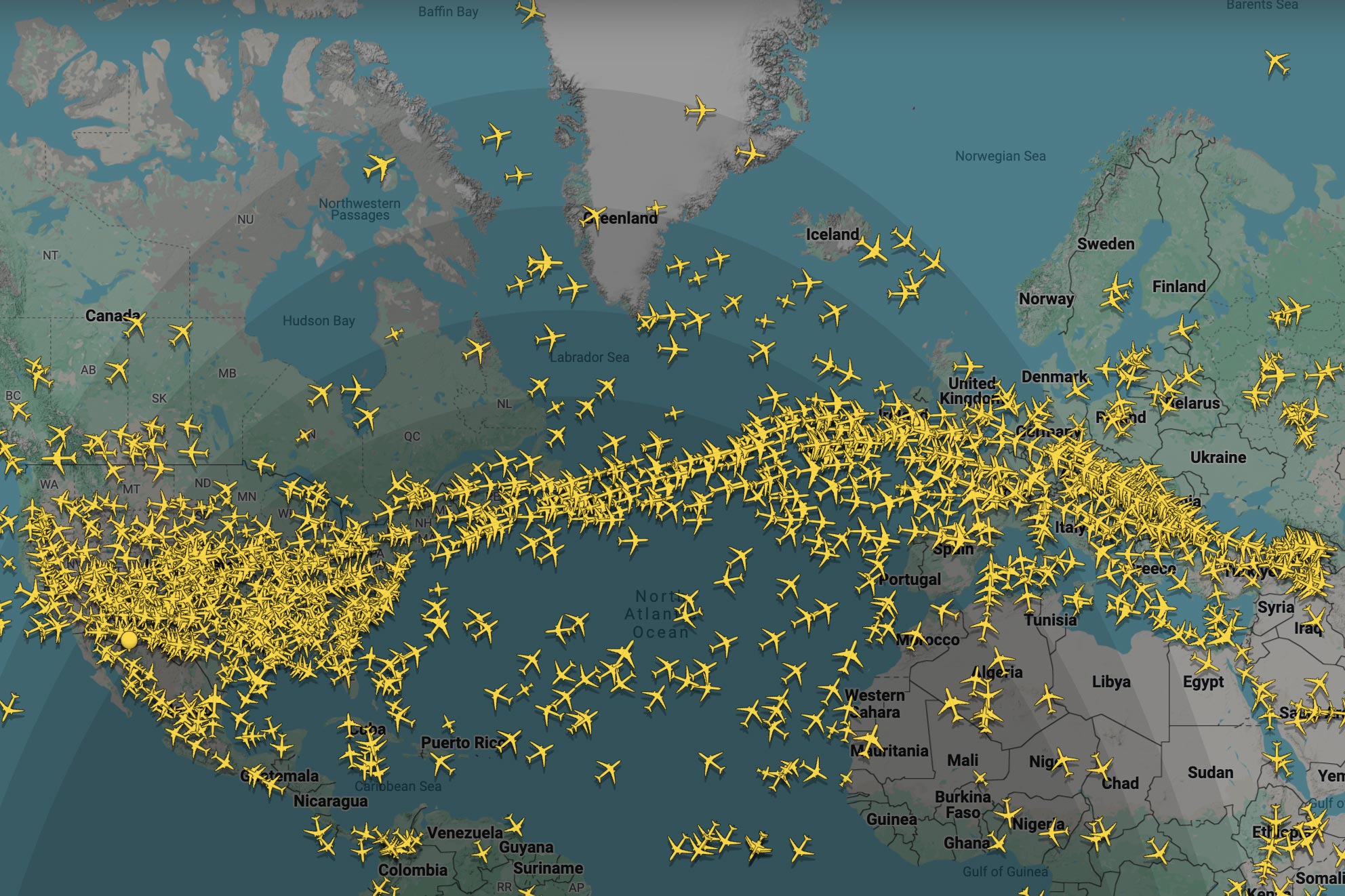
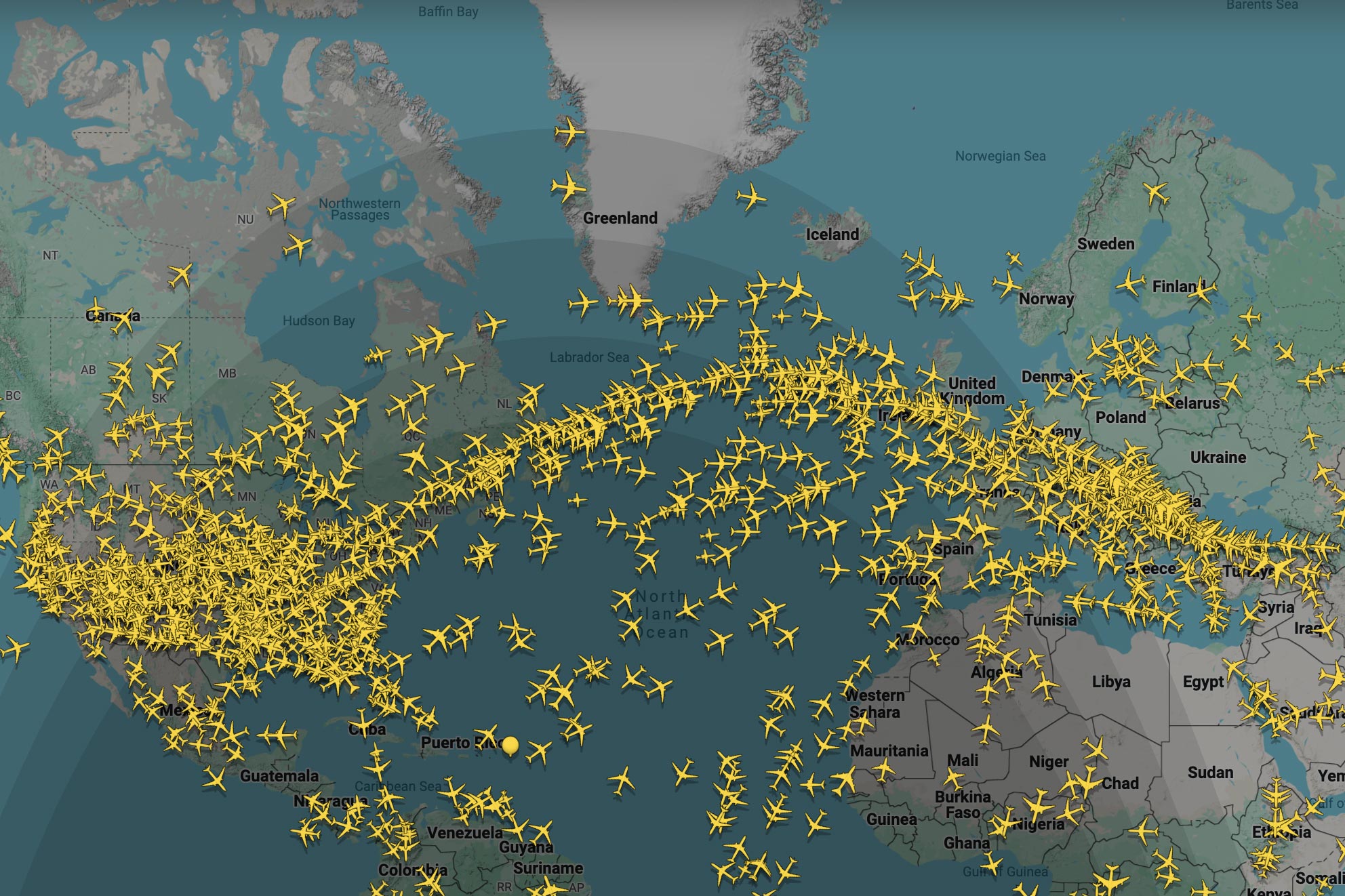
In the air, the threat of higher radiation exposure, as well as communication and navigation losses, forced trans-Atlantic flights to change course.
During the storm, Earth’s upper atmospheric layer called the thermosphere heated to unusually high temperatures. At 100 miles altitude, the temperature typically peaks at 1,200 degrees Fahrenheit, but during the storm it surpassed 2,100 degrees Fahrenheit. NASA’s GOLD (Global-scale Observations of the Limb and Disk) mission observed the atmosphere expanding from the heat to create a strong wind that lofted heavy nitrogen particles higher.
Orbital Chaos and Satellite Strain
In orbit, the expanded atmosphere increased drag on thousands of satellites. NASA’s ICESat-2 lost altitude and entered safe mode while NASA’s Colorado Inner Radiation Belt Experiment (CIRBE) CubeSat deorbited prematurely five months after the storm. Others, such as the European Space Agency’s Sentinel mission, required more power to maintain their orbits and perform maneuvers to avoid collisions with space debris.
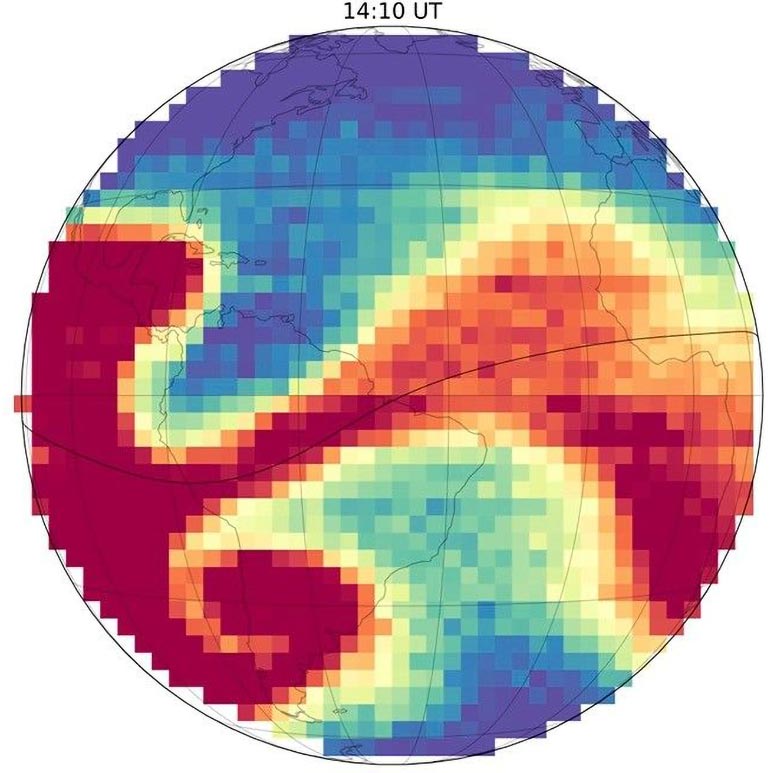
The storm also dramatically changed the structure of an atmospheric layer called the ionosphere. A dense zone of the ionosphere that normally covers the equator at night dipped toward the South Pole in a check mark shape, causing a temporary gap near the equator.
The Gannon storm also rocked Earth’s magnetosphere, the magnetic bubble surrounding the planet. Data from NASA missions MMS (Magnetospheric Multiscale) and THEMIS-ARTEMIS — short for Time History of Events and Macroscale Interactions-Acceleration, Reconnection, Turbulence and Electrodynamics of the Moon’s Interaction with the Sun — saw giant, curling waves of particles and rolled-up magnetic fields along the edge of the CMEs. These waves were perfectly sized to periodically dump extra magnetic energy and mass into the magnetosphere upon impact, creating the largest electrical current seen in the magnetosphere in 20 years.
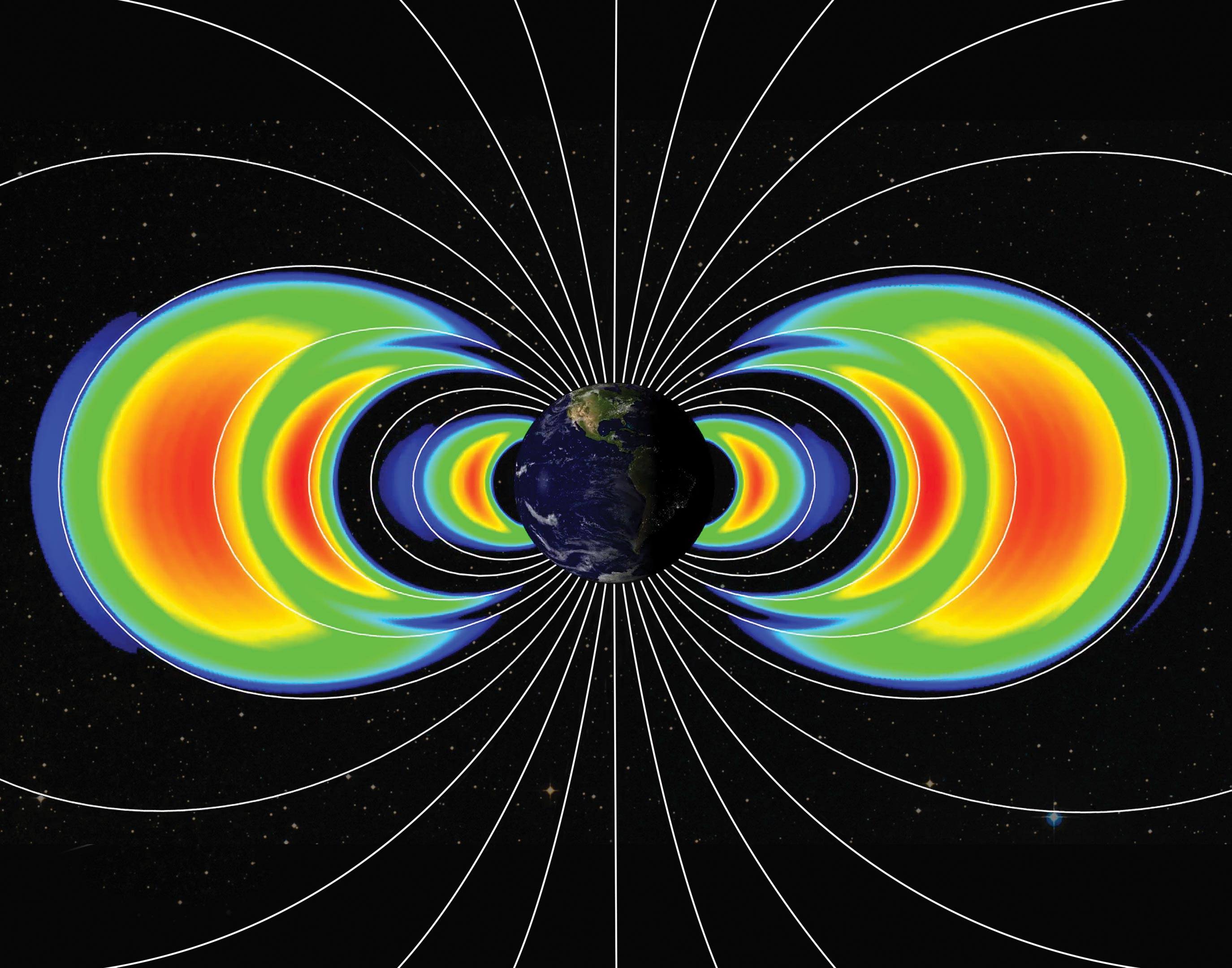
Incoming energy and particles from the Sun also created two new temporary belts of energetic particles within the magnetosphere. Discovered by CIRBE, these belts formed between the Van Allen radiation belts that permanently surround Earth. The belt’s discovery is important to spacecraft and astronauts that can be imperiled by high-energy electrons and protons in the belts.
A Global Light Show
The storm also ignited auroras around the globe, including places where these celestial light shows are rare. NASA’s Aurorasaurus project was flooded with more than 6,000 observer reports from over 55 countries and all seven continents.
Photographers helped scientists understand why auroras observed throughout Japan were magenta rather than the typical red. Researchers studied hundreds of photos and found the auroras were surprisingly high — around 600 miles above the ground (200 miles higher than red auroras typically appear).
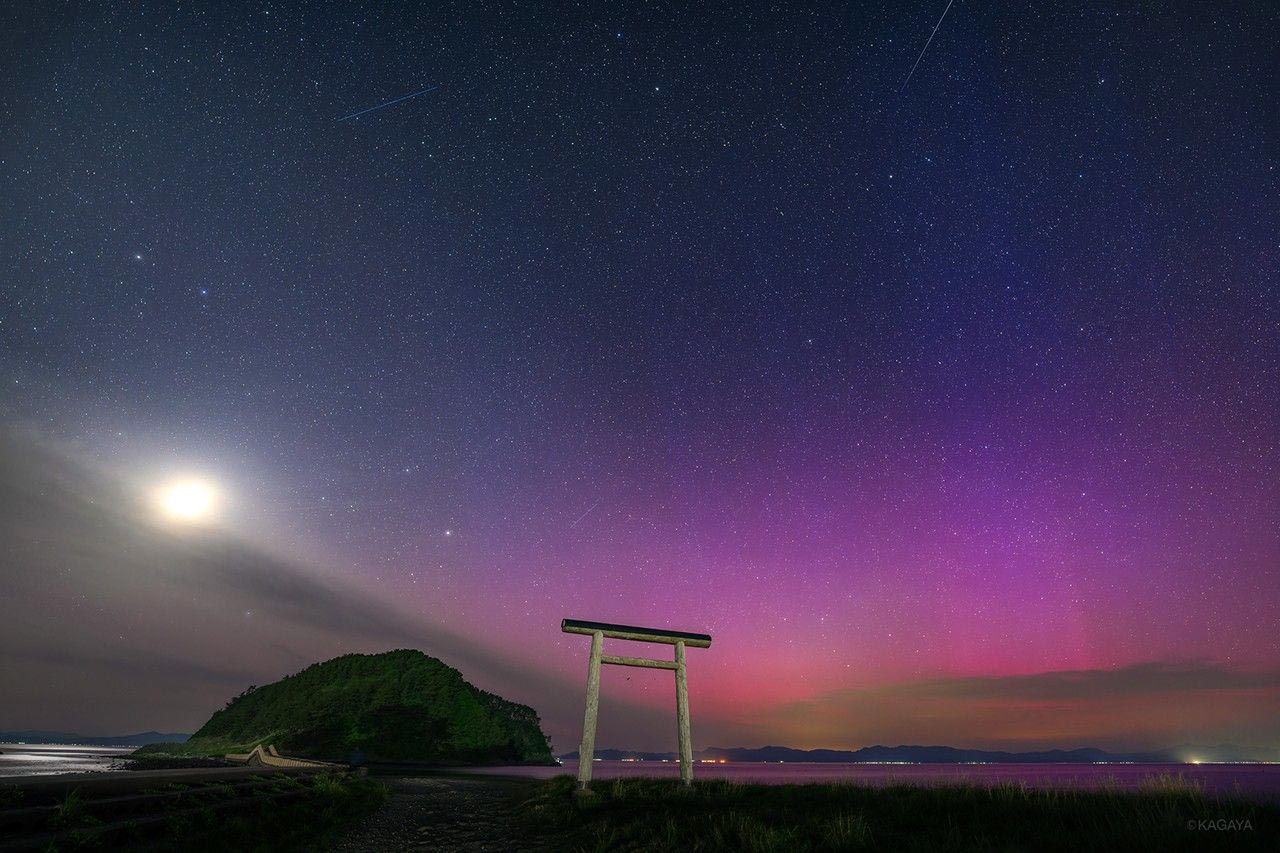
In a paper published in the journal Scientific Reports, the research team says the peculiar color likely resulted from a mix of red and blue auroras, produced by oxygen and nitrogen molecules lofted higher than usual as the Gannon storm heated and expanded the upper atmosphere.
“It typically needs some special circumstances, like we saw last May,” co-author Josh Pettit of NASA’s Goddard Space Flight Center said of Japan’s magenta auroras. “A very unique event indeed.”
Otherworldly Effects
Impacts of the Sun’s amped-up solar activity didn’t end at Earth. The solar active region that sparked the Gannon storm eventually rotated away from our planet and redirected its outbursts toward Mars.
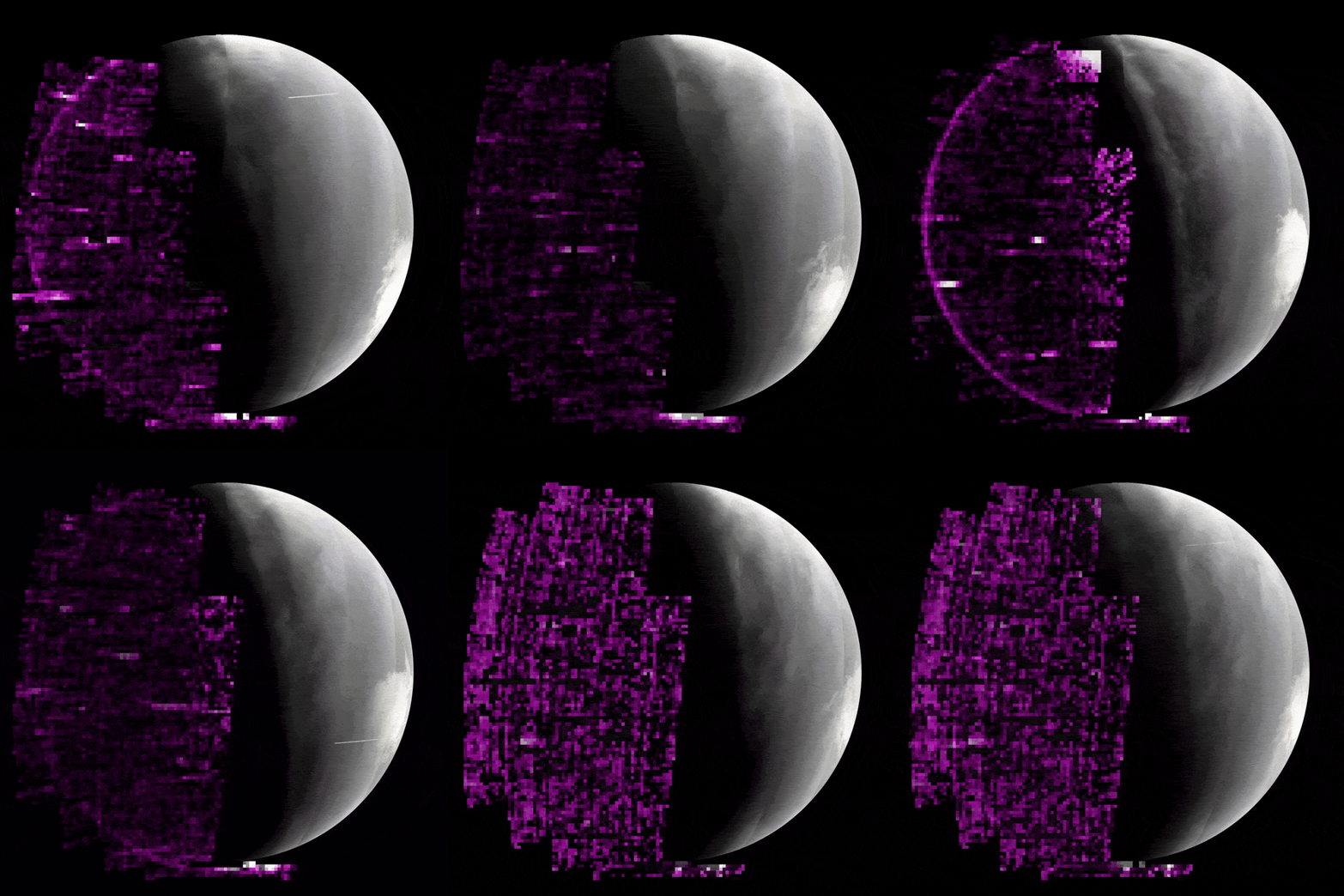
As energetic particles from the Sun struck the Martian atmosphere, NASA’s MAVEN (Mars Atmosphere and Volatile Evolution) orbiter watched auroras engulf the Red Planet from May 14 to 20.
Solar particles overwhelmed the star camera on NASA’s 2001 Mars Odyssey orbiter (which uses stars to orient the spacecraft), causing the camera to cut out for almost an hour.
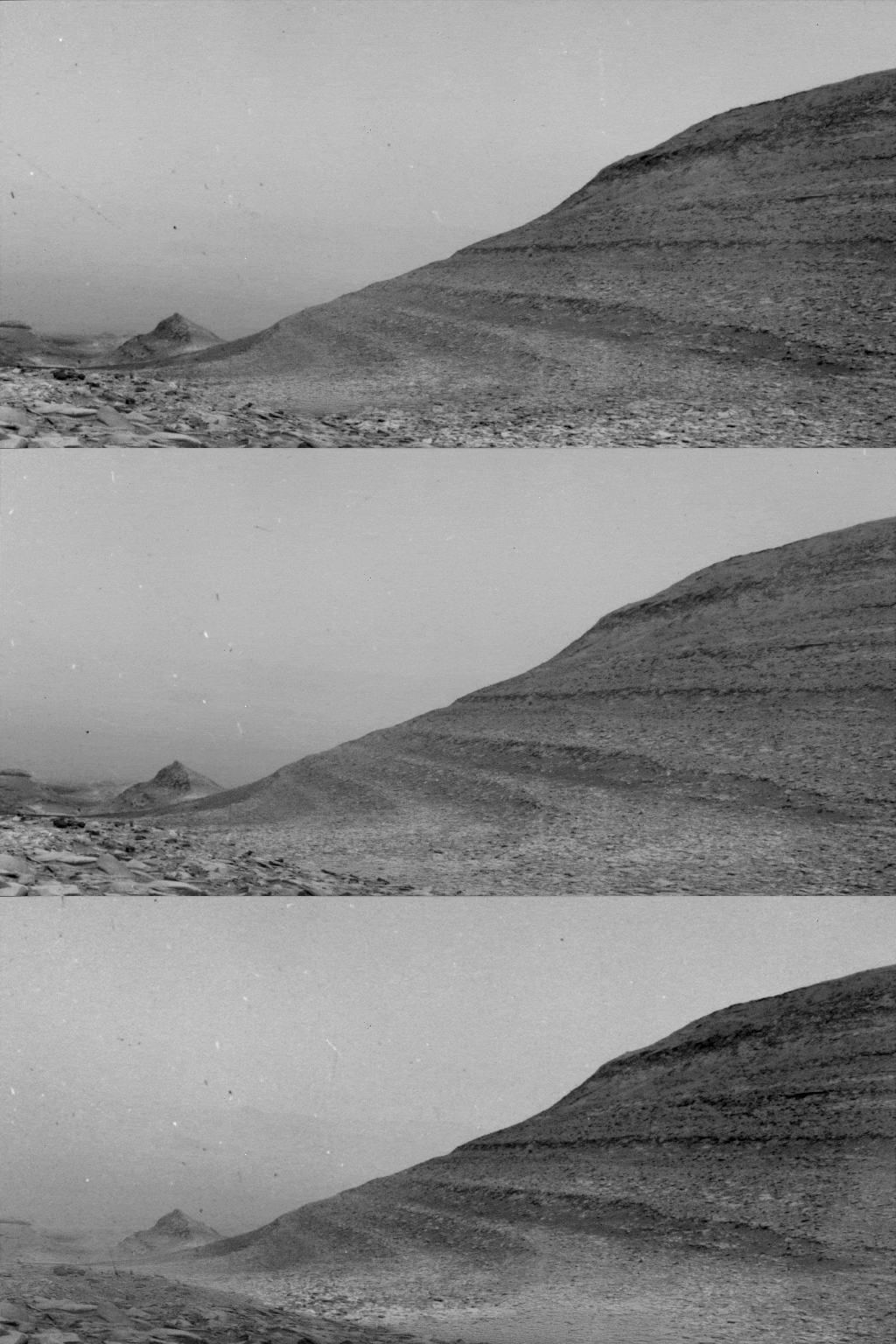
On the Martian surface, images from the navigation cameras on NASA’s Curiosity rover were freckled with “snow” — streaks and specks caused by charged particles. Meanwhile, Curiosity’s Radiation Assessment Detector recorded the biggest surge of radiation since the rover landed in 2012. If astronauts had been there, they would have received a radiation dose of 8,100 micrograys, equivalent to 30 chest X-rays.
Historic Data, Ongoing Insights
The Gannon storm spread auroras to unusually low latitudes and has been called the best-documented geomagnetic storm in history. A year on, we have just begun unraveling its story. Data captured during this historic event will be analyzed for years to come, revealing new lessons about the nature of geomagnetic storms and how best to weather them.
Reference: “Extended magenta aurora as revealed by citizen science” by Ryuho Kataoka, Sachin Alexander Reddy, Shinya Nakano, Joshua Pettit and Yuki Nakamura, 28 October 2024, Scientific Reports.
DOI: 10.1038/s41598-024-75184-9
Never miss a breakthrough: Join the SciTechDaily newsletter.
Follow us on Google and Google News.