

High above Earth’s poles, powerful electrojets create mesmerizing auroras but also pose risks like power outages. NASA’s upcoming EZIE mission aims to decode these electric currents using three CubeSats that will orbit Earth in a synchronized formation, mapping electrojets with a cutting-edge technique that measures magnetic field variations.
By leveraging the Zeeman effect, EZIE will gather data from an altitude too high for balloons yet too low for satellites to linger. The mission also enlists citizen scientists, equipping students with magnetometers to compare data from the ground. Set to launch during solar maximum, EZIE will work alongside other NASA missions, pushing the boundaries of space weather research.
Electrojets: Powerful Currents in Earth’s Atmosphere
High above Earth’s poles, powerful electric currents known as electrojets flow through the upper atmosphere, lighting up the sky with auroras. These auroral electrojets carry nearly a million amps of electrical charge around the poles every second, creating some of the strongest magnetic disturbances on the ground. Rapid shifts in these currents can disrupt power grids, potentially causing blackouts. To better understand and ultimately reduce the impact of these space weather events, NASA is launching the EZIE (Electrojet Zeeman Imaging Explorer) mission in March.
EZIE’s findings will help scientists improve predictions of hazardous space weather, which can endanger astronauts, interfere with satellites, and disrupt power systems on Earth.
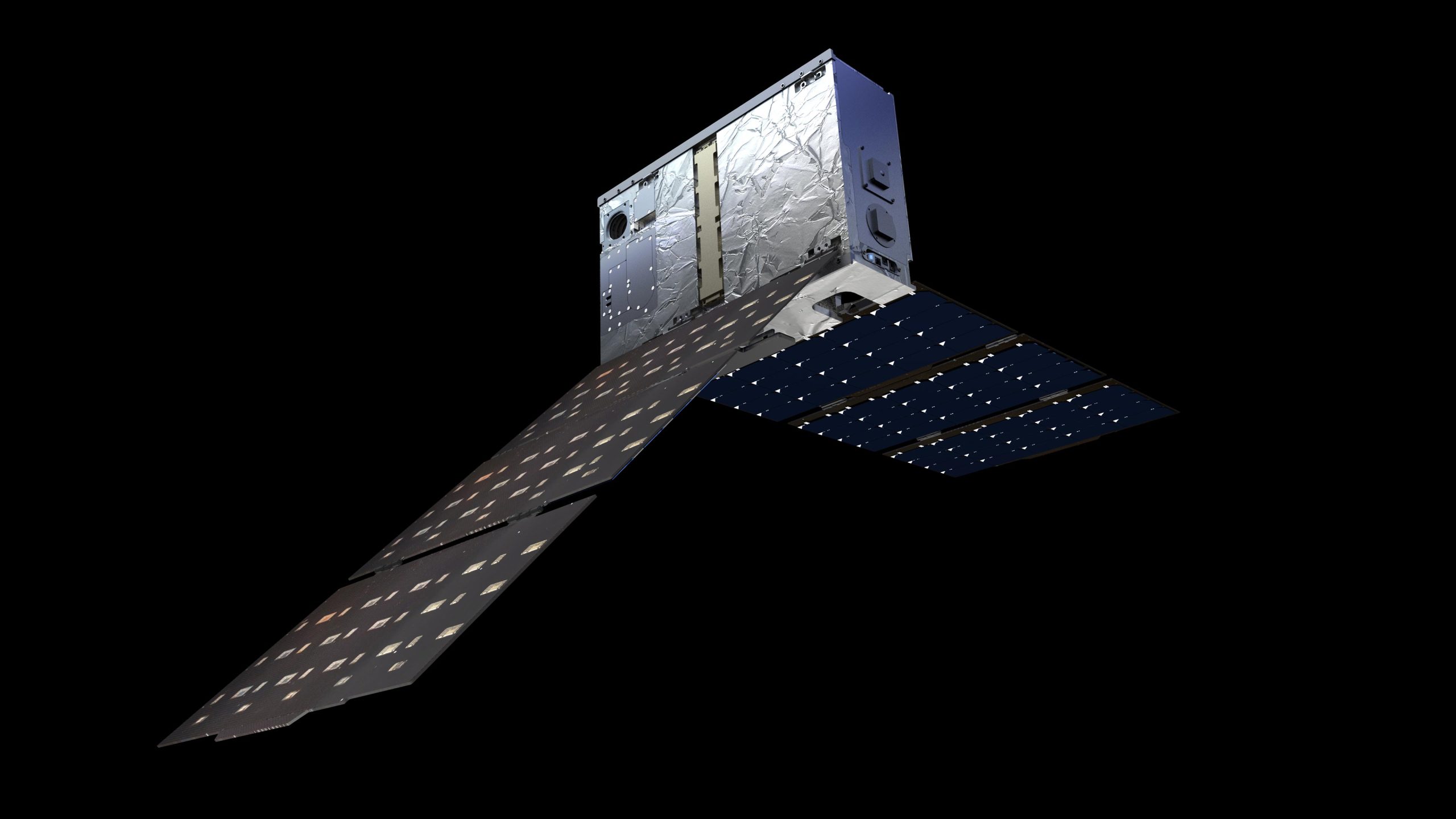
How EZIE’s CubeSats Will Track Electrojets
The mission consists of three CubeSats, each about the size of a carry-on suitcase. These small satellites will fly in a pearls-on-a-string formation, trailing one another as they orbit Earth from pole to pole at an altitude of about 350 miles (550 kilometers). From this vantage point, they will monitor the electrojets, which flow roughly 60 miles (100 kilometers) above the surface in a charged region of the atmosphere known as the ionosphere.
As they orbit, the EZIE satellites will continuously map the electrojets, capturing their structure and tracking how they evolve over time. By flying over the same regions just 2 to 10 minutes apart, the spacecraft will reveal the rapid changes in these electric currents, providing crucial insights into their behavior.
NASA’s EZIE (Electrojet Zeeman Imaging Explorer) mission will use three CubeSats to map Earth’s auroral electrojets — intense electric currents that flow high above Earth’s polar regions when auroras glow in the sky. As the trio orbits Earth, each satellite will use four dishes pointed at different angles to measure magnetic fields created by the electrojets. Credit: NASA/Johns Hopkins APL/Steve Gribben
Solving a Decades-Old Space Mystery
Previous ground-based experiments and spacecraft have observed auroral electrojets, which are a small part of a vast electric circuit that extends 100,000 miles (160,000 kilometers) from Earth to space. But for decades, scientists have debated what the overall system looks like and how it evolves. The mission team expects EZIE to resolve that debate.
“What EZIE does is unique,” said Larry Kepko, EZIE mission scientist at NASA’s Goddard Space Flight Center in Greenbelt, Maryland. “EZIE is the first mission dedicated exclusively to studying the electrojets, and it does so with a completely new measurement technique.”
“EZIE is the first mission dedicated exclusively to studying the electrojets.”
Larry Kepko.EZIE mission scientist, NASA’s Goddard Space Flight Center
Using the Zeeman Effect to Study Magnetic Fields
This technique involves looking at microwave emission from oxygen molecules about 10 miles (16 kilometers) below the electrojets. Normally, oxygen molecules emit microwaves at a frequency of 118 GHz. However, the electrojets create a magnetic field that can split apart that 118 Gigahertz emission line in a process called Zeeman splitting. The stronger the magnetic field, the farther apart the line is split.
Each of the three EZIE spacecraft will carry an instrument called the Microwave Electrojet Magnetogram to observe the Zeeman effect and measure the strength and direction of the electrojets’ magnetic fields. Built by NASA’s Jet Propulsion Laboratory (JPL) in Southern California, each of these instruments will use four antennas pointed at different angles to survey the magnetic fields along four different tracks as EZIE orbits.
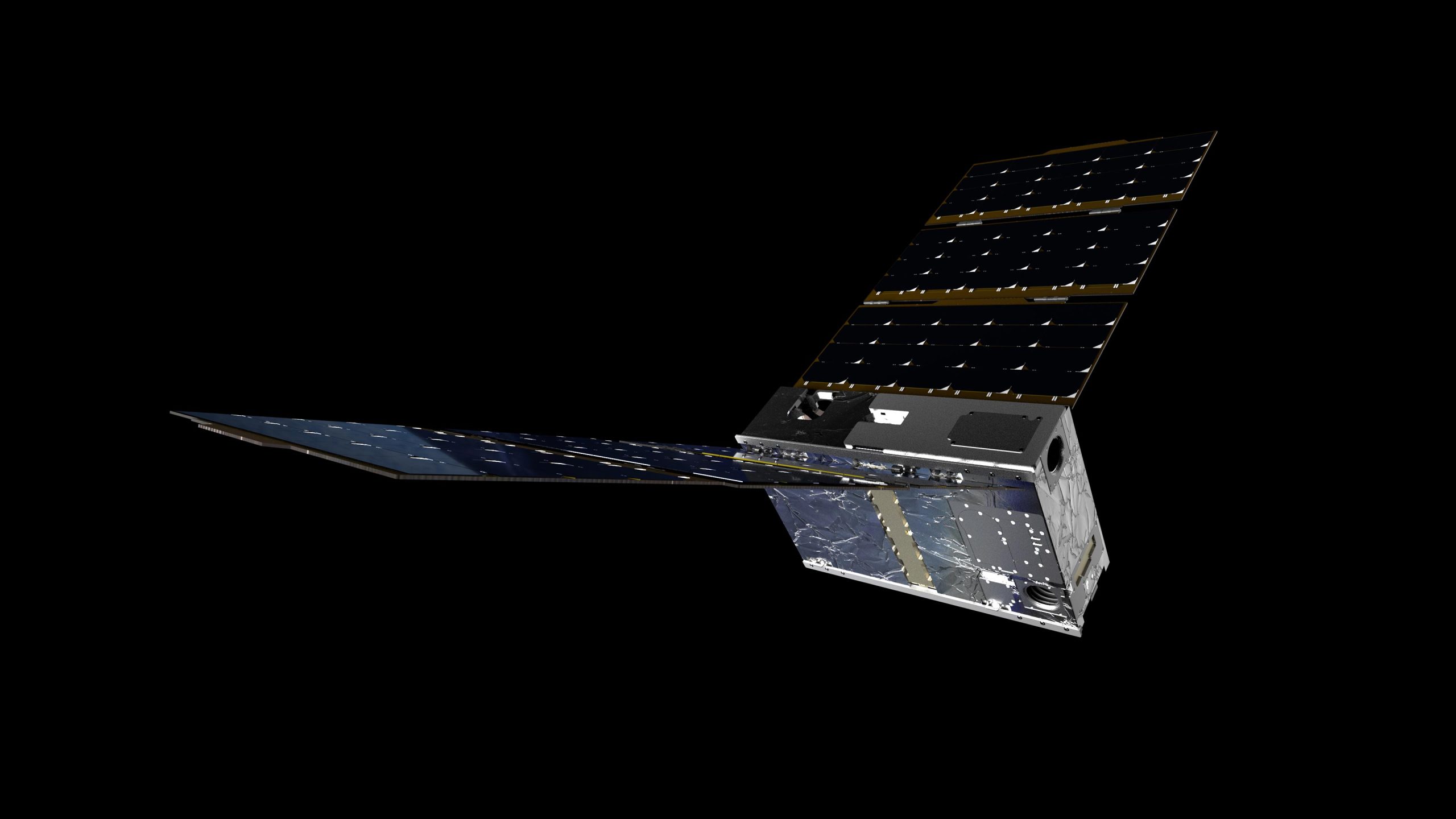
Credit: NASA/Johns Hopkins APL/Steve Gribben
Revolutionizing Space Research with CubeSat Technology
The technology used in the Microwave Electrojet Magnetograms was originally developed to study Earth’s atmosphere and weather systems. Engineers at JPL had reduced the size of the radio detectors so they could fit on small satellites, including NASA’s TEMPEST-D and CubeRRT missions, and improved the components that separate light into specific wavelengths.
The electrojets flow through a region that is difficult to study directly, as it’s too high for scientific balloons to reach but too low for satellites to dwell.
“The utilization of the Zeeman technique to remotely map current-induced magnetic fields is really a game-changing approach to get these measurements at an altitude that is notoriously difficult to measure,” said Sam Yee, EZIE’s principal investigator at the Johns Hopkins Applied Physics Laboratory (APL) in Laurel, Maryland.
NASA’s EZIE (Electrojet Zeeman Imaging Explorer) mission will investigate Earth’s auroral electrojets, which flow high above Earth’s polar regions when auroras (northern and southern lights) glow. By providing unprecedented measurements of these electrical currents, EZIE will answer decades-old mysteries. Understanding these currents will also improve scientists’ capabilities for predicting hazardous space weather. Credit: NASA/Johns Hopkins APL
Citizen Scientists Join the Mission
The mission is also including citizen scientists to enhance its research, distributing dozens of EZIE-Mag magnetometer kits to students in the U.S. and volunteers around the world to compare EZIE’s observations to those from Earth. “EZIE scientists will be collecting magnetic field data from above, and the students will be collecting magnetic field data from the ground,” said Nelli Mosavi-Hoyer, EZIE project manager at APL.
“EZIE scientists will be collecting magnetic field data from above, and the students will be collecting magnetic field data from the ground.”
Nelli Mosavi-Hoyer, EZIE project manager, Johns Hopkins Applied Physics Laboratory
Launching During a Solar Maximum for Maximum Impact
The EZIE spacecraft will launch aboard a SpaceX Falcon 9 rocket from Vandenberg Space Force Base in California as part of the Transporter-13 rideshare mission with SpaceX via launch integrator Maverick Space Systems.
The mission will launch during what’s known as solar maximum — a phase during the 11-year solar cycle when the Sun’s activity is stronger and more frequent. This is an advantage for EZIE’s science.
“It’s better to launch during solar max,” Kepko said. “The electrojets respond directly to solar activity.”
The EZIE mission will also work alongside other NASA heliophysics missions, including PUNCH (Polarimeter to Unify the Corona and Heliosphere), launching in late February to study how material in the Sun’s outer atmosphere becomes the solar wind.
CubeSats Prove Big Science Can Be Cost-Effective
According to Yee, EZIE’s CubeSat mission not only allows scientists to address compelling questions that have not been able to answer for decades but also demonstrates that great science can be achieved cost-effectively.
“We’re leveraging the new capability of CubeSats,” Kepko added. “This is a mission that couldn’t have flown a decade ago. It’s pushing the envelope of what is possible, all on a small satellite. It’s exciting to think about what we will discover.”
The EZIE mission is funded by NASA’s Heliophysics Division and managed by the Explorers Program Office at NASA Goddard. The Johns Hopkins Applied Physics Laboratory (APL) leads the mission, while Blue Canyon Technologies in Boulder, Colorado, built the CubeSats.
Never miss a breakthrough: Join the SciTechDaily newsletter.
Follow us on Google and Google News.