
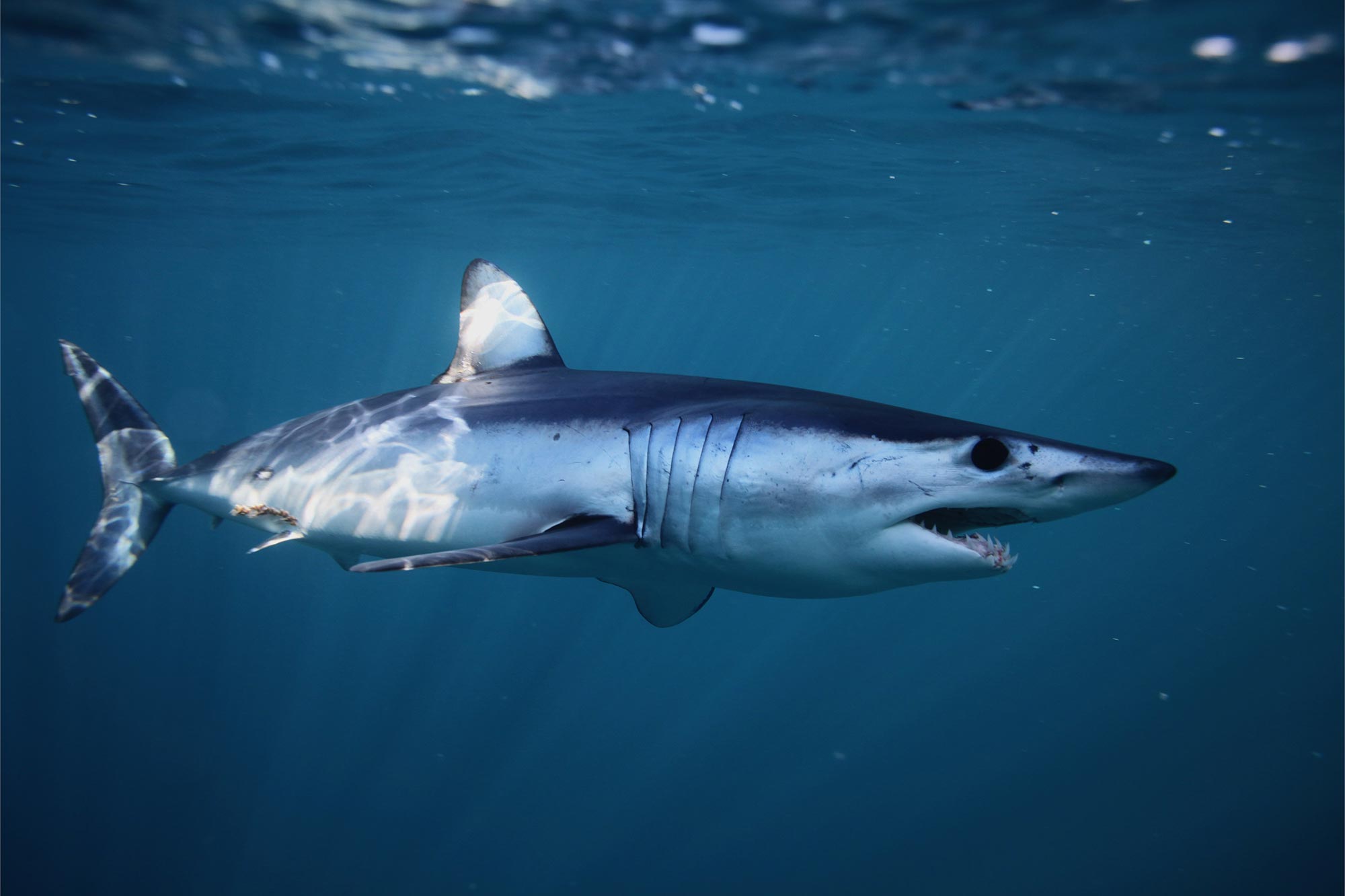
Climate change is causing significant habitat loss for key marine species like sharks and tunas in crucial oceanic regions, with some species potentially losing up to 70% of their habitats by 2100.
A study of 12 species of highly migratory fish predators—including sharks, tuna, and billfish such as marlin and swordfish—finds that most of them will encounter widespread losses of suitable habitat and redistribution from current habitats in the Northwest Atlantic Ocean (NWA) and the Gulf of Mexico (GOM) by 2100. These areas are among the fastest-warming ocean regions and are projected to increase between 1-6°C (+1-10°F) by the end of the century, a sign of climate-driven changes in marine ecosystems.
Current and Future Challenges for Marine Species
In some cases, these iconic, and economically and ecologically important species, could lose upwards of 70% of suitable habitat by the end of the century, and in most cases, the impacts of these climate-induced changes are already observable.
“The ongoing and projected effects of climate change highlight the urgent need to adaptively and proactively manage dynamic marine ecosystems,” according to the study, “Widespread habitat loss and redistribution of marine top predators in a changing ocean,” published in the journal Science Advances.
Research Methodology and Findings
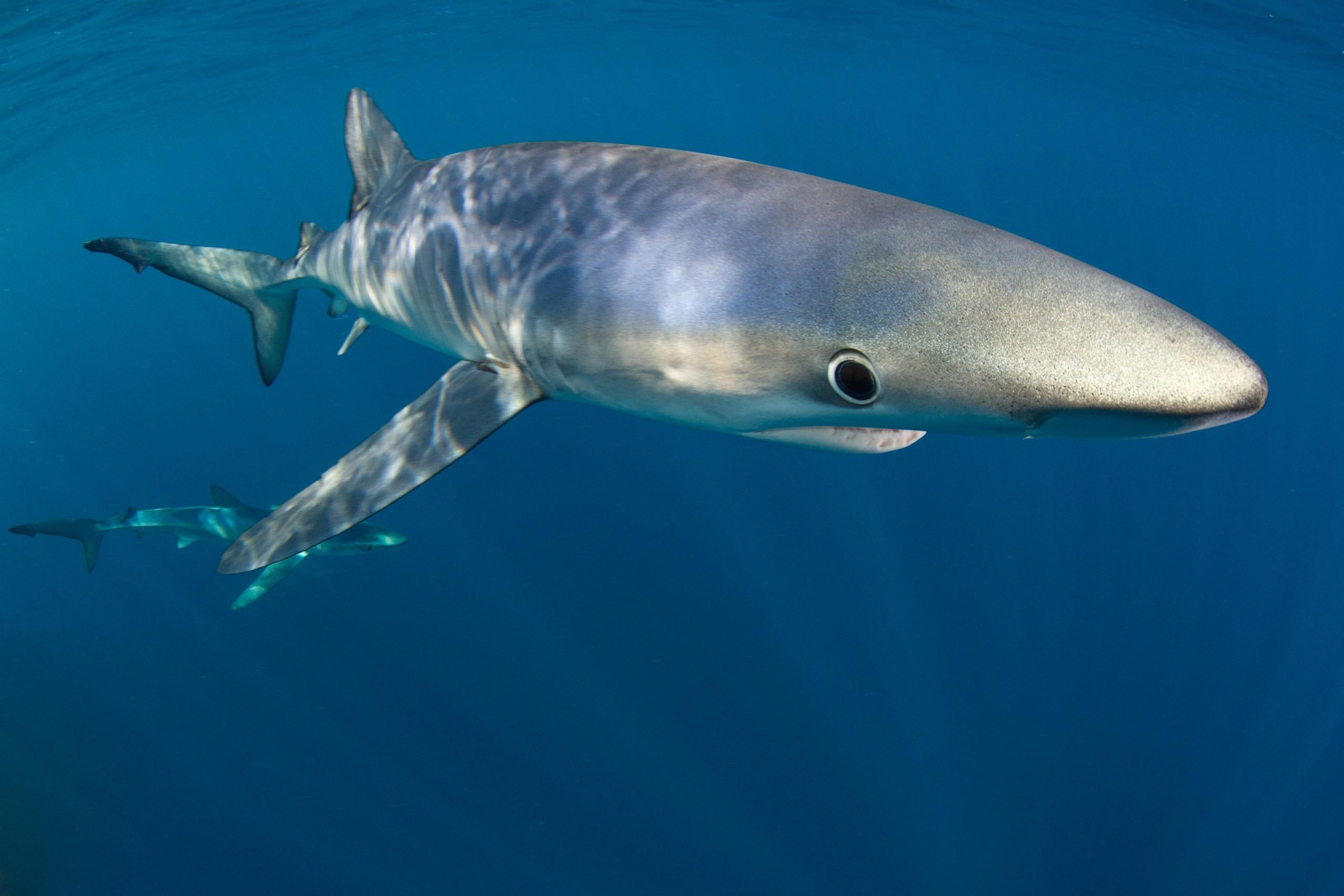
The study, led by Camrin Braun, an assistant scientist and marine ecologist at the Woods Hole Oceanographic Institution (WHOI), identified areas offshore of the Southeast U.S. and Mid-Atlantic coasts as predicted hotspots of multi-species habitat loss. The researchers studied the impacts on three shark (blue, porbeagle, and shortfin mako), five tuna (albacore, bigeye, bluefin, skipjack, and yellowfin), and four billfish (sailfish, blue marlin, white marlin, and swordfish) species. Although the researchers’ model framework could not account for potential adaptability or thermal tolerance by species, the results “suggest predominant and widespread habitat loss for nearly all [highly migratory species] studied.”
“Climate change is expected to fundamentally change the status quo for where these species are and how they live. While we don’t really understand all the details of what that fundamental change might look like, this study is a good step in the direction of trying to nail down what those changes might be, so that we can do something about it,” said Braun.
Scientists used three decades of satellite, oceanographic model, and in situ biological data to develop dynamic species distribution models to assess how climate change has already and will continue to impact the fish species in the NWA and GOM.
NOAA CoastWatch visualization of NOAA satellite data for global sea surface temperatures from January 2023 through July 2023. Credit: NOAA Satellites
Implications for Marine Management and Conservation
“Our research demonstrates that climate-driven changes are happening now, not from projections of climate change, but based on observed empirical data from the last two decades. So while our findings do point to larger species shifts in the near term, it also clarifies the substantial changes in species distributions that have already occurred,” said study co-author Rebecca Lewison. She is professor of biology and a conservation ecologist at the Coastal and Marine Institute at San Diego State University. She added that the research results “highlight the importance of using NASA and other satellite data to understand how a changing ocean is impacting commercially important marine species like swordfish and tunas.”
The study “not only sheds more light on the far-reaching effects of climate change on ocean environments but highlights that marine conservation and management efforts need to plan for these ongoing changes. If migratory fish are on the move, fishing vessels and coastal communities will also need to adapt. Studies like this will help marine resource agencies be even more dynamic in their decision-making,” said study co-author Tobey Curtis, a fishery management specialist in the Atlantic Highly Migratory Species Management Division of NOAA Fisheries.
Socioeconomic Impacts and Management Strategies
The shifts in the habitat and distributions of these species “raise concerns for associated fisheries and the socioeconomic impacts of climate change on fishing communities,” according to the article. The concentrated changes in species distribution also “highlight the need for adaptive management approaches that can respond to expected changes.” “Our results suggest static fishery management measures will continue to lose ecological relevance and economic efficacy as species redistribute under climate change.” Braun said the motivation for the research is not only to better understand the fish and marine ecosystems, but also to understand how changes affect people, their livelihoods, coastal communities, and commercial fisheries.
“We are doing our best to try to figure out what will happen, so that people can adapt and so that we can develop climate-resilient or climate-ready management policies,” Braun said.
He said that historic ways to manage fisheries are static, even though fish move around a lot. “We basically draw a box in the ocean and say whether you can or can’t fish there,” he said. Dynamic ocean management frameworks “must embody expected changes. Otherwise, you are left with your static box in the ocean that doesn’t move, even though the fish may have moved, and the ocean may have changed.”
Key Takeaways:
- A study of 12 species of highly migratory fish predators—including sharks, tuna, and billfish such as marlin and swordfish—finds that most of them will encounter widespread losses of suitable habitat and redistribution from current habitats by 2100. That is when ocean surface temperatures are projected to increase between 1-6°C (+1-10°F), a sign of climate-driven changes in marine ecosystems.
- In some cases, these iconic and economically- and ecologically important species could lose upwards of 70% of suitable habitat by the end of the century. In most cases, the impacts of climate change on habitat already are observable.
- In most cases, the impacts of climate change on habitat already are observable.
- “The ongoing and projected effects of climate change highlight the urgent need to adaptively and proactively manage dynamic marine ecosystems,” according to the study. “Our results suggest static fishery management measures will continue to lose ecological relevance and economic efficacy as species redistribute under climate change.”
- The study identified the Northwest Atlantic Ocean and the Gulf of Mexico, which are among the fastest warming ocean regions, as predicted hotspots of multi-species habitat loss.
- The motivation for the research is not only to better understand the fish and marine ecosystems, but also to understand how changes affect people, their livelihoods, coastal communities, and commercial fisheries, said journal article lead author Camrin Braun. “We are doing our best to try to figure out what will happen, so that people can adapt and so that we can develop climate-resilient or climate-ready management policies.”
- “Climate change is expected to cause the status quo for where these species are and how they live to fundamentally change. While we don’t really understand all the details of what that fundamental change might look like, this study is a good step in the direction of trying to nail down what those changes might be, so that we can do something about it,” said journal article lead author Camrin Braun
Reference: “Widespread habitat loss and redistribution of marine top predators in a changing ocean” by Camrin D. Braun, Nerea Lezama-Ochoa, Nima Farchadi, Martin C. Arostegui, Michael Alexander, Andrew Allyn, Steven J. Bograd, Stephanie Brodie, Daniel P. Crear, Tobey H. Curtis, Elliott L. Hazen, Alex Kerney, Katherine E. Mills, Dylan Pugh, James D. Scott, Heather Welch, Riley Young-Morse and Rebecca L. Lewison, 9 August 2023, Science Advances.
DOI: 10.1126/sciadv.adi2718
Funding for this research was provided by a NASA Ecological Conservation program grant, the NOAA Integrated Ecosystem Assessment Program, the Postdoctoral Scholar Program at WHOI, and the Dr. George D. Grice Postdoctoral Scholarship Fund at WHOI.
Never miss a breakthrough: Join the SciTechDaily newsletter.
Follow us on Google and Google News.
1 Comment
These long running symptoms of change are ignored by negative ignorant politicians
As man rapes the ocean, wipes out dryland habitat for greedy gains, mankind is more at risk than
before…massive insect loss, massive avian species decimated,
Massive habitat destruction? Now, the Panatal is already under the greedy assault..will lose up to 40%
of species to greedy man.
Time to remove the greedy.