
Close Menu
    Facebook X (Twitter) Instagram
    SciTechDaily
    • Biology
    • Chemistry
    • Earth
    • Health
    • Physics
    • Science
    • Space
    • Technology
    Facebook X (Twitter) Pinterest YouTube RSS
    SciTechDaily
    Home»Biology»MALBAC Offers More Efficient Way to Sequence DNA
    Biology

    MALBAC Offers More Efficient Way to Sequence DNA

    By SciTechDailyDecember 23, 20121 Comment3 Mins Read
    Facebook Twitter Pinterest Telegram LinkedIn WhatsApp Email Reddit
    Share
    Facebook Twitter LinkedIn Pinterest Telegram Email Reddit
    single-cell-genomics-efficient
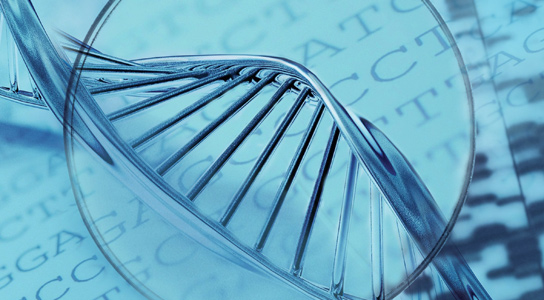
    A new technique allows the duplication of DNA so that more than 90% of the genome of a single cell can be sequenced.

    Sequencing DNA is nothing new, but it’s much harder to sequence the DNA of a single cell. In order to get enough DNA for sequencing, usually thousands or millions of cells are required. Finding out which mutations are in which cells is extremely difficult, making the mutations present in only a few cells, like early cancerous cells, almost impossible to detect.

    The scientists published their findings in the journal Science¹. A new technique was reported today, which allows the duplication of DNA so that more than 90% of the genome of a single cell can be sequenced. This method makes it easier to detect minor DNA sequence variations in single cells, and makes it easier to find genetic differences between individual cells. Such differences could help explain why cancer becomes malignant, how reproductive cells emerge and even how individual neurons differ.

    To sequence an individual cell, researchers must first make many copies of its DNA using techniques including PCR. The drawback of these techniques is that some portions of the genome are copied much more extensively than others, a problem which is known as amplification bias. As a result of this, most attempts at single-cell sequencing cover 40% to 70% of the genome.

    The new technique developed by Sunney Xie, a chemical biologist at Harvard University in Cambridge, Massachusetts, and his colleagues allows the sequencing of 93% of a human cell. Multiple annealing and looping-based amplification cycles, MALBAC, uses DNA from a single cell, isolates it and adds short DNA molecules, called primers. These are complementary to random parts of the DNA, which makes them stick to the strands and act as starting points for DNA replication.

    The primers consist of two parts: a sticky eight-nucleotide portion that varies and binds to the DNA, and a common sequence of 27 nucleotides. This stops the DNA from being copied too many times and cuts down on the amplification bias. This is done by making the newly copied strands loop back onto themselves, which presents over-copying.

    MALBAC can be used to see how quickly mutations accumulate, and to find variations in gene-copy number and chromosomal abnormalities across a population of cells. It can also help detect variants across more of the genome than other sequencing methods.

    Although MALBAC covers the genome more thoroughly than other techniques, it still misses one-third of single-nucleotide variants. Also, the enzyme that copies the DNA is error-prone, so the copying process can introduce variants that weren’t present in the cell.

    Reference: “Genome-Wide Detection of Single-Nucleotide and Copy-Number Variations of a Single Human Cell” by Chenghang Zong, Sijia Lu, Alec R. Chapman and X. Sunney Xie, 21 December 2012, Science.
    DOI: 10.1126/science.1229164

    Never miss a breakthrough: Join the SciTechDaily newsletter.
    Follow us on Google and Google News.

    Chemical Biology DNA Genetics Genome
    Share. Facebook Twitter Pinterest LinkedIn Email Reddit

    Related Articles

    Bioengineers Develop a New System for Human Genome Editing

    DNA Study Reveals Clues about Primate Evolution

    Prolific Changes in the Human Genome in the Past 5,000 Years

    The Most Comprehensive Catalog of Human Genome Variations

    Genome Studies Indicate That “Junk” DNA Holds Clues to Common Diseases

    Cdt1 Protein Has a Role in DNA Replication and Mitosis

    Faster and Cheaper Genomics Technique Ready for Takeoff

    3-D Image Shows How DNA Packs Itself into a “Fractal Globule”

    Researchers Complete Genome Sequence of a Denisovan Human Finger Bone

    1 Comment

    1. Sarah on March 26, 2013 6:55 pm

      Awesome! Far out, it feels like the leaps and bounds in genetic science are getting more and more common every day.. Really awesome to see.

      Reply
    Leave A Reply Cancel Reply

    • Facebook
    • Twitter
    • Pinterest
    • YouTube

    Don't Miss a Discovery

    Subscribe for the Latest in Science & Tech!

    Trending News

    Scientists Uncover Potential Brain Risks of Popular Fish Oil Supplements

    Scientists Discover a Surprising Way To Make Bread Healthier and More Nutritious

    After 60 Years, Scientists Uncover Unexpected Brain Effects of Popular Diabetes Drug Metformin

    New Research Uncovers Hidden Side Effects of Popular Weight-Loss Drugs

    Scientists Rethink Extreme Warming After Surprising Ocean Discovery

    Landmark Study Links Never Marrying to Significantly Higher Cancer Risk

    Researchers Discover Unknown Beetle Species Just Steps From Their Lab

    Largest-Ever Study Finds Medicinal Cannabis Ineffective for Anxiety, Depression, PTSD

    Follow SciTechDaily
    • Facebook
    • Twitter
    • YouTube
    • Pinterest
    • Newsletter
    • RSS
    SciTech News
    • Biology News
    • Chemistry News
    • Earth News
    • Health News
    • Physics News
    • Science News
    • Space News
    • Technology News
    Recent Posts
    • Researchers Uncover Source of Strange Deformation in Earth’s Largest Continental Rift
    • Scientists Solve Mystery of Where the Colorado River Vanished Millions of Years Ago
    • Not Just Alzheimer’s: Scientists Uncover Clues to a Second, Overlooked Disorder
    • Scientists Uncover Dangerous Connection Between Serotonin and Heart Valve Disease
    • Scientists Discover a “Protector” Protein That Could Help Reverse Hair Loss
    Copyright © 1998 - 2026 SciTechDaily. All Rights Reserved.
    • Science News
    • About
    • Contact
    • Editorial Board
    • Privacy Policy
    • Terms of Use

    Type above and press Enter to search. Press Esc to cancel.