
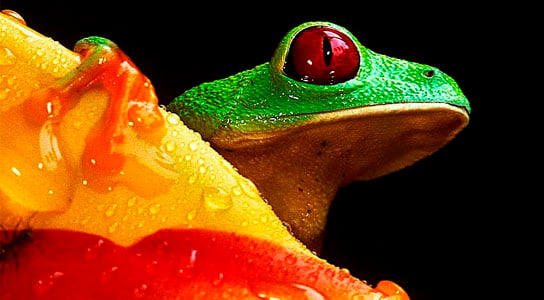
A new study from a team of international scientists found that deforestation is advancing rapidly in tropical nations and most reserves are losing some or all of their surrounding forest, leaving these nations struggling to sustain their biodiversity.
Many of the protected areas in tropical nations are struggling to sustain their biodiversity, according to a study by more than 200 scientists from around the world. The study, published in the journal Nature, found that deforestation is advancing rapidly in these nations and most reserves are losing some or all of their surrounding forest.
Among the scientists participating in the study were lead author Professor William Laurance of James Cook University in Cairns, Australia, and the Smithsonian Tropical Research Institute in Panama, who is also a senior research fellow at the University of California, Los Angeles (UCLA) Center for Tropical Research; and Thomas Smith, a professor at UCLA’s Institute of the Environment and Sustainability and director of UCLA’s Center for Tropical Research.
Laurence described the reserves as being like “arks for biodiversity.” “But some of the arks are in danger of sinking,” he added, “even though they are our best hope to sustain tropical forests and their amazing biodiversity in perpetuity.”
Laurance and his team studied more than 30 different categories of species — from trees and butterflies to primates and large predators — within protected areas across the tropical Americas, Africa and Asia-Pacific. They estimated how these groups had changed in numbers over the past two to three decades, while identifying environmental changes that might threaten the reserves.
Laurance said their conclusion was that while most reserves were helping to protect their forests, about half were struggling to sustain their original biodiversity.
One of the researchers, Carolina Useche of the Humboldt Institute in Colombia, said that “the scariest thing about our findings is just how widespread the declines of species are in the suffering reserves.”
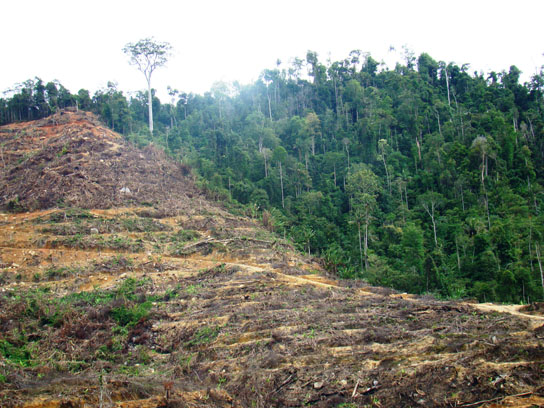
“It’s not just a few groups that are hurting, but an alarmingly wide array of species,” she said. These included big predators and other large-bodied animals, many primates, old-growth trees, and stream-dwelling fish and amphibians, among others.
The researchers found that reserves that were suffering most were those that were poorly protected and suffered encroachment from illegal colonists, hunters or loggers.
“We need to pay attention to the areas surrounding protected areas to ensure that they are also managed in a way that protects the reserves,” said UCLA’s Smith. “Given the threats to existing areas, we need more of them and larger ones to reduce erosion.”
Another of the scientists involved in the study, Kadiri Serge Bobo of the University of Dschang in Cameroon, Africa, reinforced that it was not just what was happening inside a reserve that was important.
“Almost as important is what’s going on outside it,” he said. He said that 85% of the reserves that were studied lost some nearby forest cover over the past two to three decades, but only 2 percent saw an increase in surrounding forest.
The team found many nature reserves acted like mirrors, partially reflecting the threats and changes in their surrounding landscapes.
“For example, if a park has a lot of fires and illegal mining around it, those same threats can also penetrate inside it to some degree,” Useche said.
The bottom line, the researchers say, is that a better job needs to be done in protecting the protected areas, which means fighting both their internal and external threats and building support for protected areas among local communities. Such efforts will help ensure protected areas are more resilient to future threats such as climate change.
“We have no choice,” said Laurance. “Tropical forests are the biologically richest real estate on the planet, and a lot of that biodiversity will vanish without good protected areas.”
Reference: “Averting biodiversity collapse in tropical forest protected areas” by William F. Laurance, D. Carolina Useche, Julio Rendeiro, Margareta Kalka, Corey J. A. Bradshaw, Sean P. Sloan, Susan G. Laurance, Mason Campbell, Kate Abernethy, Patricia Alvarez, Victor Arroyo-Rodriguez, Peter Ashton, Julieta Benítez-Malvido, Allard Blom, Kadiri S. Bobo, Charles H. Cannon, Min Cao, Richard Carroll, Colin Chapman, Rosamond Coates, Marina Cords, Finn Danielsen, Bart De Dijn, Eric Dinerstein, Maureen A. Donnelly, David Edwards, Felicity Edwards, Nina Farwig, Peter Fashing, Pierre-Michel Forget, Mercedes Foster, George Gale, David Harris, Rhett Harrison, John Hart, Sarah Karpanty, W. John Kress, Jagdish Krishnaswamy, Willis Logsdon, Jon Lovett, William Magnusson, Fiona Maisels, Andrew R. Marshall, Deedra McClearn, Divya Mudappa, Martin R. Nielsen, Richard Pearson, Nigel Pitman, Jan van der Ploeg, Andrew Plumptre, John Poulsen, Mauricio Quesada, Hugo Rainey, Douglas Robinson, Christiane Roetgers, Francesco Rovero, Frederick Scatena, Christian Schulze, Douglas Sheil, Thomas Struhsaker, John Terborgh, Duncan Thomas, Robert Timm, J. Nicolas Urbina-Cardona, Karthikeyan Vasudevan, S. Joseph Wright, Juan Carlos Arias-G., Luzmila Arroyo, Mark Ashton, Philippe Auzel, Dennis Babaasa, Fred Babweteera, Patrick Baker, Olaf Banki, Margot Bass, Inogwabini Bila-Isia, Stephen Blake, Warren Brockelman, Nicholas Brokaw, Carsten A. Brühl, Sarayudh Bunyavejchewin, Jung-Tai Chao, Jerome Chave, Ravi Chellam, Connie J. Clark, José Clavijo, Robert Congdon, Richard Corlett, H. S. Dattaraja, Chittaranjan Dave, Glyn Davies, Beatriz de Mello Beisiegel, Rosa de Nazaré Paes da Silva, Anthony Di Fiore, Arvin Diesmos, Rodolfo Dirzo, Diane Doran-Sheehy, Mitchell Eaton, Louise Emmons, Alejandro Estrada, Corneille Ewango, Linda Fedigan, François Feer, Barbara Fruth, Jacalyn Giacalone Willis, Uromi Goodale, Steven Goodman, Juan C. Guix, Paul Guthiga, William Haber, Keith Hamer, Ilka Herbinger, Jane Hill, Zhongliang Huang, I Fang Sun, Kalan Ickes, Akira Itoh, … Lu Xiankai, Pralad Yonzon and Franky Zamzani, 25 July 2012, Nature.
DOI: 10.1038/nature11318
Never miss a breakthrough: Join the SciTechDaily newsletter.
Follow us on Google and Google News.