
Close Menu
    Facebook X (Twitter) Instagram
    SciTechDaily
    • Biology
    • Chemistry
    • Earth
    • Health
    • Physics
    • Science
    • Space
    • Technology
    Facebook X (Twitter) Pinterest YouTube RSS
    SciTechDaily
    Home»Space»Meet Sagittarius A* – Astronomers Reveal First Image of the Black Hole at the Heart of the Milky Way
    Space

    Meet Sagittarius A* – Astronomers Reveal First Image of the Black Hole at the Heart of the Milky Way

    By European Southern Observatory (ESO)May 12, 20222 Comments2 Mins Read
    Facebook Twitter Pinterest Telegram LinkedIn WhatsApp Email Reddit
    Share
    Facebook Twitter LinkedIn Pinterest Telegram Email Reddit
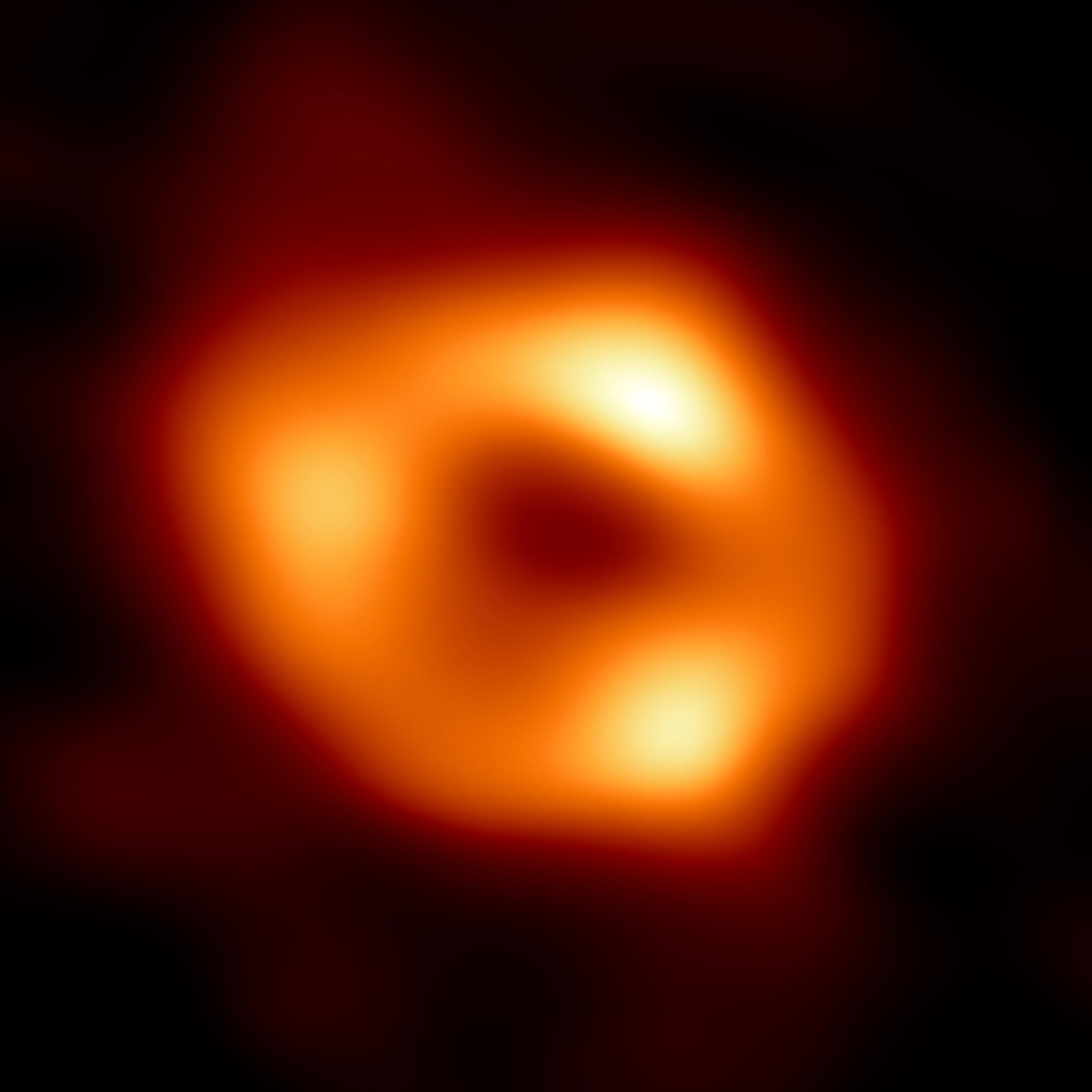
    First Image of Our Black Hole Sagittarius A*
    This is the first image of Sagittarius A*, the supermassive black hole at the center of our galaxy. It’s the first direct visual evidence of the presence of this black hole. It was captured by the Event Horizon Telescope (EHT), an array that linked together eight existing radio observatories across the planet to form a single “Earth-sized” virtual telescope. The telescope is named after the event horizon, the boundary of the black hole beyond which no light can escape. Credit: EHT Collaboration

    Today (May 12, 2022), at simultaneous press conferences around the world, including at the European Southern Observatory (ESO) headquarters in Germany, astronomers have unveiled the first image of the supermassive black hole at the center of our own Milky Way galaxy. This result provides overwhelming evidence that the object is indeed a black hole and yields valuable clues about the workings of such giants, which are thought to reside at the center of most galaxies. The image was produced by a global research team called the Event Horizon Telescope (EHT) Collaboration, using observations from a worldwide network of radio telescopes.

    The image is a long-anticipated look at the massive object that sits at the very center of our galaxy. Scientists had previously seen stars orbiting around something invisible, compact, and very massive at the center of the Milky Way. This strongly suggested that this object — known as Sagittarius A* (Sgr A*, pronounced “sadge-ay-star”) — is a black hole, and today’s image provides the first direct visual evidence of it.

    Although we cannot see the black hole itself, because it is completely dark, glowing gas around it reveals a telltale signature: a dark central region (called a shadow) surrounded by a bright ring-like structure. The new view captures light bent by the powerful gravity of the black hole, which is four million times more massive than our Sun.

    For more on this, including more pictures and videos see: Stunning Reveal: First Image of the Black Hole at the Center of the Milky Way.

    This research was presented in six papers published today in The Astrophysical Journal Letters.

    Never miss a breakthrough: Join the SciTechDaily newsletter.
    Follow us on Google and Google News.

    Astronomy Astrophysics Black Hole European Southern Observatory Event Horizon Telescope Milky Way
    Share. Facebook Twitter Pinterest LinkedIn Email Reddit

    Related Articles

    Powerful Magnetic Fields Spin Around Our Galaxy’s Supermassive Black Hole

    Record-Breaking Black Hole Discovered Just 2000 Light-Years From Earth

    Peering Into the Magnetic Soul of the Milky Way’s Central Black Hole

    “Mind-Blowing” Hot Gas Bubble Detected Zipping Around the Milky Way’s Supermassive Black Hole

    First-Ever Image of the Supermassive Black Hole at the Center of the Milky Way

    Stunning Reveal: First Image of the Black Hole at the Center of Our Milky Way Galaxy

    Groundbreaking Milky Way Results From the Event Horizon Telescope Collaboration – Watch Live

    Astronomers’ Polarized Image Shows Magnetic Fields at the Edge of M87’s Black Hole

    Event Horizon Telescope Images Magnetic Fields at the Edge of M87’s Supermassive Black Hole

    2 Comments

    1. Robert Adams on May 16, 2022 12:02 am

      WOW! What an exciting time to be alive. The Webb telescope makes it so.

      Reply
      • Marie segovia on September 29, 2024 5:31 am

        I am telling you what today those time we were living is no longer the times of living,they are live.live in today’s tech is where we are now loving the best of the greatest times to live in forevermore. I m living proof awareness obvious style.

        Reply
    Leave A Reply Cancel Reply

    • Facebook
    • Twitter
    • Pinterest
    • YouTube

    Don't Miss a Discovery

    Subscribe for the Latest in Science & Tech!

    Trending News

    The Universe Is Expanding Too Fast and Scientists Can’t Explain Why

    “Like Liquid Metal”: Scientists Create Strange Shape-Shifting Material

    Early Warning Signals of Esophageal Cancer May Be Hiding in Plain Sight

    Common Blood Pressure Drug Shows Surprising Power Against Deadly Antibiotic-Resistant Superbug

    Scientists Uncover Dangerous Connection Between Serotonin and Heart Valve Disease

    Scientists Discover a “Protector” Protein That Could Help Reverse Hair Loss

    Bone-Strengthening Discovery Could Reverse Osteoporosis

    Scientists Uncover Hidden Trigger Behind Stem Cell Aging

    Follow SciTechDaily
    • Facebook
    • Twitter
    • YouTube
    • Pinterest
    • Newsletter
    • RSS
    SciTech News
    • Biology News
    • Chemistry News
    • Earth News
    • Health News
    • Physics News
    • Science News
    • Space News
    • Technology News
    Recent Posts
    • A Common Diabetes Drug May Hold the Key to Stopping HIV From Coming Back
    • Ancient “Syphilis-Like” Disease in Vietnam Challenges Key Scientific Assumptions
    • Drinking Alcohol To Cope in Your 20s Could Damage Your Brain for Life
    • Scientists Crack Alfalfa’s Chromosome Mystery After Decades of Debate
    • Ancient Ant-Plant Alliance Collapses As Predatory Wasps Move In
    Copyright © 1998 - 2026 SciTechDaily. All Rights Reserved.
    • Science News
    • About
    • Contact
    • Editorial Board
    • Privacy Policy
    • Terms of Use

    Type above and press Enter to search. Press Esc to cancel.