
Close Menu
    Facebook X (Twitter) Instagram
    SciTechDaily
    • Biology
    • Chemistry
    • Earth
    • Health
    • Physics
    • Science
    • Space
    • Technology
    Facebook X (Twitter) Pinterest YouTube RSS
    SciTechDaily
    Home»Chemistry»Microwaves Unlock a Faster, Cleaner Way to Recycle Bulletproof Kevlar
    Chemistry

    Microwaves Unlock a Faster, Cleaner Way to Recycle Bulletproof Kevlar

    By University of GroningenMarch 1, 2025No Comments3 Mins Read
    Facebook Twitter Pinterest Telegram LinkedIn WhatsApp Email Reddit
    Share
    Facebook Twitter LinkedIn Pinterest Telegram Email Reddit
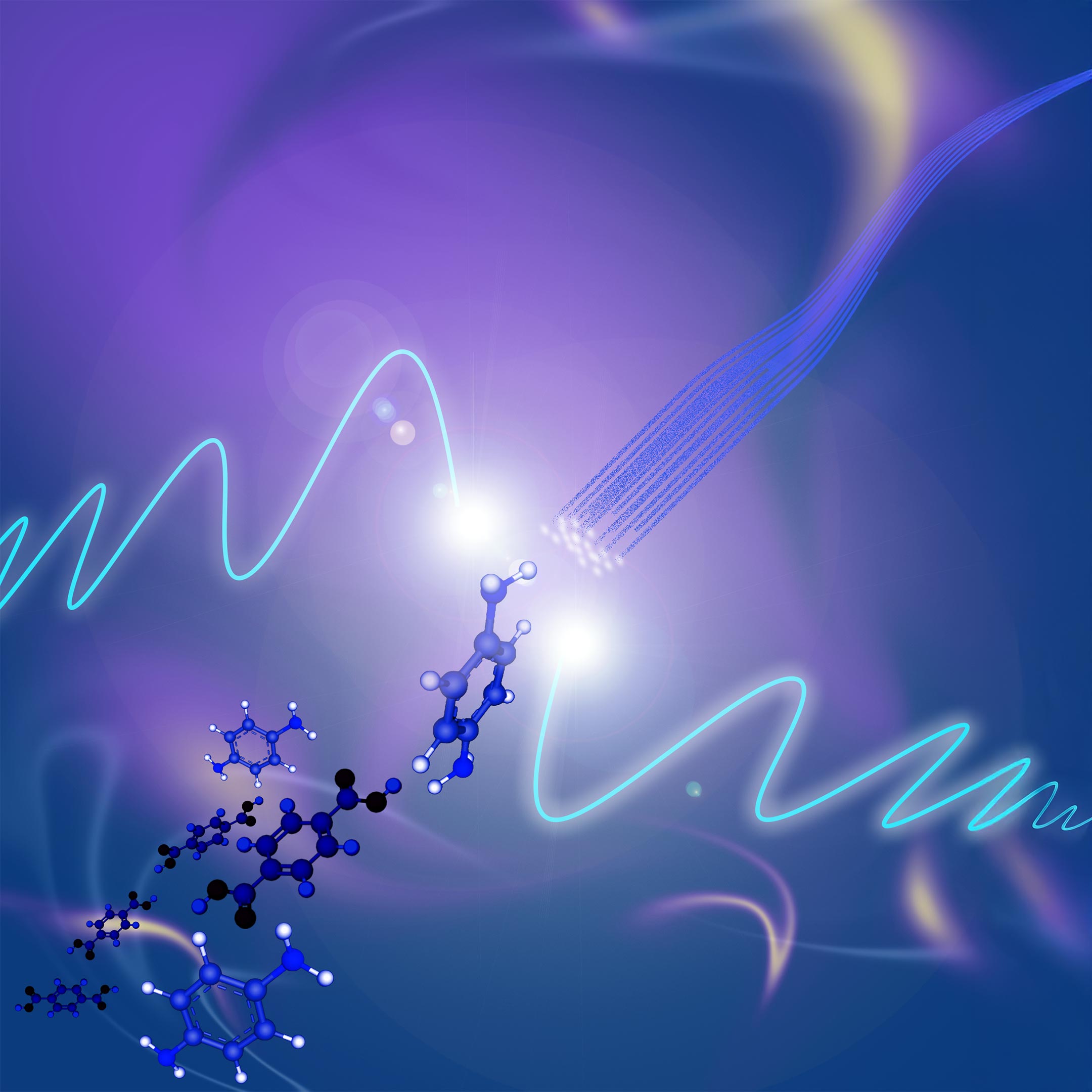
    Depolymerization of Aramid Fibers
    This is an artistic representation of the depolymerization of aramid fibers. Credit: Dr. Dina Maniar, University of Groningen, edited

    Aramid fibers like Kevlar and Twaron are incredibly strong but notoriously difficult to recycle — until now.

    Researchers have pioneered a microwave-assisted chemical process that efficiently breaks down aramid polymers without the need for harsh solvents. Unlike traditional methods that are slow and require extreme conditions, this technique achieves a 96% conversion in just 15 minutes.

    Revolutionizing Aramid Recycling

    Twaron and Kevlar are well-known brands of aramid fibers, materials that are as strong as steel but much lighter. These high-performance fibers are used in bulletproof vests, heavy-duty ropes, and durable car tires. However, their extreme strength comes with a major challenge — they are notoriously difficult to recycle.

    A team of polymer scientists from the University of Groningen and NHL Stenden University of Applied Sciences in the Netherlands, in collaboration with the Dutch company Teijin Aramid, has developed an innovative microwave-assisted chemical recycling process. Their breakthrough was detailed on February 21 in the Journal of the American Chemical Society.

    Efficient Chemical Recycling of Aramid Fibers Graphical Abstract
    Graphical abstract of the paper describing efficient chemical recycling of aramid fibers. Credit: University of Groningen / JACS

    Challenges of Traditional Recycling

    Aramid fibers are made from poly(p-phenylene terephthalamide) (PPTA). Existing recycling methods fall into two main categories: mechanical and chemical. Mechanical recycling degrades the material’s quality, making it less useful for high-performance applications. Chemical recycling can break aramid down into its building blocks, but traditional methods require organic solvents, high temperatures, and extended processing times.

    The new method uses a microwave reactor to speed up the depolymerization process at lower temperatures — without the need for harmful organic solvents. This approach achieves an impressive 96% conversion rate in just 15 minutes, offering a more efficient and sustainable way to recycle aramid fibers.

    Joël Banninga
    This is Joël Banninga, first author of the JACS paper describing efficient chemical recycling of aramid fibers. Credit: University of Groningen

    A Step Toward Sustainable Industry

    “Given the $2.9 billion aramid fibers market, this process could contribute to more sustainable material management and support closed-circle recycling initiatives in the industry,” says Katja Loos, Professor of Macromolecular Chemistry and corresponding author of the JACS paper. In order to better understand and improve the depolymerization process, more research needs to be done in collaboration with Teijin Aramid.

    Reference: “Rapid Microwave-Assisted Chemical Recycling of Poly(p-Phenylene Terephthalamide)” by Joël Benninga, Bert Gebben, Rudy Folkersma, Vincent S. D. Voet and Katja Loos, 21 February 2025, Journal of the American Chemical Society.
    DOI: 10.1021/jacs.4c17791

    This research is sponsored by the Closing Carbon Cycles with Renewable Amines (3CRA) program of the Netherlands Enterprise Agency, and was conducted within the hybrid research group “Biopolymers and Recycling Innovation” (HyBRit). HyBRit is a collaboration between the University of Groningen and NHL Stenden.

    Never miss a breakthrough: Join the SciTechDaily newsletter.
    Follow us on Google and Google News.

    Recycling University of Groningen
    Share. Facebook Twitter Pinterest LinkedIn Email Reddit

    Related Articles

    Revolutionary Process Turns Plastic Waste Into Valuable Chemicals

    Groundbreaking New Method Transforms Plastic Trash Into Chemistry Treasure

    New Recycling Method Could Make Polyethylene Waste a Thing of the Past

    New Reversible Glue Promises To Change How We Recycle

    From Cardboard Waste to Sustainable Foam: Revolutionizing Packaging

    Salt and “Baking” – Simple Combination Solves a Serious Environmental Problem

    Plastic Upcycling Breakthrough: New Waste-Free, Scalable Process

    New Technology Transforms Traditionally Unrecyclable Plastics Into Useful Chemicals

    An Unexpected New Way To Recycle – Scientists Transform Plastic Waste Into Soap

    Leave A Reply Cancel Reply

    • Facebook
    • Twitter
    • Pinterest
    • YouTube

    Don't Miss a Discovery

    Subscribe for the Latest in Science & Tech!

    Trending News

    Popular Sugar-Free Sweetener Linked to Liver Disease, Study Warns

    What Is Hantavirus? The Deadly Disease Raising Alarm Worldwide

    Scientists Just Discovered How the Universe Builds Monster Black Holes

    Scientists Unveil New Treatment Strategy That Could Outsmart Cancer

    A Simple Vitamin May Hold the Key to Treating Rare Genetic Diseases

    Scientists Think the Real Fountain of Youth May Be Hiding in Your Gut

    Ravens Don’t Follow Wolves, They Predict Them

    This Common Knee Surgery May Be Doing More Harm Than Good

    Follow SciTechDaily
    • Facebook
    • Twitter
    • YouTube
    • Pinterest
    • Newsletter
    • RSS
    SciTech News
    • Biology News
    • Chemistry News
    • Earth News
    • Health News
    • Physics News
    • Science News
    • Space News
    • Technology News
    Recent Posts
    • Popular Supplement Ingredient Linked to Shorter Lifespan in Men
    • Scientists May Have Found a Way To Repair Nerve Damage in Multiple Sclerosis
    • GLP-1 Weight Loss Linked To Dramatically Lower Risk of Sleep Apnea, Kidney Disease and More
    • Scientists Uncover the Surprising Source of Strange Clouds Near the Milky Way’s Supermassive Black Hole
    • This Dazzling Green Snake Was Hiding in Plain Sight for Decades
    Copyright © 1998 - 2026 SciTechDaily. All Rights Reserved.
    • Science News
    • About
    • Contact
    • Editorial Board
    • Privacy Policy
    • Terms of Use

    Type above and press Enter to search. Press Esc to cancel.