

In the shadowy depths of the ocean, sharks, rays, and ghostly chimaeras face a growing peril from the rise of deep-sea mining.
New research reveals that 30 species, many already endangered, inhabit regions slated for mineral extraction on the seafloor. The disruption of delicate habitats, from egg-laying nurseries to sediment-sensitive ecosystems, could push some species closer to extinction before scientists have even fully studied them.
Sharks, Rays, and Ghost Sharks at Risk From Deep-Sea Mining
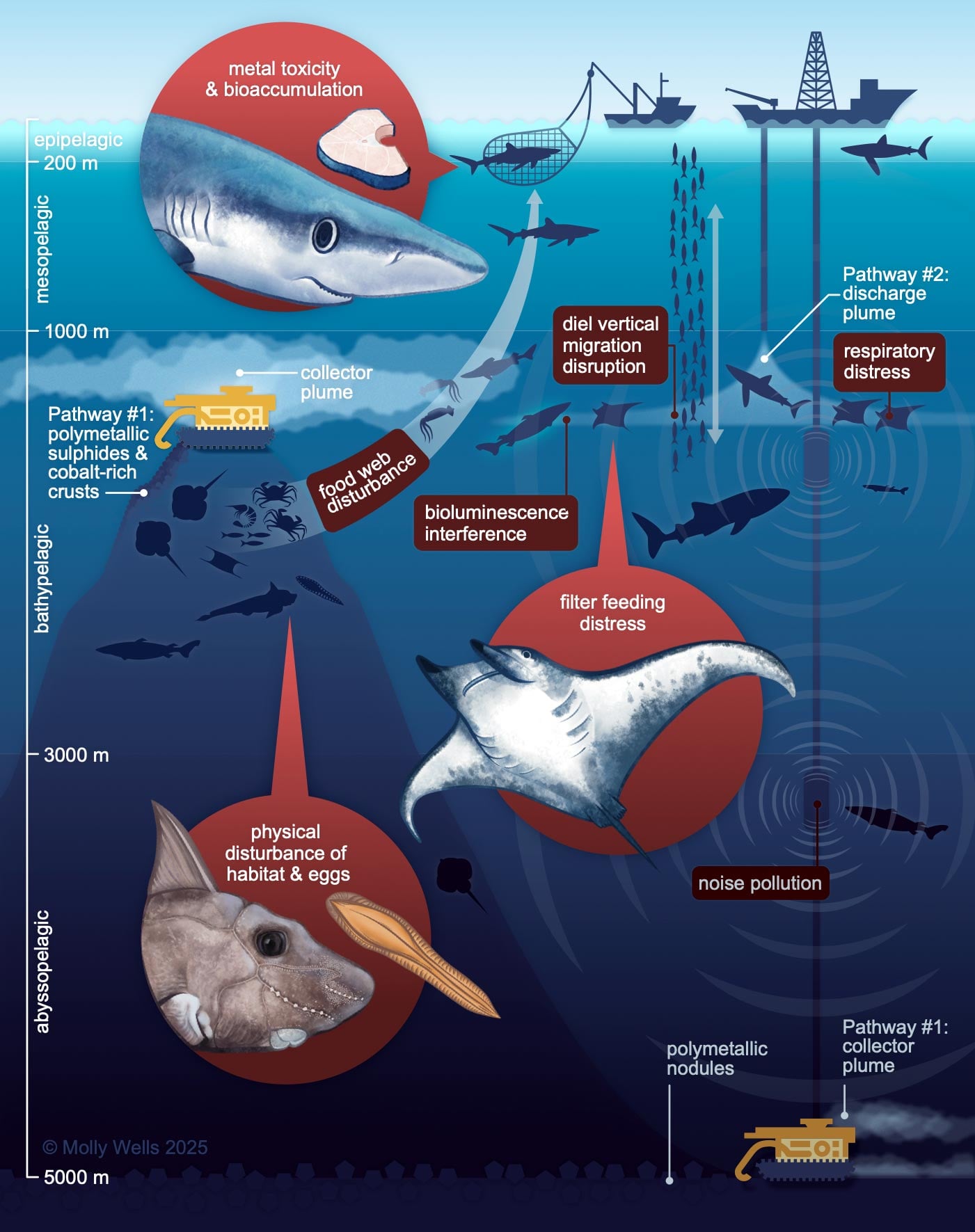
The habitats of thirty different species of sharks, rays, and chimaeras (also known as ghost sharks) intersect with areas where deep-sea mining operations are being proposed, according to new research published in Current Biology by oceanographers at the University of Hawai‘i at Mānoa. Nearly two-thirds of these species are already classified as threatened due to human activities. Deep-sea mining, which disturbs the seafloor and releases massive plumes of sediment into the surrounding waters, could further increase their risk of extinction.
“Deep-sea mining is a new potential threat to this group of animals which are both vital in the ocean ecosystem and to human culture and identity,” said Aaron Judah, lead author of the study and oceanography graduate student in the UH Mānoa School of Ocean and Earth Science and Technology (SOEST). “By identifying and calling attention to this threat and recommending potential conservation pathways, I hope we will be better positioned to support healthy shark, ray, and chimaera populations into the future.”
Mapping Species Overlap With Mining Zones
To examine the potential risks, Judah worked with an international team of experts to compare global maps of shark and ray habitats produced by the IUCN Shark Specialist Group with the deep-sea mining contract and reserve areas designated by the International Seabed Authority. The analysis also incorporated life history details such as reproductive behavior and diving depth to assess each species’ level of vulnerability. For instance, skates and chimaeras lay their eggs directly on the seafloor, meaning mining vehicles could damage or destroy their nursery grounds.
The study included both well-known species, like whale sharks, manta rays, and the elusive megamouth shark, as well as lesser-known deep-sea species such as the pygmy shark, chocolate skate, and point-nosed chimaera. These deep-sea chimaeras belong to a distinct group of cartilaginous fishes related to sharks and rays, often referred to as ghost sharks.
The researchers concluded that 30 species could be exposed to mining-related sediment plumes, and 25 of these might also experience direct habitat disruption on the seafloor. Because many of these animals occupy multiple depth zones or make deep dives, mining activities may affect more than half of the total depth range for 17 of the identified species.
The Clarion-Clipperton Zone in Focus
Deep-sea mining is set to potentially occur in the Clarion-Clipperton Zone, which is a large abyssal plain area that spans from the waters around Hawai‘i into the eastern Pacific Ocean. To make the best management decisions, the potential impacts on marine life and the communities that depend on them must be known.
“Sharks and their relatives are the second most threatened vertebrate group on the planet, mostly from overfishing,” said Jeff Drazen, study senior author and professor of Oceanography at SOEST. “Because of their vulnerability, they should be considered in ongoing discussions of the environmental risks from deep-sea mining, and those responsible for monitoring their health should be aware that mining could pose an additional risk.”
The authors offer a number of recommendations to improve conservation of these species under the footprint of mining, such as establishing monitoring programs, including them in environmental impact assessments, and creating protected areas. These recommendations could be adopted by the International Seabed Authority in their regulations for creating environmental impact assessments, or by contractors in executing scientific baseline assessments.
Hawai‘i Ecosystems Could Be Indirectly Affected
“Many of the shark species identified in the analysis are highly mobile and can move across wide swaths of ocean,” said Judah. “Given their mobility and the proximity of Hawai’i to the areas allocated for mining, impacts in these areas may stretch indirectly to ecosystems near the island chain.”
Judah continues to research and report species range extensions for animals not included in the initial assessment, which may add additional species to this group of animals at risk from mining impacts.
Reference: “Deep-sea mining risks for sharks, rays, and chimaeras” by Aaron B. Judah, Christopher G. Mull, Nicholas K. Dulvy, Brittany Finucci, Victoria E. Assad and Jeffrey C. Drazen, 2 October 2025, Current Biology.
DOI: 10.1016/j.cub.2025.09.019
Never miss a breakthrough: Join the SciTechDaily newsletter.
Follow us on Google and Google News.
2 Comments
Well i guess man is just hell bent on destroying this earth
Surah Al Qiyamah
◑ ❝Alam Ya Kunu Nutfataan mim Maniyum Yumna○Summa Kana Alaqotaan Fa Kholaqoqa Fasawwa.❞
Surah Al-Alaq
◑ ❝Kholaqol Insana Min Alaq.❞
Surah An-Najiat
◑❝Was Sabiqoti Sabqo❞
Surah Al-Yaasin
◑❝ Innaka la Minal Moorsaleen❞