
Close Menu
    Facebook X (Twitter) Instagram
    SciTechDaily
    • Biology
    • Chemistry
    • Earth
    • Health
    • Physics
    • Science
    • Space
    • Technology
    Facebook X (Twitter) Pinterest YouTube RSS
    SciTechDaily
    Home»Health»Muscle Mass and Chronic Kidney Disease
    Health

    Muscle Mass and Chronic Kidney Disease

    By Jim Shelton, Yale UniversityNovember 10, 2014No Comments2 Mins Read
    Facebook Twitter Pinterest Telegram LinkedIn WhatsApp Email Reddit
    Share
    Facebook Twitter LinkedIn Pinterest Telegram Email Reddit
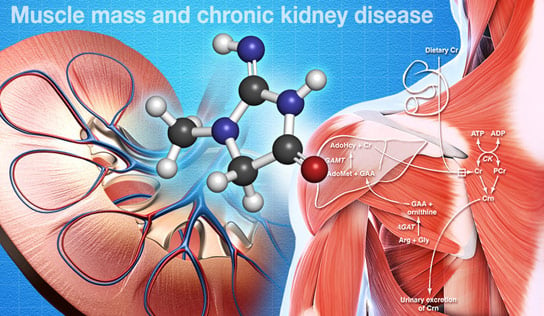
    Muscle Mass is Not an Accurate a Predictor of Chronic Kidney Disease
    A recent Yale University study challenges the accuracy of muscle mass as a predictor for chronic kidney disease outcomes. Credit: Patrick Lynch

    A newly published study from Yale University reveals that muscle mass is not as accurate a predictor of chronic kidney disease outcomes as previously thought.

    In a study published online by the Clinical Journal of the American Society of Nephrology, researchers looked at data from 3,604 patients with chronic kidney disease. They checked for an association between CKD outcomes (death and dialysis) and a pair of factors related to muscle mass. Muscle mass has been shown to be predictive of these outcomes in other disease states.

    For the first factor, creatinine excretion in urine, doctors did find an association. Lower levels of urinary creatinine excretion were “strongly” associated with increased mortality and progression to end-stage renal disease.

    Yet when researchers looked at an even better indicator of muscle mass — bioelectrical impedance analysis, which estimates body fat — there was no association with worsening CKD.

    “There was nothing there. This suggests it is not just about muscle mass,” said Dr. F. Perry Wilson, a Yale nephrologist and assistant professor at Yale School of Medicine. “This opens the door to more sophisticated interventions.”

    This was the first study to examine both factors at the same time. “This presents something of a paradigm shift in how we should think of urine creatinine,” Wilson said. “In essence, it’s telling us more than we thought it was.”

    Wilson said the findings indicate that poor muscle quality may be the better prognosticator for CKD outcomes. “There’s a physiological function here we haven’t fully characterized yet,” he said.

    Reference: “Urinary Creatinine Excretion, Bioelectrical Impedance Analysis, and Clinical Outcomes in Patients with CKD: The CRIC Study” by F. Perry Wilson, Dawei Xie, Amanda H. Anderson, Mary B. Leonard, Peter P. Reese, Patrice Delafontaine, Edward Horwitz, Radhakrishna Kallem, Sankar Navaneethan, Akinlolu Ojo, Anna C. Porter, James H. Sondheimer, H. Lee Sweeney, Raymond R. Townsend, Harold I. Feldman and the CRIC Study Investigators, 5 December 2014, Clinical Journal of the American Society of Nephrology.
    DOI: 10.2215/​CJN.03790414

    Never miss a breakthrough: Join the SciTechDaily newsletter.
    Follow us on Google and Google News.

    Disease Muscle Nephrology Yale University
    Share. Facebook Twitter Pinterest LinkedIn Email Reddit

    Related Articles

    New Treatments for Pulmonary Arterial Hypertension

    Unique Drug Combinations Show Positive Results in Fighting Late-Stage Melanoma

    New Model for Vaccination Against Genital Herpes

    Ketamine Produces Rapid Antidepressant Responses

    New Class of Proteins Inhibit HIV Infection in Cell Cultures

    New Antibody Drug Boosts the Immune System’s Capacity to Fight Cancer

    Intensive Glycemic Control Does Not Definitively Reduce the Risk of Impaired Kidney Function

    Obese Children with Genetic Variants Susceptible to Fatty Liver Disease

    Ticks, Lyme Disease and Public Health

    Leave A Reply Cancel Reply

    • Facebook
    • Twitter
    • Pinterest
    • YouTube

    Don't Miss a Discovery

    Subscribe for the Latest in Science & Tech!

    Trending News

    Scientists Uncover Potential Brain Risks of Popular Fish Oil Supplements

    Scientists Discover a Surprising Way To Make Bread Healthier and More Nutritious

    After 60 Years, Scientists Uncover Unexpected Brain Effects of Popular Diabetes Drug Metformin

    New Research Uncovers Hidden Side Effects of Popular Weight-Loss Drugs

    Scientists Rethink Extreme Warming After Surprising Ocean Discovery

    Landmark Study Links Never Marrying to Significantly Higher Cancer Risk

    Researchers Discover Unknown Beetle Species Just Steps From Their Lab

    Largest-Ever Study Finds Medicinal Cannabis Ineffective for Anxiety, Depression, PTSD

    Follow SciTechDaily
    • Facebook
    • Twitter
    • YouTube
    • Pinterest
    • Newsletter
    • RSS
    SciTech News
    • Biology News
    • Chemistry News
    • Earth News
    • Health News
    • Physics News
    • Science News
    • Space News
    • Technology News
    Recent Posts
    • Scientists Discover Hidden Pathway Inside Catalysts That Defies Decades of Assumptions
    • Scientists Finally Crack Decades-Old Mystery of “Breathing” Lasers
    • “Like Liquid Metal”: Scientists Create Strange Shape-Shifting Material
    • Early Warning Signals of Esophageal Cancer May Be Hiding in Plain Sight
    • Researchers Have Discovered a THC-Free Cannabis Compound That May Replace Opioids
    Copyright © 1998 - 2026 SciTechDaily. All Rights Reserved.
    • Science News
    • About
    • Contact
    • Editorial Board
    • Privacy Policy
    • Terms of Use

    Type above and press Enter to search. Press Esc to cancel.