
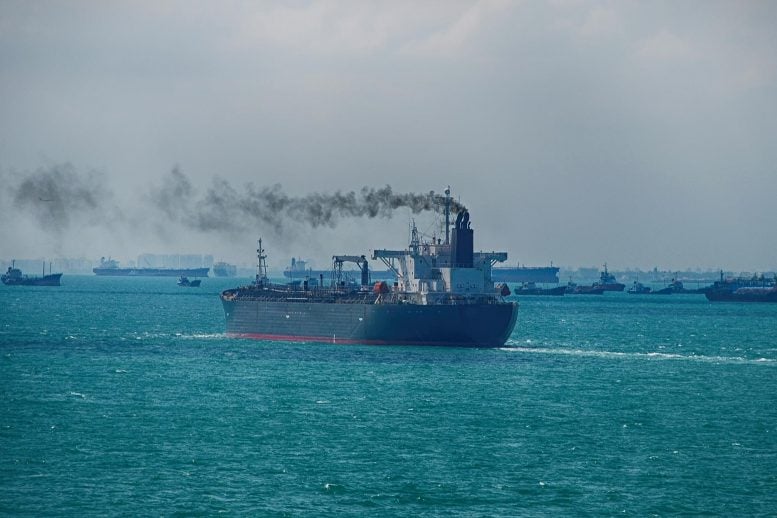
New technique unexpectedly finds that black carbon in rivers and oceans differs significantly.
In understanding the global carbon cycle, “black carbon” — decay-resistant carbon molecules altered by exposure to fire or combustion — has long been presumed to originate on land and work its way to the ocean via rivers and streams. An unexpected finding published today (November 7, 2019) in Nature Communications challenges that long-held assumption and introduces a tantalizing new mystery: If oceanic black carbon is significantly different from the black carbon found in rivers, where did it come from?
“The signature of oceanic dissolved black carbon is very different from that of riverine dissolved black carbon, raising a host of fundamental questions,” said Sasha Wagner, a Rensselaer Polytechnic Institute assistant professor of earth and environmental sciences and lead author of the research. “Are there other sources of dissolved black carbon? Is it being degraded away in rivers, sequestered in sediments, or altered beyond recognition before it reaches the open ocean? Is what we’ve measured actually fire-derived?”
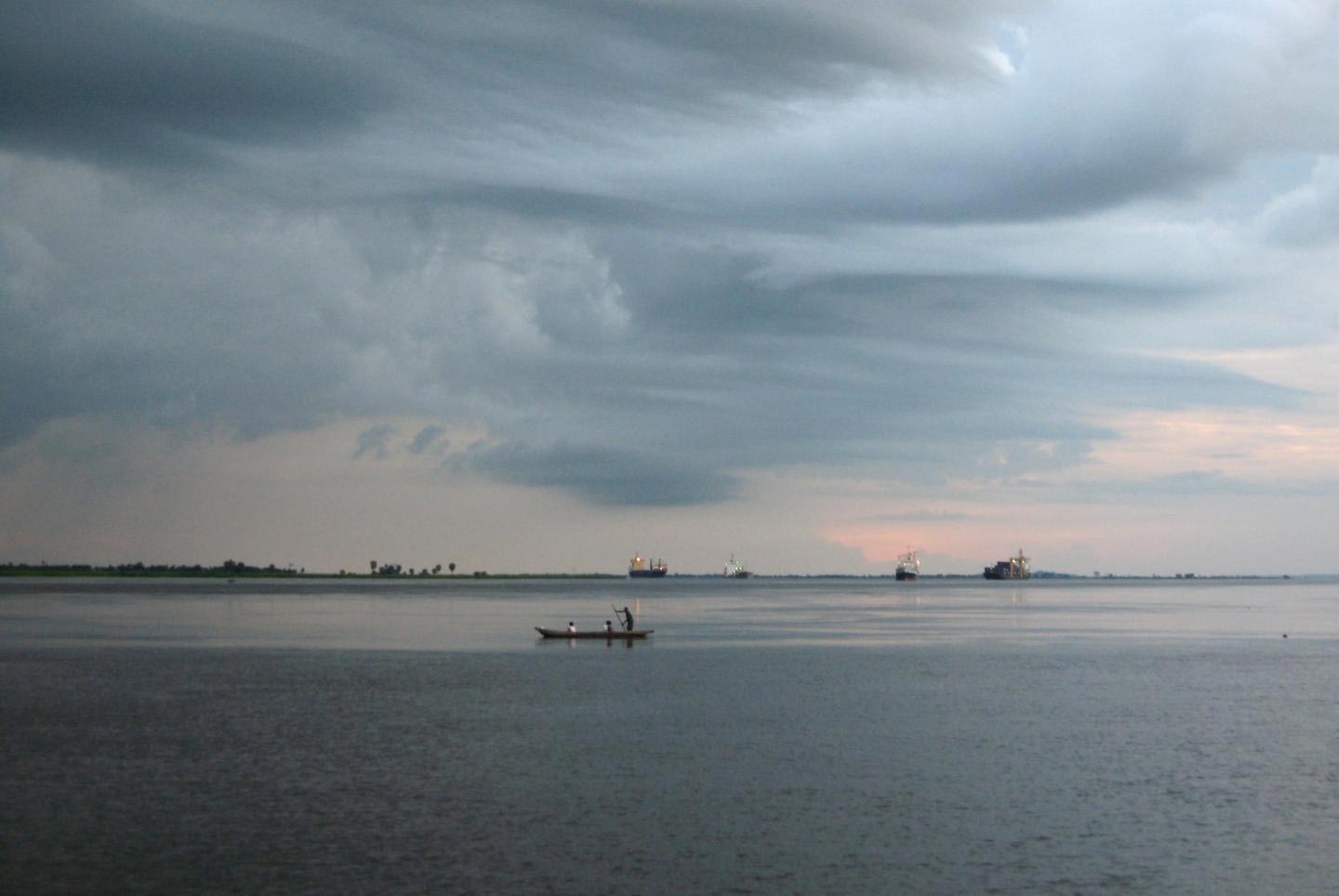
By calling the origin of oceanic black carbon into question, the research published in Nature Communications actually compounds a puzzle that Wagner has been exploring. Radiocarbon dating shows dissolved black carbon in the deep oceans to be as much as 20,000 years old, while calculations estimate that rivers could replace the entire amount of oceanic dissolved black carbon in about 500 years. If so much dissolved black carbon has been moving downriver to the ocean, apparently for millennia, why don’t researchers find more of it?
In exploring such questions, Wagner developed a new technique for analyzing black carbon. Sources of black carbon have traditionally been tracked using a ratio between molecular proxies. But, given that the ratio is easily altered with exposure to sunlight, the method is unreliable when used in aquatic environments. Wagner’s new approach incorporates carbon isotopes — variants of carbon that contain differing numbers of neutrons — to discern different sources of dissolved black carbon. By performing stable carbon isotope analysis on the individual proxy molecules, it becomes possible to track terrestrial sources of black carbon as it moves from soils to the ocean.
In her newly published research, Wagner used the technique to ask a broad question, comparing samples taken from the Atlantic and Pacific Oceans with large rivers including the Amazon, Mississippi, Congo, and two Arctic Rivers.
The results show that oceanic dissolved black carbon contains a significantly higher proportion of carbon-13 (an isotope of carbon-12 that has one additional neutron) than dissolved black carbon found in global rivers.
“The values are really different, and while we’re still in the very early days of using this method, that result tells us that the black carbon in the ocean isn’t coming from rivers,” Wagner said. “Riverine dissolved black carbon isn’t reaching the oceans, and that raises a lot of exciting alternatives we should explore.”
“The use of isotope ratios to discern the separate origins of black carbon from lakes and streams from that found in the sea has disrupted some long-held beliefs in the scientific community,” said Curt Breneman, dean of the Rensselaer School of Science. “Sasha Wagner’s innovative approach to this compelling question is a great example of how faculty members at Rensselaer keep pushing back the frontiers of science forward by asking hard questions and challenging the status quo.”
###
Reference: “Isotopic composition of oceanic dissolved black carbon reveals non-riverine source” by Sasha Wagner, Jay Brandes, Robert G. M. Spencer, Kun Ma, Sarah Z. Rosengard, Jose Mauro S. Moura and Aron Stubbins, 7 November 2019, Nature Communications.
DOI: 10.1038/s41467-019-13111-7
“Isotopic composition of oceanic dissolved black carbon reveals non-riverine source” was supported by the National Science Foundation (Chemical Oceanography #1756812, #1756733, and #1635618; Office of Polar Programs #1500169). Wagner was joined in the research by Jay Brandes and Kun Ma at the University of Georgia (Skidaway Institute of Oceanography), Robert G.M. Spencer at Florida State University, Sarah Z. Rosengard at the University of British Columbia, Jose Mauro S. Moura at the Federal University of Western Para in Brazil, and Aron Stubbins at Northeastern University.
Never miss a breakthrough: Join the SciTechDaily newsletter.
Follow us on Google and Google News.
1 Comment
heavier isotopes of carbon or other elements could be due to enrichment by decaying radioactive elements in the planet’s interior.