
Close Menu
    Facebook X (Twitter) Instagram
    SciTechDaily
    • Biology
    • Chemistry
    • Earth
    • Health
    • Physics
    • Science
    • Space
    • Technology
    Facebook X (Twitter) Pinterest YouTube RSS
    SciTechDaily
    Home»Technology»NASA Blasts X-59 Quiet Supersonic Mini Jet to Mach 1.4 in Tokyo Tunnel
    Technology

    NASA Blasts X-59 Quiet Supersonic Mini Jet to Mach 1.4 in Tokyo Tunnel

    By NASAJuly 13, 20251 Comment3 Mins Read
    Facebook Twitter Pinterest Telegram LinkedIn WhatsApp Email Reddit
    Share
    Facebook Twitter LinkedIn Pinterest Telegram Email Reddit
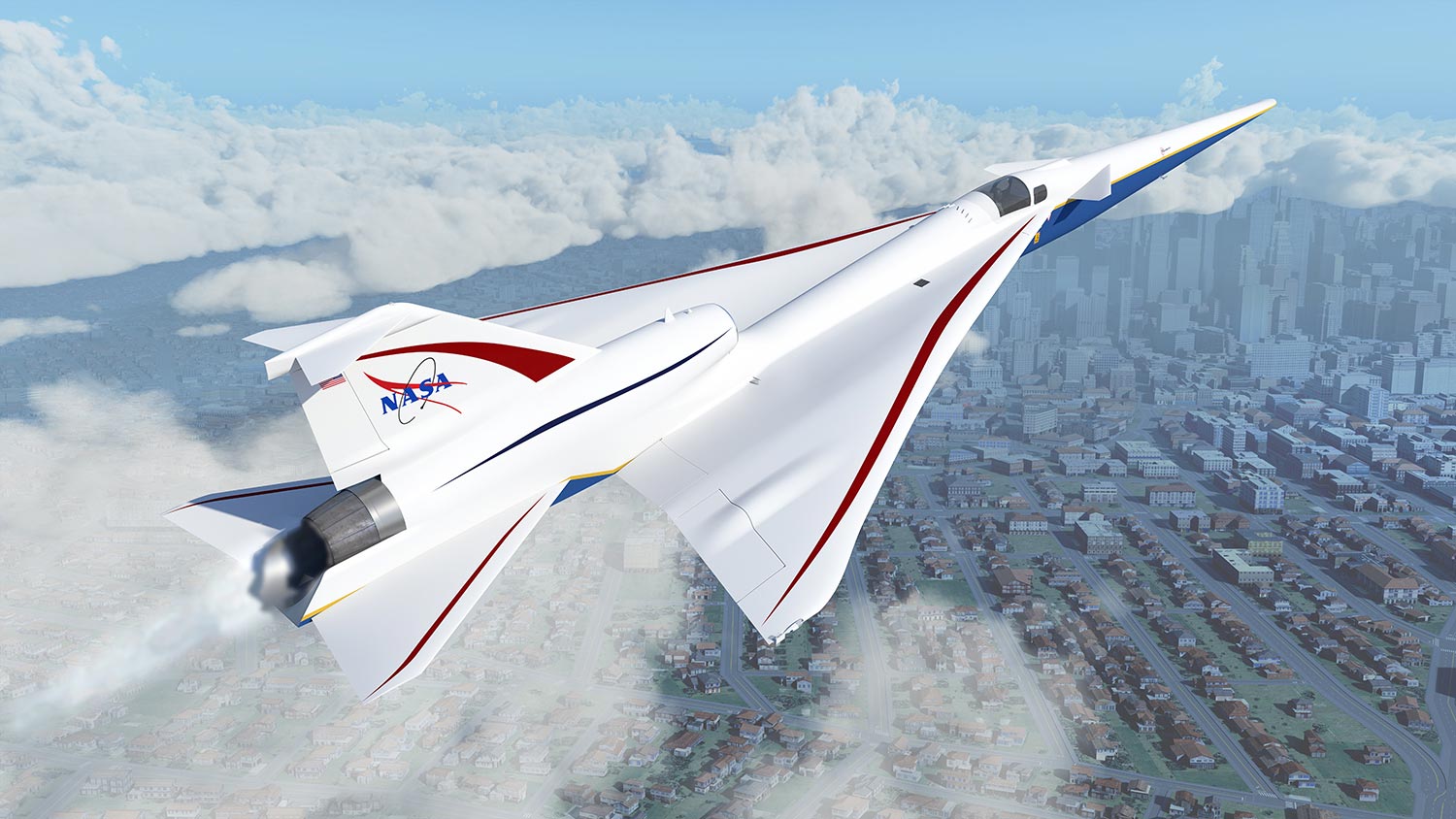
    NASA X-59 Quiet SuperSonic Technology Aircraft
    NASA’s X-59 Quiet SuperSonic Technology aircraft, or QueSST, is designed to fly faster than the speed of sound without producing a loud, disruptive sonic boom, which is typically heard on the ground below aircraft flying at such speeds. Instead, with the X-59, people on the ground will hear nothing more than a quiet sonic thump – if they hear anything at all.Credit: NASA / Joey Ponthieux

    NASA and JAXA fired a hand-sized X-59 model through a Mach 1.4 wind tunnel, gathering proof that its needle-nose and tailored wings can scatter shock waves into a muted “thump.”

    The data validate computer predictions, setting the stage for the full-scale jet’s first flight and Quesst’s mission to rewrite the rules of supersonic travel without rattling communities below.

    Supersonic Noise Test Milestone

    NASA and the Japanese Aerospace Exploration Agency (JAXA) recently placed a scaled-down version of the X-59 experimental jet inside a supersonic wind tunnel in Chofu, Japan to measure how much noise might reach listeners on the ground.

    The experiment marked a key step for NASA’s one-of-a-kind X-59, which aims to break the sound barrier without producing the ear-shattering sonic boom typical of supersonic flight.

    Because the sound that reaches the ground is tied to the plane’s pressure signature, understanding that acoustic footprint is essential.

    X-59 Model Tested in Japanese Supersonic Wind Tunnel
    Here you see the X-59 scaled model inside the JAXA supersonic wind tunnel during critical tests related to sound predictions. Credit: JAXA

    Scaled Model Wind-Tunnel Insights

    The full-size X-59 stretches 99.7 feet long with a wingspan of 29.7 feet, yet JAXA’s tunnel measures just over 3 feet on each side.

    To fit the tunnel, engineers built a model only 1.62 percent of the aircraft’s actual size—about 19 inches nose to tail—and exposed it to airflow matching the jet’s planned cruising speed of Mach 1.4 (approximately 925 miles per hour).

    Data from these trials allows NASA researchers to compare real-world results with their Computational Fluid Dynamics predictions, which map how air will flow around the aircraft.

    Understanding Shock-Wave Quieting

    This marked the third round of wind tunnel tests for the X-59 model, following a previous test at JAXA and at NASA’s Glenn Research Center in Ohio.

    The data will help researchers understand the noise level that will be created by the shock waves the X-59 produces at supersonic speeds.

    The shock waves from traditional supersonic aircraft typically merge together, producing a loud sonic boom. The X-59’s unique design works to keep shock waves from merging, which will result in a quieter sonic thump.

    Toward Quiet Supersonic Travel

    The X-59 was built in Palmdale, California at contractor Lockheed Martin Skunk Works and is undergoing final ground tests en route to its historic first flight this year.

    NASA’s Quesst mission aims to help change the future of quiet supersonic travel using the X-59. The experimental aircraft allows the Quesst team to gather public feedback on acceptable sound levels for quiet supersonic flight.

    Through Quesst’s development of the X-59, NASA will deliver design tools and technology for quiet supersonic airliners that will achieve the high speeds desired by commercial operators without creating disturbance to people on the ground.

    Never miss a breakthrough: Join the SciTechDaily newsletter.
    Follow us on Google and Google News.

    Aviation JAXA NASA NASA X-59 Quesst Popular
    Share. Facebook Twitter Pinterest LinkedIn Email Reddit

    Related Articles

    NASA’s X-59 Quiet Supersonic Jet Reaches a Major Milestone

    On the Brink of Revolution: NASA’s Quiet Supersonic X-59 Moves Toward Maiden Flight

    NASA’s X-59 Quesst: Overturning the 50-Year-Old Supersonic Speed Limit

    Silencing Sonic Booms: NASA’s X-59 Quiet Supersonic Aircraft Passes Critical Milestone

    NASA X-59 Experimental Aircraft’s Quiet Revolution in Supersonic Flight

    Mach 1.4 in Stealth Mode: The Science Behind NASA’s X-59 Quiet Supersonic Aircraft

    NASA’s Quesst Mission: X-59 Quiet Supersonic Technology Aircraft Gets Its Tail

    NASA’s X-59 Quiet Supersonic Experimental Aircraft Arrives Back in California Following Critical Ground Tests

    Robonaut 2: A Robotic Space Station Crew Member

    1 Comment

    1. Robert Schreib on July 17, 2025 6:42 am

      What if they tweaked the jet exhaust of this, installed high-density aero-baffles, that makes it shoot out like a tapering corkscrew, in a MUCH LONGER, action/reaction straight line? Could that further reduce the sonic boom noise, and also improve the jet fuel mileage?

      Reply
    Leave A Reply Cancel Reply

    • Facebook
    • Twitter
    • Pinterest
    • YouTube

    Don't Miss a Discovery

    Subscribe for the Latest in Science & Tech!

    Trending News

    Artificial Sweeteners May Harm Future Generations, Study Suggests

    Splashdown! NASA Artemis II Returns From Record-Breaking Moon Mission

    What If Consciousness Exists Beyond Your Brain

    Scientists Finally Crack the 100-Million-Year Evolutionary Mystery of Squid and Cuttlefish

    Beyond “Safe Levels”: Study Challenges What We Know About Pesticides and Cancer

    Researchers Have Found a Dietary Compound That Increases Longevity

    Scientists Baffled by Bizarre “Living Fossil” From 275 Million Years Ago

    Your IQ at 23 Could Predict Your Wealth at 27, Study Finds

    Follow SciTechDaily
    • Facebook
    • Twitter
    • YouTube
    • Pinterest
    • Newsletter
    • RSS
    SciTech News
    • Biology News
    • Chemistry News
    • Earth News
    • Health News
    • Physics News
    • Science News
    • Space News
    • Technology News
    Recent Posts
    • What if Dark Matter Has Two Forms? Bold New Hypothesis Could Explain a Cosmic Mystery
    • Researchers Expose Hidden Chemistry of “Ore-Forming” Elements in Biology
    • Geologists Reveal the Americas Collided Earlier Than We Thought
    • 20x Difference: Study Reveals True Source of Airborne Microplastics
    • Scientists Uncover Hidden Force Powering Yellowstone’s Supervolcano
    Copyright © 1998 - 2026 SciTechDaily. All Rights Reserved.
    • Science News
    • About
    • Contact
    • Editorial Board
    • Privacy Policy
    • Terms of Use

    Type above and press Enter to search. Press Esc to cancel.