
Close Menu
    Facebook X (Twitter) Instagram
    SciTechDaily
    • Biology
    • Chemistry
    • Earth
    • Health
    • Physics
    • Science
    • Space
    • Technology
    Facebook X (Twitter) Pinterest YouTube RSS
    SciTechDaily
    Home»Space»NASA Conducts Massive SLS Rocket Booster Test for Artemis Mission to the Moon
    Space

    NASA Conducts Massive SLS Rocket Booster Test for Artemis Mission to the Moon

    By NASASeptember 3, 2020No Comments4 Mins Read
    Facebook Twitter Pinterest Telegram LinkedIn WhatsApp Email Reddit
    Share
    Facebook Twitter LinkedIn Pinterest Telegram Email Reddit
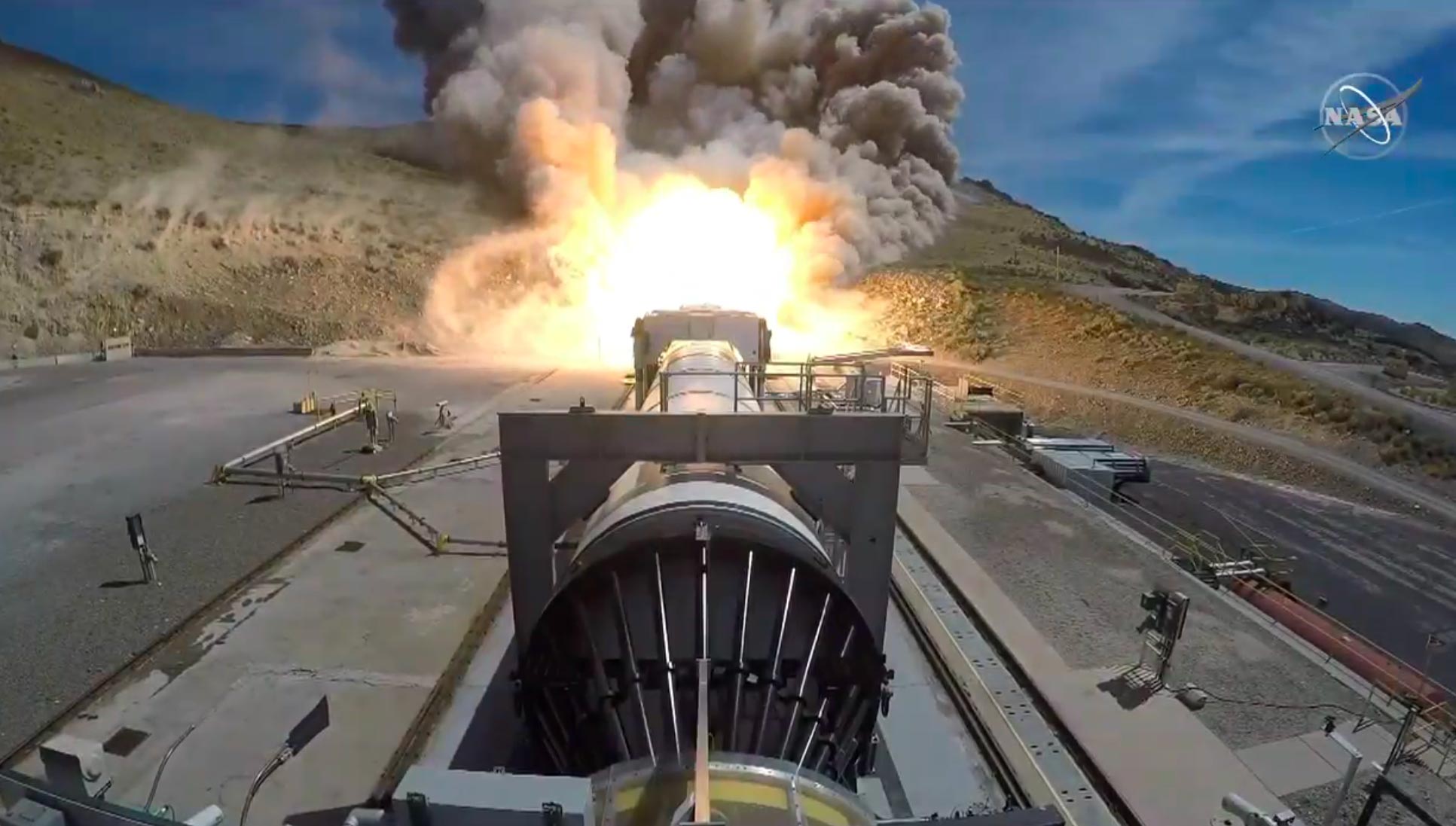
    SLS Booster Rocket Test Back
    Space Launch System (SLS) rocket boosters

    As NASA begins assembling the boosters for the Space Launch System (SLS) rocket that will power the first Artemis mission to the Moon, teams in Utah are evaluating materials and processes to improve rocket boosters for use on missions after Artemis III.

    NASA completed a full-scale booster test for NASA’s Space Launch System rocket in Promontory, Utah, on September 2. NASA and Northrop Grumman, the SLS booster lead contractor, will use data from the test to evaluate the motor’s performance using potential new materials and processes that can be incorporated into future boosters. NASA has a contract with Northrop Grumman to build boosters for future rocket flights.

    “Landing the first woman and the next man on the Moon is just the beginning of NASA’s Artemis Program,” said NASA Administrator Jim Bridenstine. “The SLS flight support booster firing is a crucial part of sustaining missions to the Moon.  NASA’s goal is to take what we learn living and working on the Moon and use it to send humans on the first missions to Mars.”

    For a little over two minutes — the same amount of time that the boosters power the SLS rocket during liftoff and flight for each Artemis mission — the five-segment flight support booster fired in the Utah desert, producing more than 3 million pounds of thrust.

    NASA and Northrop Grumman have previously completed three development motor tests and two qualification motor tests. Yesterday’s test, called Flight Support Booster-1 (FSB-1), builds on prior tests with the introduction of propellant ingredients from new suppliers for boosters on SLS rockets to support flights after Artemis III.
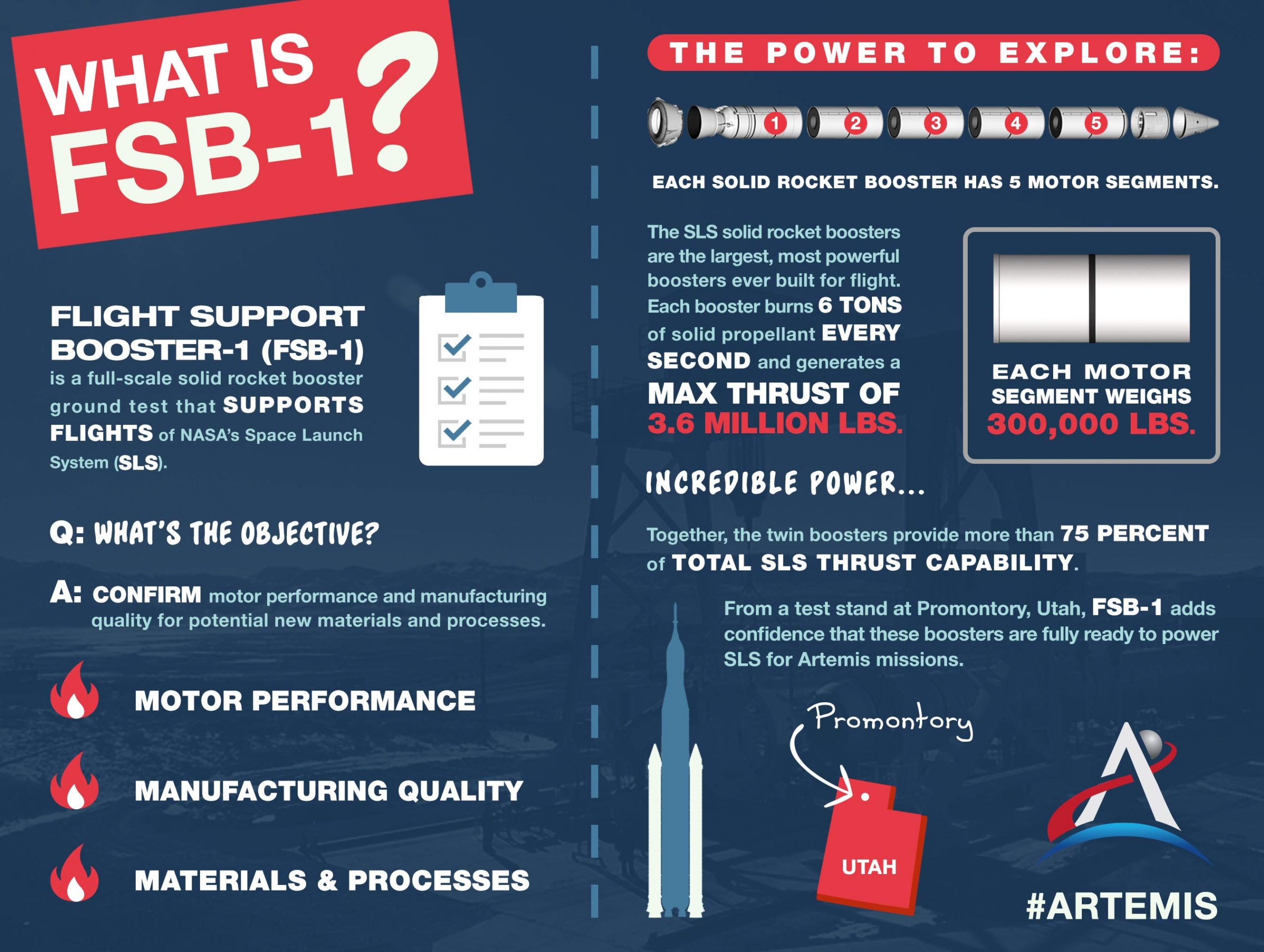
    SLS Flight Support Booster

    “NASA is simultaneously making progress on assembling and manufacturing the solid rocket boosters for the first three Artemis missions and looking ahead toward missions beyond the initial Moon landing,” said John Honeycutt, the SLS Program Manager at NASA’s Marshall Space Flight Center in Huntsville, Alabama. “Today marks the first flight support booster test to confirm the rocket motor’s performance using potential new materials for Artemis IV and beyond.”

    The SLS boosters are the largest, most powerful boosters ever built for flight. The flight support booster used in the test is the same size and has the same power as the flight version of a five-segment solid rocket booster used for NASA’s Artemis missions. The Artemis I boosters are currently being prepared for launch at NASA’s Kennedy Space Center in Florida.
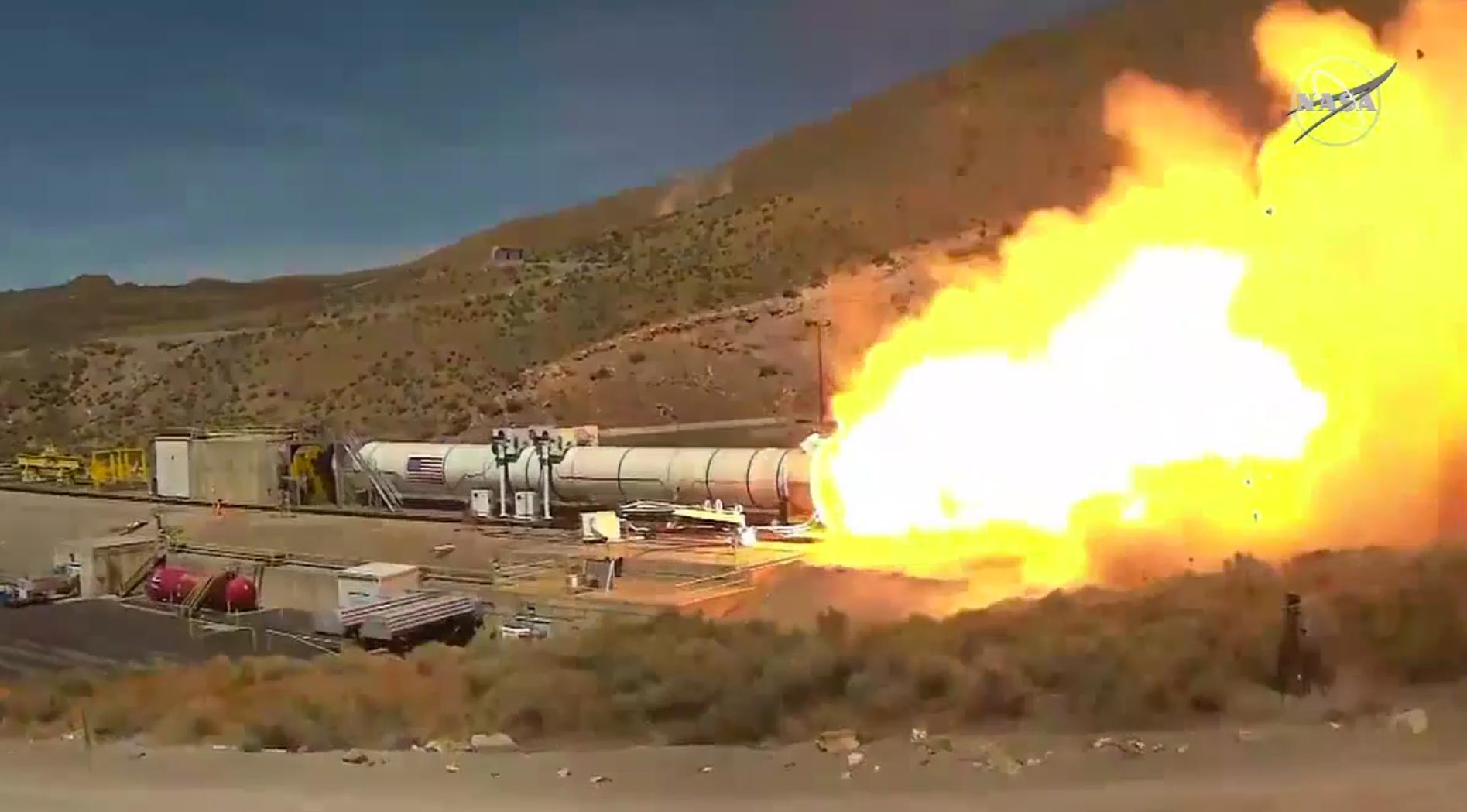
    Flight Support Booster 1 Test
    NASA and Northrop Grumman successfully complete the Flight Support Booster-1 (FSB-1) test in Promontory, Utah, on September 2. The full-scale booster firing was conducted with new materials and processes that may be used for NASA’s Space Launch System (SLS) rocket boosters. NASA and Northrop Grumman, the SLS boosters lead contractor, will use data from the test to evaluate the motor’s performance using potential new materials and processes for Artemis missions beyond the initial Moon landing in 2024.The SLS boosters are the largest, most powerful boosters ever built for flight. The two boosters on the rocket provide more than 75% of the thrust needed to launch NASA’s future deep space missions through NASA’s Artemis lunar program. Northrop Grumman is the lead contractor for the SLS boosters. Credit: NASA/Northrop Grumman

    “This flight support booster test is the first motor firing NASA and Northrop Grumman have completed since qualifying the booster design for the Space Launch System rocket,” said Bruce Tiller, SLS Boosters Office Manager at Marshall. “Full-scale booster tests are rare, so NASA tries to test multiple objectives at one time so we are highly confident that any changes we make to the boosters will still enable them to perform as expected on launch day.”

    NASA is working to land the first woman and next man on the Moon by 2024. The SLS rocket, Orion spacecraft, Gateway, and human landing system are part of NASA’s backbone for deep space exploration. The Artemis program is the next step in human space exploration as part of America’s broader Moon to Mars exploration approach. Experience gained at the Moon will enable humanity’s next giant leap: sending humans to Mars. SLS is the only rocket that can send Orion, astronauts and supplies to the Moon in a single mission.

    Never miss a breakthrough: Join the SciTechDaily newsletter.
    Follow us on Google and Google News.

    ARTEMIS Mission NASA Popular Space Launch System
    Share. Facebook Twitter Pinterest LinkedIn Email Reddit

    Related Articles

    NASA’s Engineering Marvel: Preparing the Gateway to the Moon

    Moonbound Majesty: Astronauts’ Inside Look at SLS, the Engine of Artemis Dreams

    NASA Tests Upgraded Artemis Moon Rocket Engines at 113% Power Level

    NASA’s Artemis I Moon Rocket Ready To Launch – How To Watch Live

    NASA Completes Artemis I Moon Rocket Test, Moves Forward Toward Launch

    NASA Artemis I Moon Rocket Test: SLS Fully Fueled for First Time Despite Leak

    NASA Conducts 2nd RS-25 Engine Hot Fire Test for World’s Most Powerful Rocket

    NASA Artemis Missions Set to Begin Next Year as SLS Rocket Costs Climb

    Massive SLS Rocket Test: NASA to Apply Millions of Pounds of Force to Try to Break Oxygen Tank Structure

    Leave A Reply Cancel Reply

    • Facebook
    • Twitter
    • Pinterest
    • YouTube

    Don't Miss a Discovery

    Subscribe for the Latest in Science & Tech!

    Trending News

    The Universe Is Expanding Too Fast and Scientists Can’t Explain Why

    “Like Liquid Metal”: Scientists Create Strange Shape-Shifting Material

    Early Warning Signals of Esophageal Cancer May Be Hiding in Plain Sight

    Common Blood Pressure Drug Shows Surprising Power Against Deadly Antibiotic-Resistant Superbug

    Scientists Uncover Dangerous Connection Between Serotonin and Heart Valve Disease

    Scientists Discover a “Protector” Protein That Could Help Reverse Hair Loss

    Bone-Strengthening Discovery Could Reverse Osteoporosis

    Scientists Uncover Hidden Trigger Behind Stem Cell Aging

    Follow SciTechDaily
    • Facebook
    • Twitter
    • YouTube
    • Pinterest
    • Newsletter
    • RSS
    SciTech News
    • Biology News
    • Chemistry News
    • Earth News
    • Health News
    • Physics News
    • Science News
    • Space News
    • Technology News
    Recent Posts
    • Scientists Overcome Major Quantum Bottleneck, Potentially Transforming Teleportation and Computing
    • Quantum Physics’ Strangest Problem May Hold the Key to Time Itself
    • Scientists Create “Liquid Gears” That Spin Without Touching
    • The Simple Habit That Could Help Prevent Cancer
    • Forgotten Medicinal Plant Shows Promise in Fighting Dangerous Superbugs
    Copyright © 1998 - 2026 SciTechDaily. All Rights Reserved.
    • Science News
    • About
    • Contact
    • Editorial Board
    • Privacy Policy
    • Terms of Use

    Type above and press Enter to search. Press Esc to cancel.