
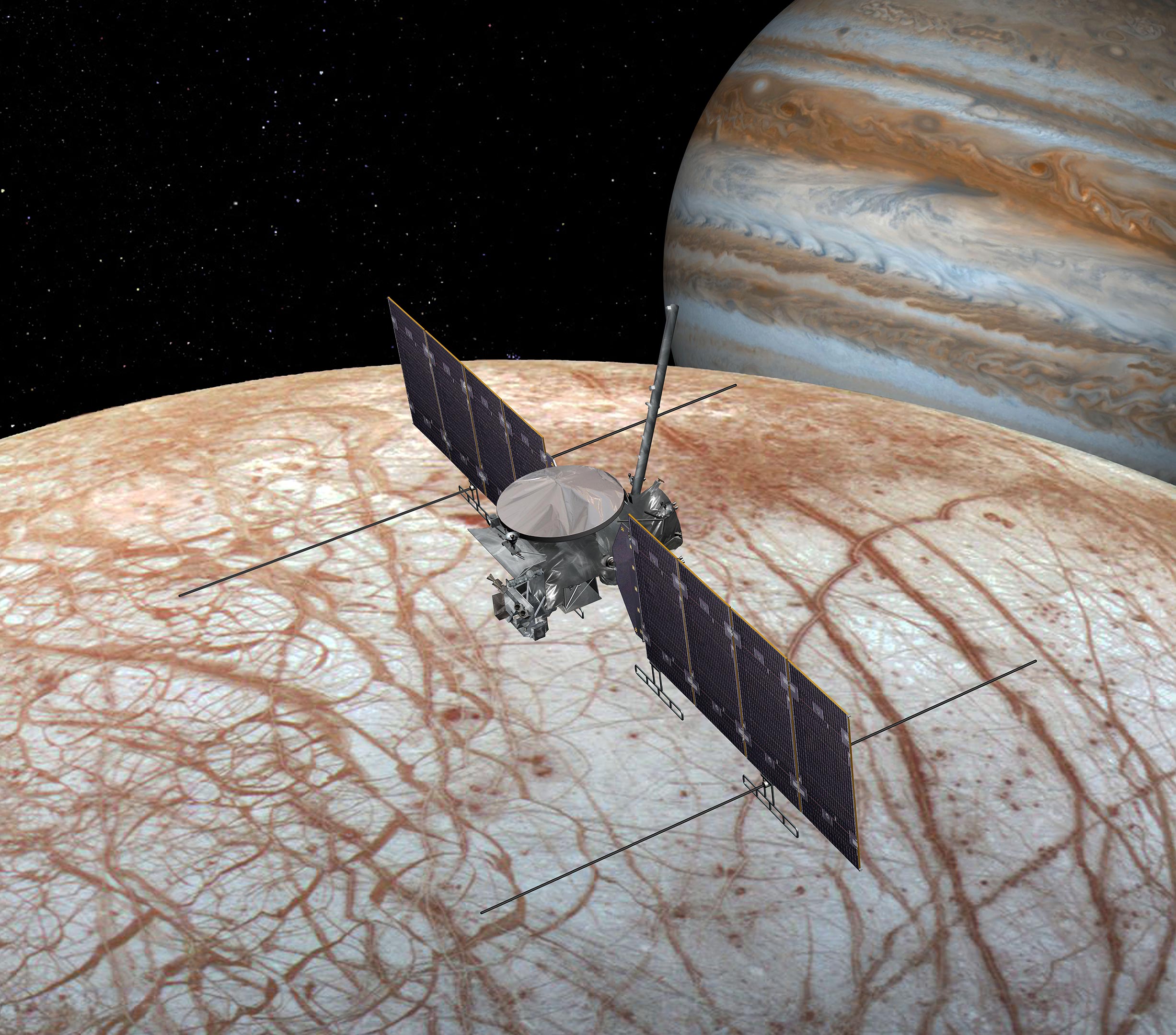
NASA’s Europa Clipper mission, set to launch in 2024, will journey 1.8 billion miles to Jupiter’s icy moon Europa to study its potential for supporting life.
The mission will utilize a high-gain antenna to communicate data back to Earth, exploring the moon’s atmosphere, ice crust, and subterranean ocean during approximately 50 flybys.
NASA Installs High Gain Antenna on Europa Clipper Spacecraft
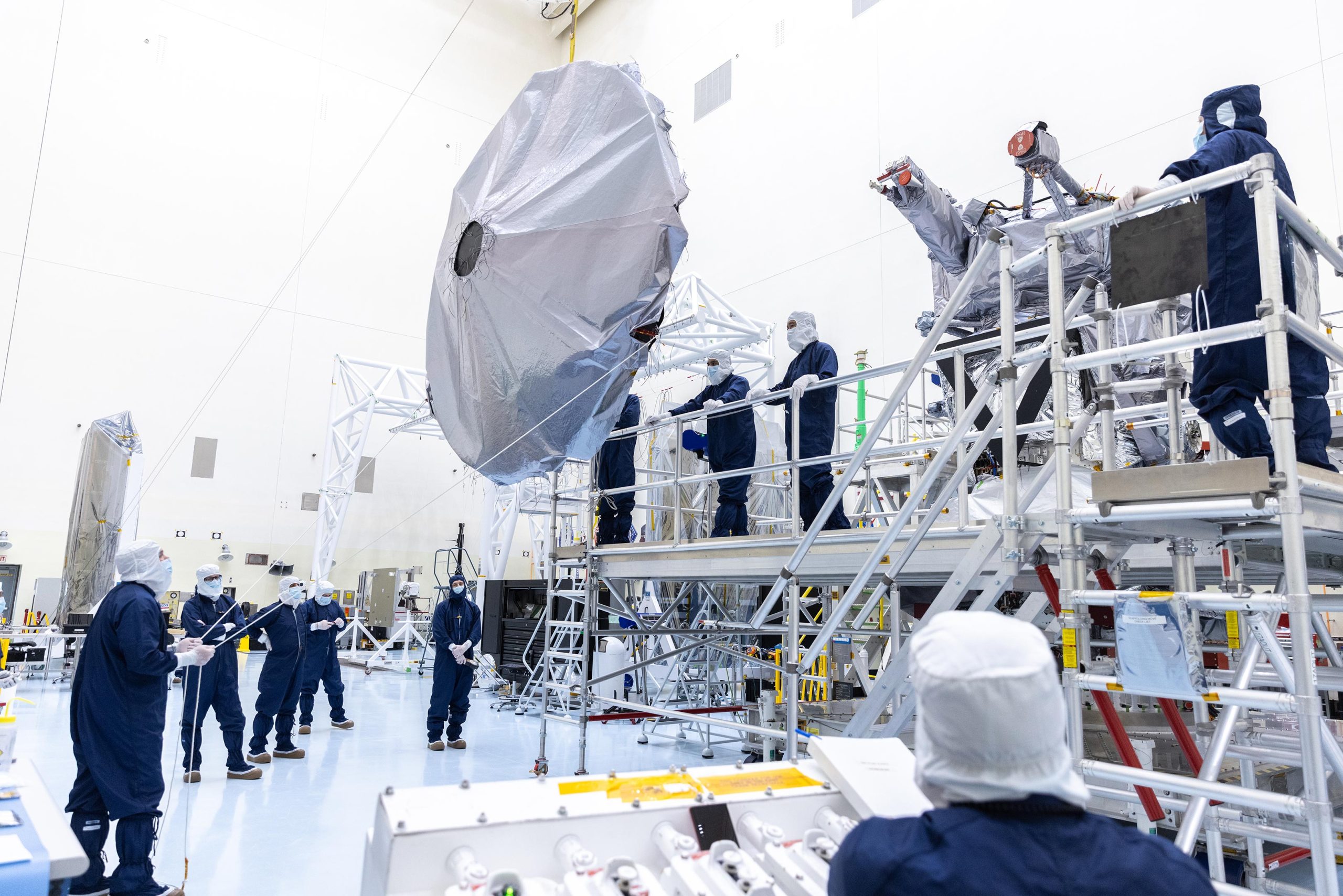
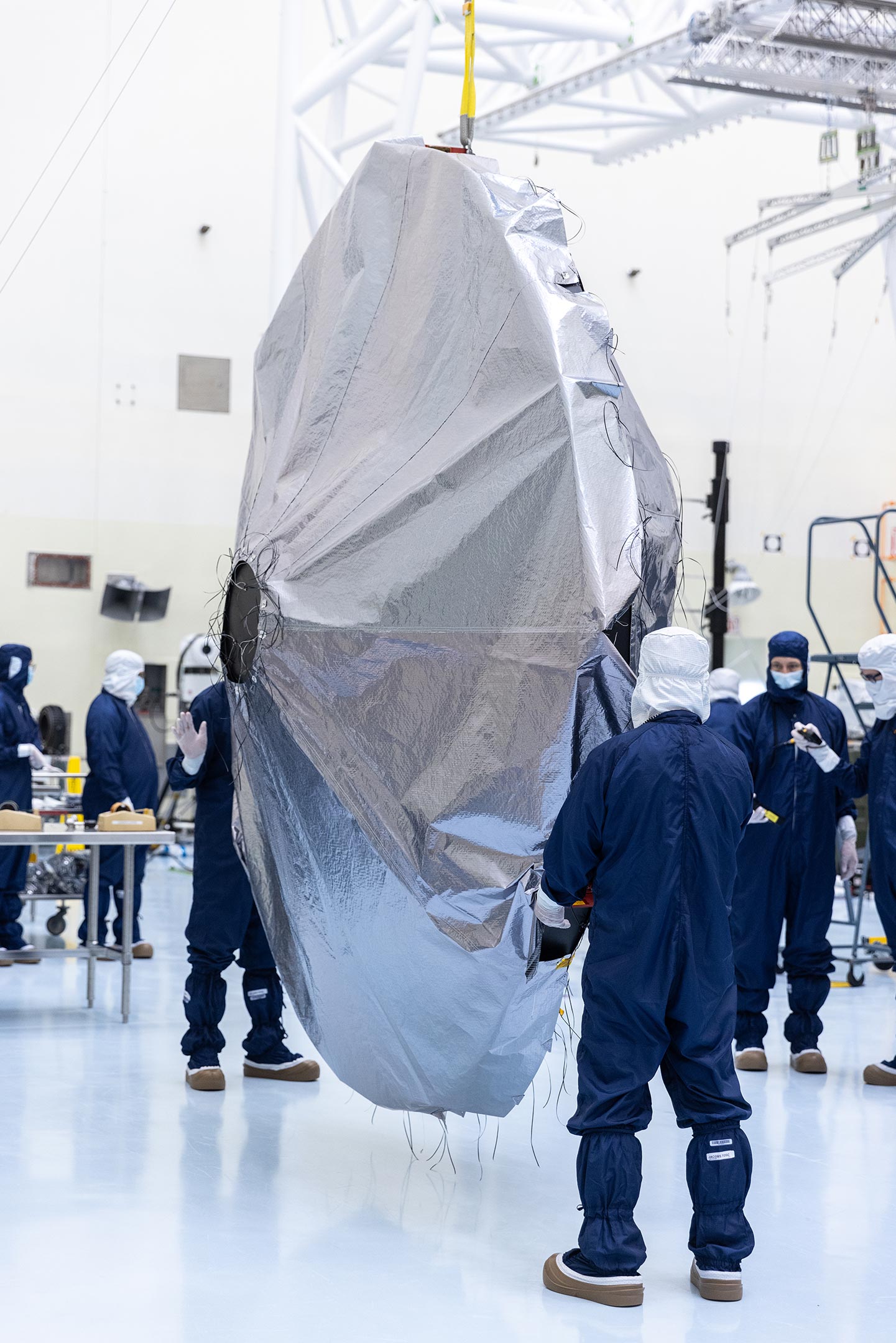
When NASA’s Europa Clipper is in orbit around Jupiter, transmitting science data and receiving commands from Earth across hundreds of millions of miles, it will need a powerful antenna. Technicians installed the spacecraft’s high-gain antenna inside the Payload Hazardous Servicing Facility at NASA’s Kennedy Space Center in Florida on June 17.
Scheduled to launch later this year, Europa Clipper will embark on a 1.8-billion-mile (2.6-billion-kilometer) journey to Jupiter. It is the largest spacecraft NASA has developed for a planetary mission. Set to arrive in April 2030, it will study the gas giant’s icy moon, Europa, to determine its potential to support life.
Advanced Communication Technology
The spacecraft will conduct approximately 50 flybys of Europa, allowing its nine science instruments to gather data on the moon’s atmosphere, its ice crust, and the ocean underneath. The nearly 10-foot-wide (3-meter) dish-shaped antenna and several smaller antennas will transmit the data to Earth, a trip that will take about 45 minutes when the spacecraft is in orbit around Jupiter.
To ensure Europa Clipper has the necessary bandwidth, the antenna will operate on NASA’s deep space X-band radio frequencies of 7.2 and 8.4 (GHz), and Ka-band at 32 (GHz), through the agency’s Deep Space Network, a global array of large radio antennas that communicate with dozens of spacecraft throughout the solar system.
Exploring Habitability in Our Solar System
Europa Clipper underscores NASA’s commitment to exploring our solar system for habitable conditions beyond Earth. Although Europa Clipper is not a life-detection mission, understanding Europa’s habitability will help us better understand how life developed on Earth and whether we’re likely to find conditions that might support life beyond our planet.
Technicians at NASA Kennedy will continue to prepare the spacecraft for its mission and perform final checkouts as part of launch preparations. Europa Clipper is scheduled to launch atop a SpaceX Falcon Heavy rocket from Kennedy’s Launch Complex 39A, no earlier than October 2024.
Engineering and Management of the Mission
Europa Clipper’s high-gain antenna was designed by the Johns Hopkins University APL (Applied Physics Laboratory) in Laurel, Maryland, and aerospace vendor AASC (Applied Aerospace Structures Corporation) in Stockton, California.
Managed by Caltech in Pasadena, California, NASA’s Jet Propulsion Laboratory leads the development of the Europa Clipper mission in partnership with APL for NASA’s Science Mission Directorate in Washington. The main spacecraft body was designed by APL in collaboration with JPL and NASA’s Goddard Space Flight Center in Greenbelt, Maryland. The Planetary Missions Program Office at NASA’s Marshall Space Flight Center in Huntsville, Alabama, executes program management of the Europa Clipper mission.
NASA’s Launch Services Program, based at Kennedy, manages the launch service for the Europa Clipper spacecraft.
Never miss a breakthrough: Join the SciTechDaily newsletter.
Follow us on Google and Google News.
2 Comments
Scientists experimented with carbon in asteroid belt meteorites and breaking down isotopes of atoms scattered by the sun’s rays. Isotopes They dated the oldest meteorites and estimated that the Earth is 4.5 billion years old. This estimate is based on the number of decaying isotopes tested with carbon eleven, and the lifetime of meteorites and the lifetime of the Earth are very accurate. They found, but this calculation is wrong. The age of the earth must be calculated and determined from tens of kilometers underground and the decay of soil isotopes that were previously exposed to the radiation of another star near the sun other than Shams. Billions of years ago and one more star should be counted, not meteorites and rocky planets. Four and a half billion years ago, the four rocky planets next to the Sun joined the Milky Way along with the 243 planets that are now the moons of Saturn, Neptune, Uranus, and Jupiter. They are all within the same 4.5 billion years that they joined the solar bodies from the Milky Way. Except for the gas planets that were next to the Sun a hundred billion years ago, the planets Mercury, Venus, Earth and Mars were not next to the Sun. In the last hundred billion years and you should know, 243 moons of the gas planets also joined the solar bodies during four and a half billion years, but since the total of 243 moons of the gas planets, which with four rocky planets and three moons of Mars and the Earth’s moon, actually There are 250 planets that have now joined our solar body in 4.5 billion years. joined our solar system, but if NASA scientists want to know the exact age of the Earth, they need to reach layers that are at least tens of billions of years old, their isotopes decayed by light and rays from the sun other than the sun. . They were on the other side of the galaxy. The Earth was actually placed next to the Sun in its last moments of life. I already said that if the Earth was next to the Sun tens of billions of years ago, it would have burned up the noble matter in oxygen and hydrogen
What I mean is that if the earth was next to the sun twenty billion years ago, the noble materials that form life would have burned during the age of the earth and the formation of the earth is more than 4.5 billion years. 4.5 billion years ago, it was placed next to the sun. The age of the earth is more than thirty billion years. The earth was placed next to the sun from another star. In four and a half billion years ago, the belt of asteroids was created due to the impact of the big arms of the galaxy on the solar bodies. All the moons of the solar system are planets. were transformed into moons from the big arms of the galaxy when they joined the solar bodies, the age of these moons is more than ten billion years, but it is 4.5 billion years since they joined the body of the sun