
Close Menu
    Facebook X (Twitter) Instagram
    SciTechDaily
    • Biology
    • Chemistry
    • Earth
    • Health
    • Physics
    • Science
    • Space
    • Technology
    Facebook X (Twitter) Pinterest YouTube RSS
    SciTechDaily
    Home»Space»NASA Selects Gamma-Ray Telescope To Probe Origins of Galactic Positrons, Chart Milky Way Evolution
    Space

    NASA Selects Gamma-Ray Telescope To Probe Origins of Galactic Positrons, Chart Milky Way Evolution

    By NASAOctober 19, 2021No Comments3 Mins Read
    Facebook Twitter Pinterest Telegram LinkedIn WhatsApp Email Reddit
    Share
    Facebook Twitter LinkedIn Pinterest Telegram Email Reddit
    Compton Spectrometer and Imager (COSI)
    The Compton Spectrometer and Imager (COSI) is a soft gamma-ray survey telescope (0.2-5 MeV) designed to probe the origins of Galactic positrons, uncover the sites of nucleosynthesis in the Galaxy, perform pioneering studies of gamma-ray polarization, and find counterparts to multi-messenger sources. COSI’s compact Compton telescope combines improvement in sensitivity, spectral resolution, angular resolution, and sky coverage to facilitate groundbreaking science. Credit: NASA

    COSI, NASA’s next small astrophysics mission, will map stellar element formation and probe antimatter origins in the Milky Way.

    NASA has selected a new space telescope proposal that will study the recent history of star birth, star death, and the formation of chemical elements in the Milky Way. The gamma-ray telescope, called the Compton Spectrometer and Imager (COSI), is expected to launch in 2025 as NASA’s latest small astrophysics mission.

    NASA’s Astrophysics Explorers Program received 18 telescope proposals in 2019 and selected four for mission concept studies. After a detailed review of these studies by a panel of scientists and engineers, NASA selected COSI to continue into development.

    “For more than 60 years, NASA has provided opportunities for inventive, smaller-scale missions to fill knowledge gaps where we still seek answers,” said Thomas Zurbuchen, associate administrator for the agency’s Science Mission Directorate in Washington. “COSI will answer questions about the origin of the chemical elements in our own Milky Way galaxy, the very ingredients critical to the formation of Earth itself.”
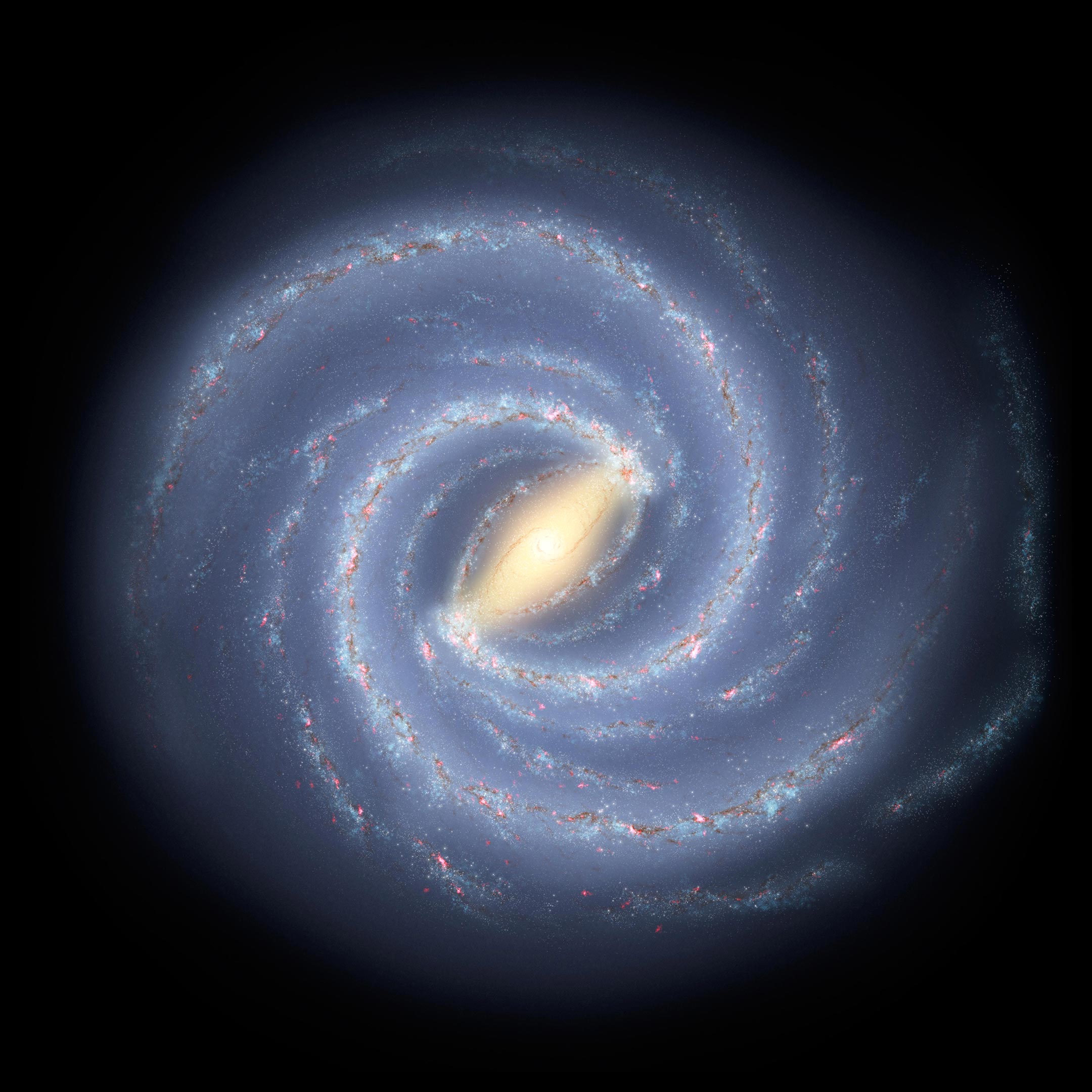
    Milky Way With Far-3 Kiloparsec Arm
    NASA has selected a new gamma-ray space telescope, the Compton Spectrometer and Imager (COSI), that will chart the evolution of the Milky Way, seen here in this illustration. Credit: NASA/JPL-Caltech

    COSI will study gamma rays from radioactive atoms produced when massive stars exploded to map where chemical elements were formed in the Milky Way. The mission will also probe the mysterious origin of our galaxy’s positrons, also known as antielectrons – subatomic particles that have the same mass as an electron but a positive charge.

    COSI’s principal investigator is John Tomsick at the University of California, Berkeley. The mission will cost approximately $145 million, not including launch costs. NASA will select a launch provider later.

    The COSI team spent decades developing their technology through flights on scientific balloons. In 2016, they sent a version of the gamma-ray instrument aboard NASA’s super pressure balloon, which is designed for long flights and heavy lifts.

    NASA’s Explorers Program is the agency’s oldest continuous program. It provides frequent, low-cost access to space using principal investigator-led space research relevant to the astrophysics and heliophysics programs. Since the 1958 launch of Explorer 1, which discovered Earth’s radiation belts, the program has launched more than 90 missions. The Cosmic Background Explorer, another NASA Explorer mission, led to a Nobel Prize in 2006 for its principal investigators.

    NASA’s Goddard Space Flight Center in Greenbelt, Maryland, manages the program for the agency.

    Never miss a breakthrough: Join the SciTechDaily newsletter.
    Follow us on Google and Google News.

    Astronomy Astrophysics Milky Way NASA Popular
    Share. Facebook Twitter Pinterest LinkedIn Email Reddit

    Related Articles

    Hypervelocity Escape: NASA Spots Mysterious Object Moving at 1 Million Miles per Hour

    Our Milky Way Galaxy: How Big Is Space? [Video]

    NASA’s New $10 Billion Webb Space Telescope Will Reveal the Supermassive Black Hole at the Heart of the Milky Way

    New All-Sky Map of Milky Way’s Outer Reaches Released – Could Offer a New Test of Dark Matter Theories

    Hubble Shows Us the Future: A Galactic Collision

    Mystery As Hubble Finds Milky Way Raids Intergalactic ‘Bank Accounts’

    Astronomers Reveal the Rotation of the Hot Gas Around the Milky Way

    Planck Space Telescope Reveals the Magnetic Field Lines of the Milky Way

    Hubble Reveals the First Visual Evidence of Changes in the Milky Way

    Leave A Reply Cancel Reply

    • Facebook
    • Twitter
    • Pinterest
    • YouTube

    Don't Miss a Discovery

    Subscribe for the Latest in Science & Tech!

    Trending News

    New Study Reveals Why Ozempic Works Better for Some People Than Others

    Climate Change Is Altering a Key Greenhouse Gas in a Way Scientists Didn’t Expect

    New Study Suggests Gravitational Waves May Have Created Dark Matter

    Scientists Discover Why the Brain Gets Stuck in Schizophrenia

    Scientists Engineer “Tumor-Eating” Bacteria That Devour Cancer From Within

    Even “Failed” Diets May Deliver Long-Term Health Gains, Study Finds

    NIH Scientists Discover Powerful New Opioid That Relieves Pain Without Dangerous Side Effects

    Collapsing Plasma May Hold the Key to Cosmic Magnetism

    Follow SciTechDaily
    • Facebook
    • Twitter
    • YouTube
    • Pinterest
    • Newsletter
    • RSS
    SciTech News
    • Biology News
    • Chemistry News
    • Earth News
    • Health News
    • Physics News
    • Science News
    • Space News
    • Technology News
    Recent Posts
    • This 15,000-Year-Old Discovery Changes What We Know About Early Human Creativity
    • 35-Million-Year-Old Mystery: Strange Arachnid Discovered Preserved in Amber
    • Revolutionary Gas Turbine Generates Power Without Air Compression
    • Is AI Really Just a Tool? It Could Be Altering How You See Reality
    • JWST Reveals a “Forbidden” Planet With a Baffling Composition
    Copyright © 1998 - 2026 SciTechDaily. All Rights Reserved.
    • Science News
    • About
    • Contact
    • Editorial Board
    • Privacy Policy
    • Terms of Use

    Type above and press Enter to search. Press Esc to cancel.