
Close Menu
    Facebook X (Twitter) Instagram
    SciTechDaily
    • Biology
    • Chemistry
    • Earth
    • Health
    • Physics
    • Science
    • Space
    • Technology
    Facebook X (Twitter) Pinterest YouTube RSS
    SciTechDaily
    Home»Space»NASA’s CURIE Mission To Unravel the Sun’s Cryptic Radio Riddles
    Space

    NASA’s CURIE Mission To Unravel the Sun’s Cryptic Radio Riddles

    By Mara Johnson-Groh, NASA’s Goddard Space Flight CenterJuly 18, 2024No Comments3 Mins Read
    Facebook Twitter Pinterest Telegram LinkedIn WhatsApp Email Reddit
    Share
    Facebook Twitter LinkedIn Pinterest Telegram Email Reddit
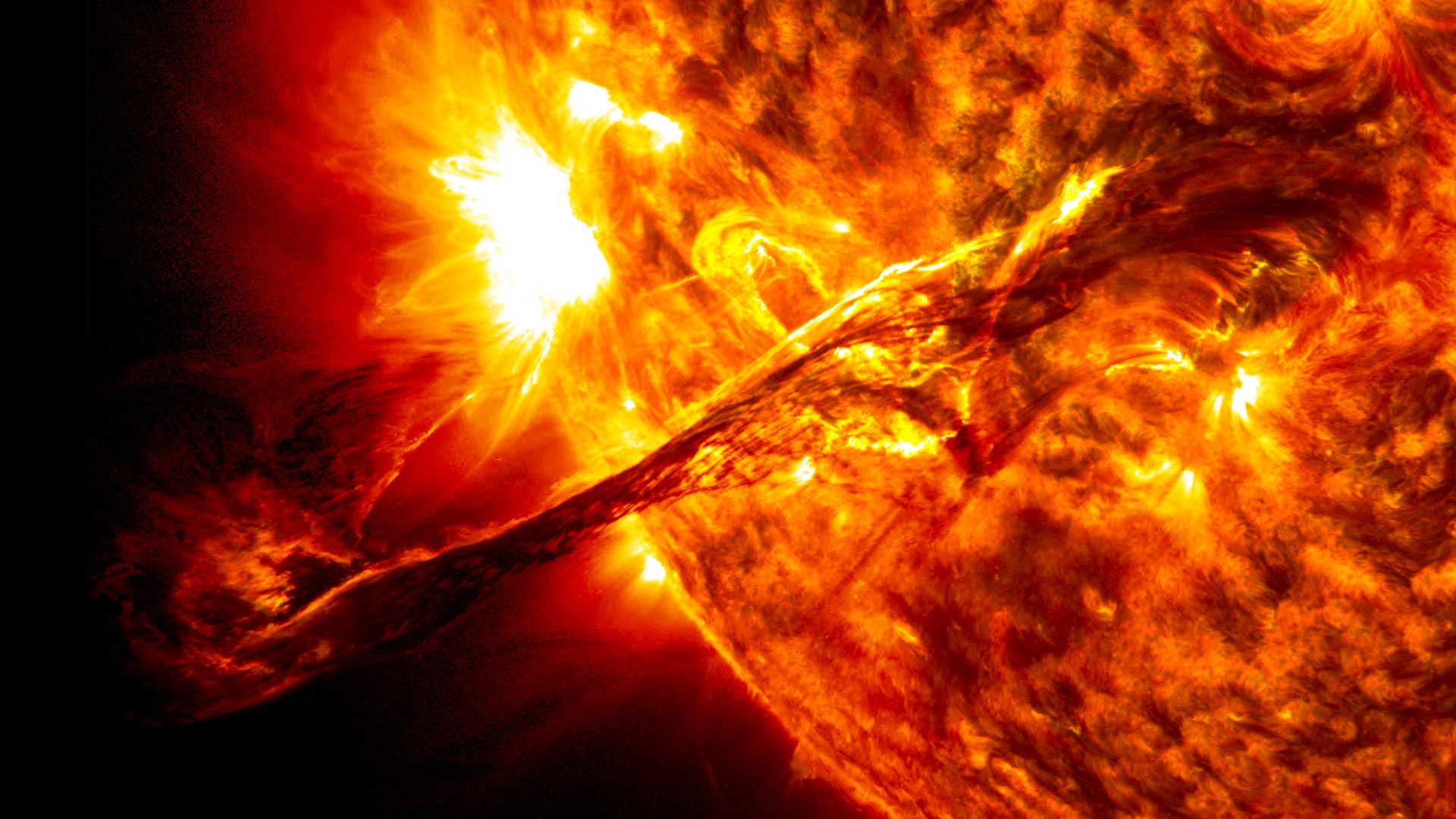
    Coronal Mass Ejection 304- and 171-Angstrom Wavelengths
    CURIE will investigate where solar radio waves originate in coronal mass ejections, like this one seen in 304- and 171-angstrom wavelengths by NASA’s Solar Dynamics Observatory. Credit: NASA/Goddard Space Flight Center

    NASA’s CURIE mission will explore the origins of solar radio waves using a unique space-based radio interferometry method. By flying two CubeSats that will orbit Earth and gather radio data, this NASA mission aims to identify the precise source of emissions linked to solar flares and coronal mass ejections.

    NASA’s CubeSat Radio Interferometry Experiment, or CURIE, launched successfully on July 9, 2024, to investigate the unresolved origins of radio waves coming from the Sun.

    Scientists first noticed these radio waves decades ago, and over the years they’ve determined the radio waves come from solar flares and giant eruptions on the Sun called coronal mass ejections, or CMEs, which are a key driver of space weather that can impact satellite communications and technology at Earth. But no one knows where the radio waves originate within a CME.
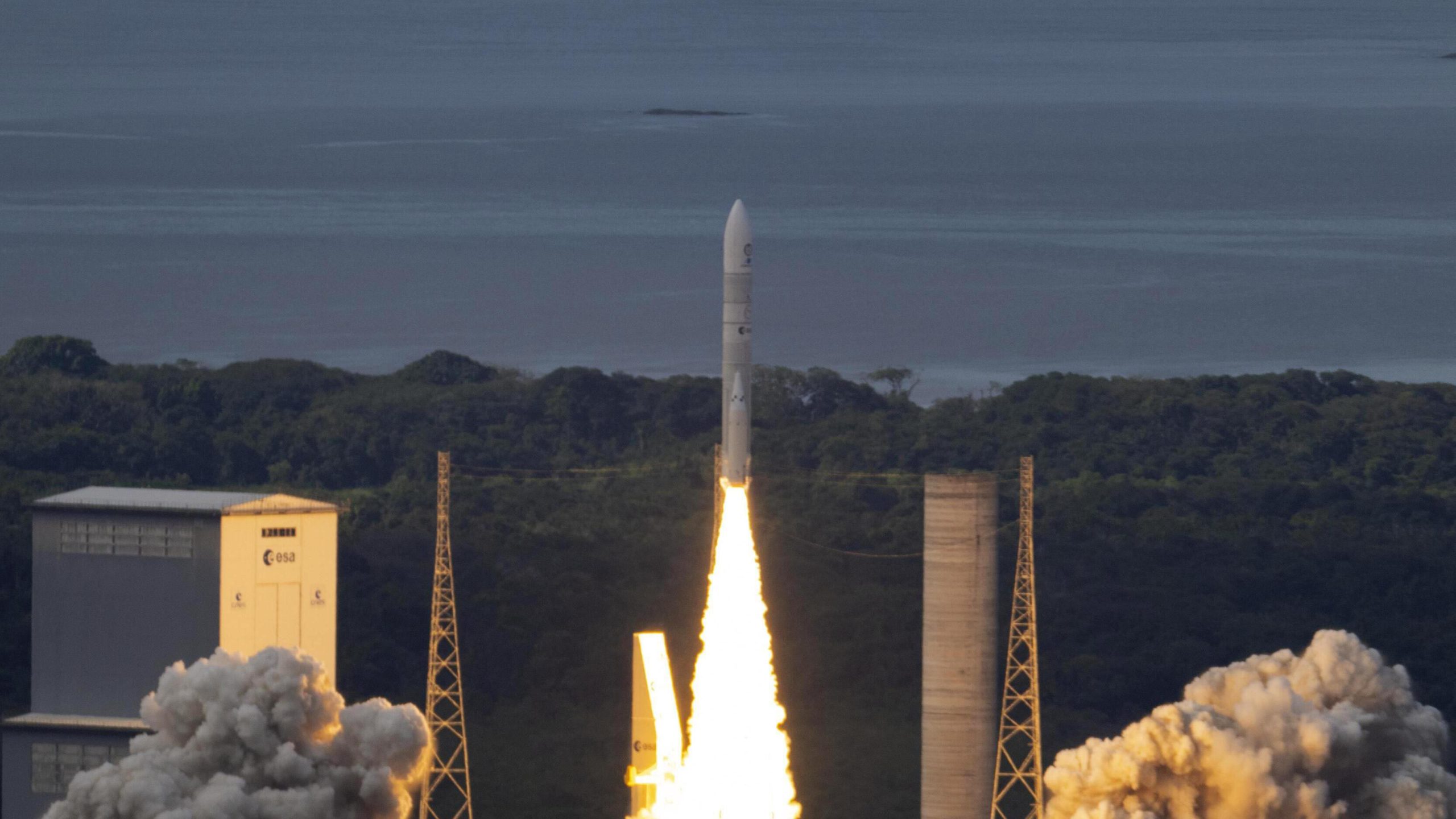
    First Ariane 6 Rocket Lifts Off
    Ariane 6 launches to the sky on July 9, 2024, from Europe’s Spaceport in French Guiana. Credit: ESA – S. Corvaja

    Technological Innovation in Space

    The CURIE mission aims to advance our understanding using a technique called low frequency radio interferometry, which has never been used in space before. This technique relies on CURIE’s two independent spacecraft — together no bigger than a shoebox — that will orbit Earth about two miles apart. This separation allows CURIE’s instruments to measure tiny differences in the arrival time of radio waves, which enables them to determine exactly where the radio waves came from.

    “This is a very ambitious and very exciting mission,” said Principal Investigator David Sundkvist, a researcher at the University of California, Berkeley. “This is the first time that someone is ever flying a radio interferometer in space in a controlled way, and so it’s a pathfinder for radio astronomy in general.”
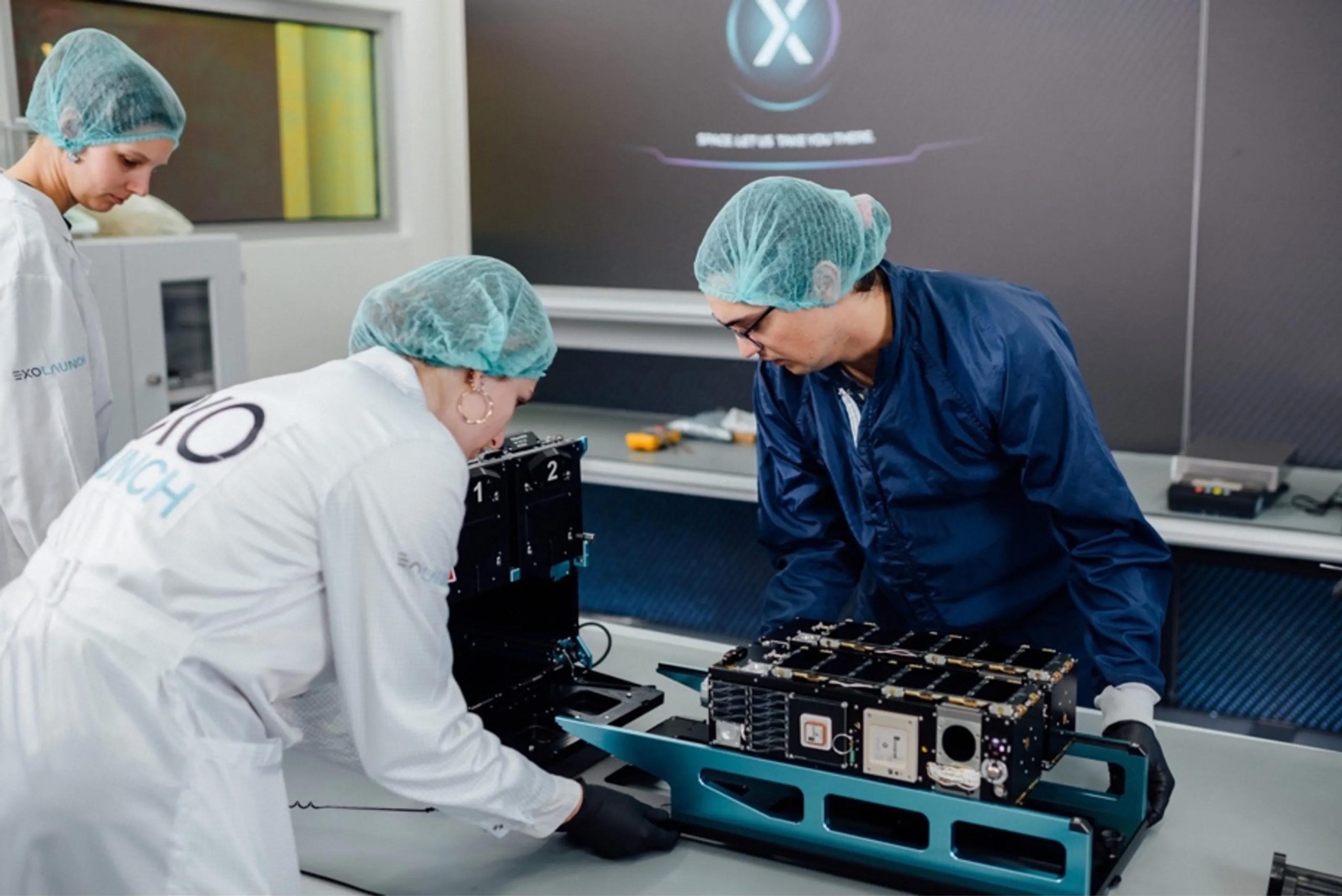
    CURIE Team Members Work
    CURIE team members work on integrating the satellites into the CubeSat deployer. Credit: ExoLaunch

    Mission Details and Launch

    The spacecraft, designed by a team from UC Berkeley, will measure radio waves ranging 0.1 to 19 megahertz to pinpoint the radio waves’ solar origin. These wavelengths are blocked by Earth’s upper atmosphere, so this research can only be done from space.

    CURIE launched aboard an ESA (European Space Agency) Ariane 6 rocket on July 9 from the Guiana Space Center in Kourou, French Guiana. The rocket took CURIE to 360 miles above Earth’s surface, where it can get a clear view of the Sun’s radio waves.

    Once in its circular orbit, the two adjoined CURIE spacecraft will establish communication with ground stations before orienting and separating. When the separated satellites are in formation, their dual eight-foot antennas will deploy and start collecting data.

    CURIE is sponsored by NASA’s Heliophysics Flight Opportunities for Research and Technology (H-FORT) Program and is the sole mission manifested on the NASA CubeSat Launch Initiative’s ELaNa (Educational Launch of Nanosatellites) 43 mission. As a pathfinder, CURIE will demonstrate a proof-of-concept for space-based radio interferometry in the CubeSat form factor. CURIE will also pave the way for the upcoming Sun Radio Interferometer Space Experiment, or SunRISE, mission. SunRISE will employ six CubeSats to map the region where the solar radio waves originate in 2-D.

    Never miss a breakthrough: Join the SciTechDaily newsletter.
    Follow us on Google and Google News.

    CubeSat NASA NASA Goddard Space Flight Center Popular Sun
    Share. Facebook Twitter Pinterest LinkedIn Email Reddit

    Related Articles

    NASA Just Flew Through the Sun’s Atmosphere – And What It Saw Is Jaw-Dropping

    NASA’s CODEX Unveils the Sun’s Fiery Secrets With Stunning New Solar Wind Images

    Massive Solar Storm Unleashes Mysterious New Radiation Belts

    NASA Uncovers the Hidden Forces Behind the Sun’s Mysterious Moss

    Astronomers Discover Surprising Radio Signals Emanating From the Sun

    Intensely Powerful X1.0 Solar Flare Witnessed by NASA’s Solar Dynamics Observatory

    Don’t Miss Eclipses: NASA Releases New Map of Upcoming Solar Eclipses

    New Clues To Predict When and Where the Sun’s Next Flare Might Explode

    What Mercury’s Unusual Orbit Reveals About the Sun [Video]

    Leave A Reply Cancel Reply

    • Facebook
    • Twitter
    • Pinterest
    • YouTube

    Don't Miss a Discovery

    Subscribe for the Latest in Science & Tech!

    Trending News

    Scientists Warn That This Common Pet Fish Can Wreck Entire Ecosystems

    Scientists Make Breakthrough in Turning Plastic Trash Into Clean Fuel Using Sunlight

    This Popular Supplement May Interfere With Cancer Treatment, Scientists Warn

    Scientists Finally Solved One of Water’s Biggest Mysteries

    Could This New Weight-Loss Pill Disrupt the Entire Market? Here’s What You Should Know About Orforglipron

    Earth’s Crust Is Tearing Open in Africa, and It Could Form a New Ocean

    Breakthrough Bowel Cancer Trial Leaves Patients Cancer-Free for Nearly 3 Years

    Natural Compound Shows Powerful Potential Against Rheumatoid Arthritis

    Follow SciTechDaily
    • Facebook
    • Twitter
    • YouTube
    • Pinterest
    • Newsletter
    • RSS
    SciTech News
    • Biology News
    • Chemistry News
    • Earth News
    • Health News
    • Physics News
    • Science News
    • Space News
    • Technology News
    Recent Posts
    • Kratom Use Explodes in the US, With Life-Changing Consequences
    • Scientists Uncover Fatal Weakness in “Zombie Cells” Linked to Cancer
    • World-First Study Reveals Human Hearts Can Regenerate After a Heart Attack
    • Why Your Dreams Feel So Real Sometimes and So Strange Other Times
    • Scientists Debunk 100-Year-Old Belief About Brain Cells, Rewriting Textbooks
    Copyright © 1998 - 2026 SciTechDaily. All Rights Reserved.
    • Science News
    • About
    • Contact
    • Editorial Board
    • Privacy Policy
    • Terms of Use

    Type above and press Enter to search. Press Esc to cancel.