
Close Menu
    Facebook X (Twitter) Instagram
    SciTechDaily
    • Biology
    • Chemistry
    • Earth
    • Health
    • Physics
    • Science
    • Space
    • Technology
    Facebook X (Twitter) Pinterest YouTube RSS
    SciTechDaily
    Home»Space»NASA’s Mega Moon Rocket Is Ready To Roll: Watch the Artemis I Rollout Trailer
    Space

    NASA’s Mega Moon Rocket Is Ready To Roll: Watch the Artemis I Rollout Trailer

    By NASAMarch 15, 20222 Comments3 Mins Read
    Facebook Twitter Pinterest Telegram LinkedIn WhatsApp Email Reddit
    Share
    Facebook Twitter LinkedIn Pinterest Telegram Email Reddit
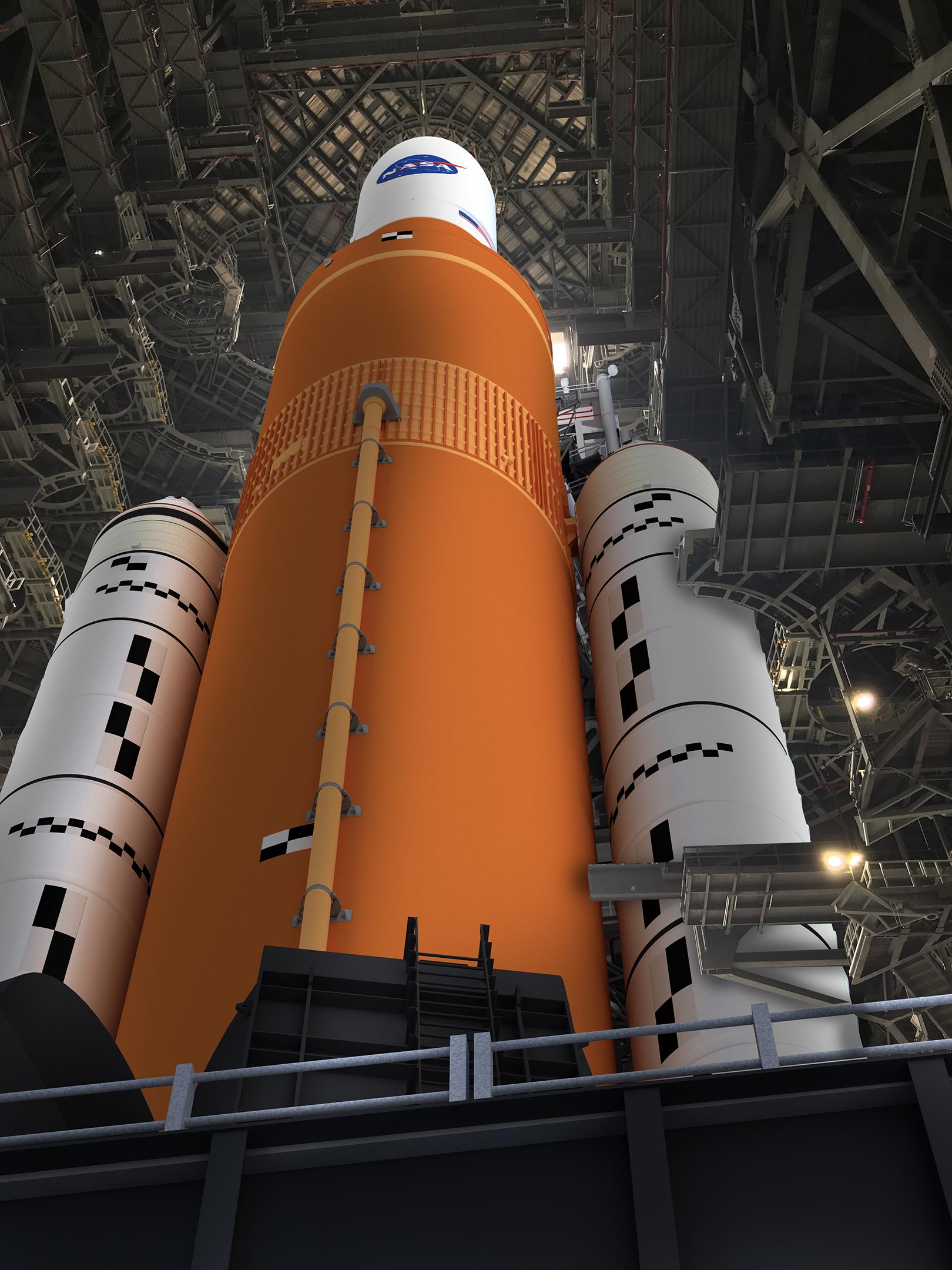
    SLS in Block 1 Cargo Configuration Inside VAB
    This illustration shows NASA’s Space Launch System (SLS) in its Block 1 configuration inside the Vehicle Assembly Building at NASA’s Kennedy Space Center in Florida. From top to bottom, the entire rocket measures about 312 feet high and has the capability of lifting payloads with a mass of more than 26 metric tons (57,000 pounds). Credit: NASA

    Artemis I will test NASA’s SLS rocket and Orion spacecraft on an uncrewed mission beyond the Moon, paving the way for future human exploration.

    Twin solid rocket boosters that will produce a combined 7.2 million pounds (3.3 million kilograms) of thrust at liftoff, a towering core stage, and the only human-rated spacecraft in the world capable of deep-space travel – together, NASA’s Space Launch System rocket and Orion spacecraft stand ready to usher in a new chapter of exploration. Now fully assembled at Kennedy Space Center in Florida, SLS and Orion will soon roll to the launch pad.

    Artemis I will be the first integrated test of NASA’s deep space exploration systems: the Orion spacecraft, Space Launch System (SLS) rocket, and the ground systems at Kennedy Space Center in Cape Canaveral, Florida. The first in a series of increasingly complex missions, Artemis I will be an uncrewed flight test that will provide a foundation for human deep space exploration, and demonstrate our commitment and capability to extend human existence to the Moon and beyond.

    During this flight, the spacecraft will launch on the most powerful rocket in the world and fly farther than any spacecraft built for humans has ever flown. It will travel 280,000 miles (451,000 kilometers) from Earth, thousands of miles beyond the Moon over the course of about a four to six-week mission. Orion will stay in space longer than any ship for astronauts has done without docking to a space station and return home faster and hotter than ever before.

    “This is a mission that truly will do what hasn’t been done and learn what isn’t known,” said Mike Sarafin, Artemis I mission manager at NASA Headquarters in Washington. “It will blaze a trail that people will follow on the next Orion flight, pushing the edges of the envelope to prepare for that mission.”


    In the next nine and a half minutes, you’ll experience a twenty-five-and-a-half-day mission from roll-out to recovery of the first integrated flight test of NASA’s Orion spacecraft and the Space Launch System rocket, launching from the agency’s Kennedy Space Center in Florida. This uncrewed mission will be the first in a planned series of Artemis missions beyond the Moon, signaling what astronauts who dare to operate in deep space will experience on future flights.

    Never miss a breakthrough: Join the SciTechDaily newsletter.
    Follow us on Google and Google News.

    ARTEMIS Mission NASA Popular Rocket Space Launch System
    Share. Facebook Twitter Pinterest LinkedIn Email Reddit

    Related Articles

    NASA’s Engineering Marvel: Preparing the Gateway to the Moon

    Moonbound Majesty: Astronauts’ Inside Look at SLS, the Engine of Artemis Dreams

    NASA Tests Upgraded Artemis Moon Rocket Engines at 113% Power Level

    NASA’s Artemis I Moon Rocket Ready To Launch – How To Watch Live

    NASA Completes Artemis I Moon Rocket Test, Moves Forward Toward Launch

    NASA Artemis I Moon Rocket Test: SLS Fully Fueled for First Time Despite Leak

    Standing Tall: Massive Moon Rocket Milestone for Artemis

    First Rollout of NASA’s Massive Artemis I Moon Rocket

    NASA’s Powerful SLS Rocket Fully Stacked for Artemis I Moon Mission – Liftoff for Deep Space in February 2022

    2 Comments

    1. Cynthia Binder on March 15, 2022 7:56 am

      Work is 👨‍🚀👩‍🚀done,preparation work in progress 💪 🙌 👩‍🚀👨‍🚀🚀🛎🛸mission control we have neighbors 😀 😄 🤓👽👾. Be watching like back in the 1960s

      Reply
    2. Ken O'Neill on March 15, 2022 11:06 pm

      Its the Apollo program all over again ,to the moon this time to stay.!

      Reply
    Leave A Reply Cancel Reply

    • Facebook
    • Twitter
    • Pinterest
    • YouTube

    Don't Miss a Discovery

    Subscribe for the Latest in Science & Tech!

    Trending News

    Bone-Strengthening Discovery Could Reverse Osteoporosis

    Scientists Uncover Hidden Trigger Behind Stem Cell Aging

    Scientists Find Way to Reverse Fatty Liver Disease Without Changing Diet

    Could Humans Regrow Limbs? New Study Reveals Promising Genetic Pathway

    Scientists Reveal Eating Fruits and Vegetables May Increase Your Risk of Lung Cancer

    Scientists Reverse Brain Aging With Simple Nasal Spray

    Scientists Uncover Potential Brain Risks of Popular Fish Oil Supplements

    Scientists Discover a Surprising Way To Make Bread Healthier and More Nutritious

    Follow SciTechDaily
    • Facebook
    • Twitter
    • YouTube
    • Pinterest
    • Newsletter
    • RSS
    SciTech News
    • Biology News
    • Chemistry News
    • Earth News
    • Health News
    • Physics News
    • Science News
    • Space News
    • Technology News
    Recent Posts
    • Europe’s Most Active Volcano Just Got Stranger – Here’s Why Scientists Are Rethinking It
    • Why Are Giant Ants Letting Tiny Ants Crawl All Over Them?
    • Revolutionary Technique Sends Healthy Mitochondria Exactly Where They’re Needed
    • This Student Recreated the Universe in a Bottle. What She Discovered Could Help Reveal How Life Started on Earth
    • Alzheimer’s Symptoms May Start Outside the Brain, Study Finds
    Copyright © 1998 - 2026 SciTechDaily. All Rights Reserved.
    • Science News
    • About
    • Contact
    • Editorial Board
    • Privacy Policy
    • Terms of Use

    Type above and press Enter to search. Press Esc to cancel.