
Close Menu
    Facebook X (Twitter) Instagram
    SciTechDaily
    • Biology
    • Chemistry
    • Earth
    • Health
    • Physics
    • Science
    • Space
    • Technology
    Facebook X (Twitter) Pinterest YouTube RSS
    SciTechDaily
    Home»Space»“Neptunian Ridge” Discovered: Scientists Unveil New Map of Distant Planets
    Space

    “Neptunian Ridge” Discovered: Scientists Unveil New Map of Distant Planets

    By University of WarwickOctober 21, 20243 Comments3 Mins Read
    Facebook Twitter Pinterest Telegram LinkedIn WhatsApp Email Reddit
    Share
    Facebook Twitter LinkedIn Pinterest Telegram Email Reddit
    Astronomy Two Exoplanets Art Concept Illustration
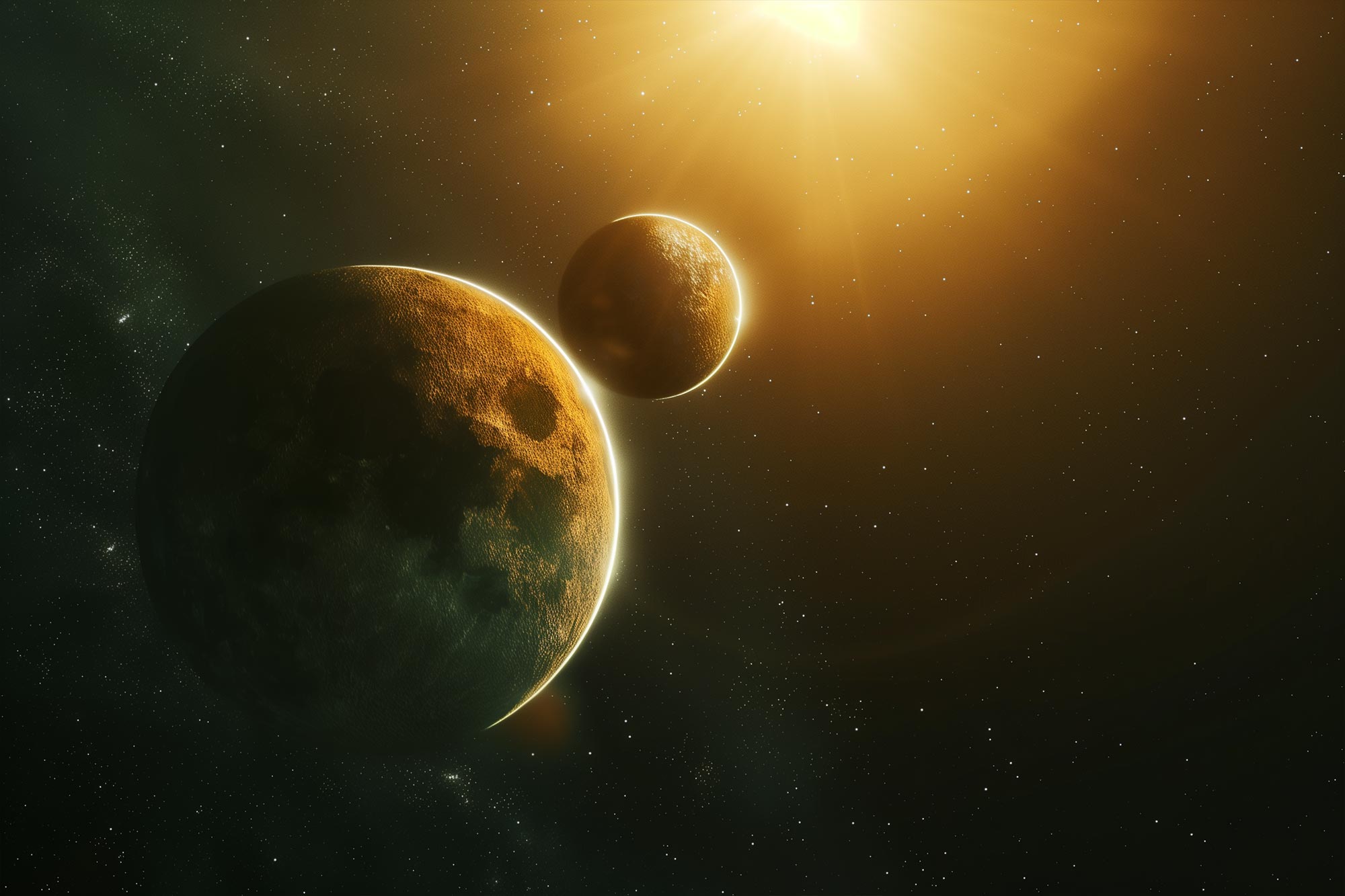
    Researchers uncovered a new ‘Neptunian Ridge,’ which divides a sparse desert of eroded planets from a more populated savannah, revealing how planetary migration affects their distribution. Credit: SciTechDaily.com

    Researchers have discovered the Neptunian Ridge, a region packed with planets, located between the Neptunian Desert and Savannah. This finding sheds light on how planets migrate and evolve in different environments.

    A new ‘map’ of distant planets has been unveiled by scientists from The University of Warwick, which finds a ridge of planets in deep space, separating a desert of planets from a more populated savannah.

    Researchers from Warwick and other universities examined Neptunian exoplanets – these planets share similar characteristics to our own Neptune, but orbit outside of our solar system.

    Scientists discovered a new area called the ‘Neptunian Ridge’ – in between the ‘Neptunian desert’ and the ‘Neptunian Savannah’.

    Characteristics of the Neptunian Desert and Savannah

    Planets in the desert are very rare, as intense radiation has eroded their atmospheres to the point of destroying them, turning these planets into bare rocky cores.

    The savannah is a region located further away from the intense radiation. In this region, environmental conditions are more favorable and allow planets to maintain their atmospheres for millions of years.

    Artistic Illustration of the Neptunian Desert and the Neptunian Savanna Separated by the Neptunian Ridge
    Artistic illustration of the Neptunian desert (left) and the Neptunian savanna (right) separated by the Neptunian ridge. Credit: Elsa Bersier / ERC project SPICE DUNE

    In between these two regions, researchers have discovered a new pile-up called the ridge, where there is a large concentration of planets.

    Current evidence suggests that many of the planets in the ridge could have arrived from their birthplace through a mechanism called high-eccentricity tidal migration, which can bring planets closer to their stars at any stage of their life.

    Two Types of Planetary Migration

    In contrast, planets in the savannah could have been brought mainly through another type of migration, called disk-driven migration, which occurs just after planets are formed.

    Therefore, these two systems driving the movement of planets are populating the savannah and the desert differently. The few planets in the desert could be rare extreme cases pushing the edges of these broad models.

    David Armstrong, Associate Professor of Physics at Warwick, commented: “Our work to observe this new structure in space is highly significant in helping us map the exoplanet landscape.

    “As scientists, we’re always striving to understand why planets are in the condition they are in, and how they ended up where they are.

    “The discovery of the Neptunian ridge helps answer these questions, unveiling part of the geography of exoplanets out there, and is a hugely exciting discovery.”

    Reference: “Mapping the exo-Neptunian landscape – A ridge between the desert and savanna” by A. Castro-González, V. Bourrier, J. Lillo-Box, J.-B. Delisle, D. J. Armstrong, D. Barrado and A. C. M. Correia, 17 September 2024, Astronomy & Astrophysics.
    DOI: 10.1051/0004-6361/202450957

    Never miss a breakthrough: Join the SciTechDaily newsletter.
    Follow us on Google and Google News.

    Astronomy Astrophysics Exoplanet University of Warwick
    Share. Facebook Twitter Pinterest LinkedIn Email Reddit

    Related Articles

    This Giant Planet Shouldn’t Exist – But Astronomers Just Found It Around a Tiny Star

    Astronomers Stunned by WASP-132’s Bizarre Planetary System

    Rare Exoplanet Discovery Paves Path to Uncovering Earth-Like Worlds

    Cosmic Sandwiches: A New Explanation for Planet Formation

    “Chemical Fingerprint” of First Transiting Exoplanet Reveals Its Distant Birthplace

    First Ultra Hot Neptune – LTT 9779b – Is One of Nature’s Improbable Planets

    First Exposed Planetary Core Discovered: Unique Glimpse Inside Other Worlds

    Astronomers Discover 5,400 mph Winds on Exoplanet HD 189733b

    NASA’s Kepler Mission Discovers 11 New Extrasolar Systems with 26 Exoplanets

    3 Comments

    1. Jared on October 22, 2024 2:23 pm

      I’m sorry, but as an average reader i really didn’t get what was trying to be explained in this article. Maybe an artist rendering or breaking it down further could help. Where in the solar system are we talking? Is this observation only our solar system or is this prevalent in others as well?
      Also with the title – ‘ “Neptunian Ridge” Discovered: Scientists Unveil New Map of Distant Planets’- it would have been nice to see the map…

      Reply
      • David on October 23, 2024 6:08 am

        Ditto Jared’s response. How many AU? Maybe an explanation of the intensity of the radiation compared to that within the Sun’s influence.

        Reply
        • Kelli on October 28, 2024 12:33 am

          From this article:

          A new ‘map’ of distant planets has been unveiled by scientists from The University of Warwick, which finds a ridge of planets in deep space, separating a desert of planets from a more populated savannah.

          Researchers from Warwick and other universities examined Neptunian exoplanets — these planets share similar characteristics to our own Neptune, but orbit outside of our solar system.

          https://www.sciencedaily.com/releases/2024/09/240925123540.htm

          Reply
    Leave A Reply Cancel Reply

    • Facebook
    • Twitter
    • Pinterest
    • YouTube

    Don't Miss a Discovery

    Subscribe for the Latest in Science & Tech!

    Trending News

    Scientists Discover 132-Million-Year-Old Dinosaur Tracks on South Africa’s Coast

    Scientists Uncover the Secret Ingredient Behind the Spark That May Have Started Life on Earth

    Physicists Observe Matter in Two Places at Once in Mind-Bending Quantum Experiment

    Stanford Scientists Discover Hidden Brain Circuit That Fuels Chronic Pain

    New Study Reveals Why Ozempic Works Better for Some People Than Others

    Climate Change Is Altering a Key Greenhouse Gas in a Way Scientists Didn’t Expect

    New Study Suggests Gravitational Waves May Have Created Dark Matter

    Scientists Discover Why the Brain Gets Stuck in Schizophrenia

    Follow SciTechDaily
    • Facebook
    • Twitter
    • YouTube
    • Pinterest
    • Newsletter
    • RSS
    SciTech News
    • Biology News
    • Chemistry News
    • Earth News
    • Health News
    • Physics News
    • Science News
    • Space News
    • Technology News
    Recent Posts
    • Surprise RNA Discovery Challenges Long-Held Beliefs About How Genes Work
    • Your IQ at 23 Could Predict Your Wealth at 27, Study Finds
    • 320 Light-Years Away, a Planet Confirms a Fundamental Cosmic Assumption
    • Astronomers Solve Decades-Long Mystery About Saturn’s Spin – “Something Strange Was Happening”
    • Scientists Uncover Strange New State of Matter Inside Uranus and Neptune
    Copyright © 1998 - 2026 SciTechDaily. All Rights Reserved.
    • Science News
    • About
    • Contact
    • Editorial Board
    • Privacy Policy
    • Terms of Use

    Type above and press Enter to search. Press Esc to cancel.