
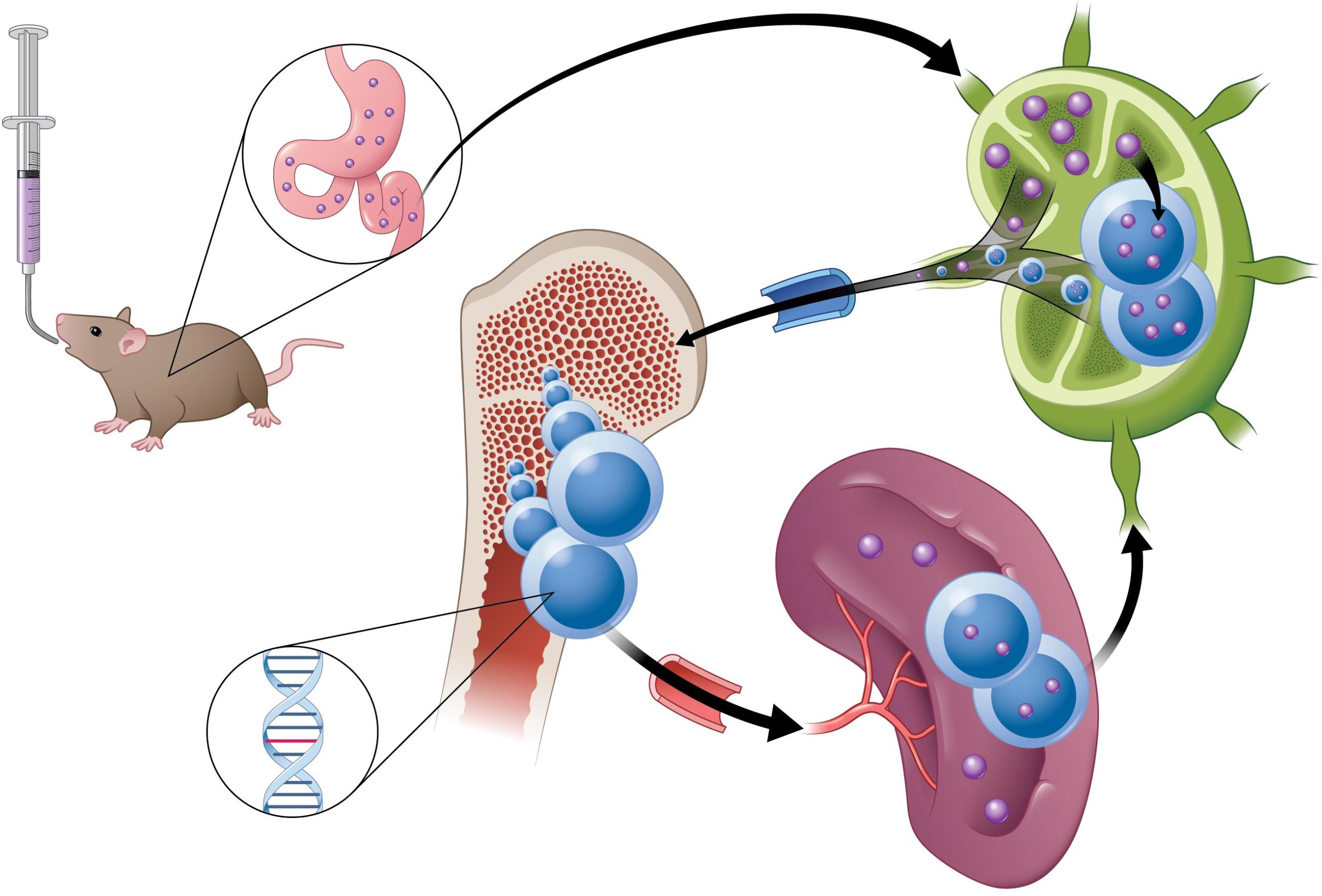
Scientists found they could optimize drug concentrations to simultaneously target two molecular signaling pathways responsible for cancer growth by using the lymphatic system as a storage reservoir.
A new anti-cancer drug is being developed by a team of University of Michigan researchers that is absorbed through the gut’s lymphatic system rather than blood vessels. This enables it to potentially outmaneuver the molecular signaling pathways that lead to drug resistance while increasing cancer-fighting ability and reducing side effects.
In a study published today (August 17, 2022) in Nature Communications, the team of researchers reports on a novel kinase inhibitor that significantly reduced disease, limited toxicity, and prolonged survival in mice with myelofibrosis, a precursor to acute leukemia.
Kinase Inhibitors Targeting PI3K and MAPK
They designed the oral medication LP-182 to simultaneously target phosphoinositide 3-kinase, also known as PI3K, and mitogen-activated protein kinase, known as MAPK. Both are molecular signaling pathways that drive a high percentage of cancers.
Combination therapy is often used in cancer treatment to target different cancer cell vulnerabilities. However, because these drugs circulate through and are absorbed and removed by the body at different rates, it can be challenging to sustain the right therapeutic balance of each individual drug. It’s especially tricky to maintain each at a concentration necessary to be effective while limiting drug toxicity and side effects, said lead author Brian D. Ross, Ph.D., the Roger A. Berg Research Professor of Radiology at the University of Michigan Medical School.
Failure to strike this balance impairs the effectiveness of the drug combinations against cancer and can result in drug resistance, as PI3K and MAPK crosstalk can activate downstream pathways to resist therapy. Even if a drug blocks one pathway, another can provide an escape survival pathway to compensate and continue growing.
Lymphatic Absorption Offers Sustained Drug Release
Unlike traditional oral drugs, which are often designed to be rapidly absorbed into the bloodstream, scientists treating mice with myelofibrosis discovered that LP-182 is absorbed by the gut’s lymphatic system first. The lymphatic system serves as a storage reservoir, separating the drug from the rest of the body and gradually releasing the therapy into the general circulation over time to sustain drug concentrations at an optimal therapeutic level.
“Within the therapeutic window, we are able to maintain the on-target inhibition of two distinct pathways that are talking to one another,” said Ross, who is also the director of the Center for Molecular Imaging at Michigan Medicine and director of the Preclinical Molecular Imaging Shared Resource at the U-M Rogel Cancer Center. “This demonstrates the feasibility of delivering anti-cancer agents directly into the lymphatic system, which opens tremendous new opportunities for improving cancer therapeutic outcomes and reducing the side effects of the agents themselves.”
Potential for Broader Applications in Cancer and Autoimmune Diseases
In myelofibrosis, excessive scar tissue forms in the bone marrow, which disrupts normal blood cell production. Overactive molecular signaling leads to a proliferation of malignant stem cells, extensive fibrosis, enlarged spleen, and progressive bone marrow failure.
The disease spreads through lymphatic tissue, which is also a common route for cancer metastasis. This means the findings from Ross and his team may offer new strategies to prevent cancer spread. Moreover, Ross says, because the gut’s lymphatic system harbors over half the body’s immune cells, the study’s results could provide approaches for the treatment of other conditions including autoimmune disorders.
Ross and his colleagues will continue to expand their pre-clinical studies of LP-182 with the intention of setting up a phase I clinical trial in human patients with myelofibrosis. Also, additional lymphatropic targeted kinase inhibitors are being developed to treat solid tumors, including breast, brain, gastrointestinal, and pancreatic cancers, along with autoimmune diseases such as lupus and multiple sclerosis.
Reference: “A lymphatic-absorbed multi-targeted kinase inhibitor for myelofibrosis therapy” by Brian D. Ross, Youngsoon Jang, Amanda Welton, Christopher A. Bonham, Dilrukshika S. W. Palagama, Kevin Heist, Jagadish Boppisetti, Kasun P. Imaduwage, Tanner Robison, Leah R. King, Edward Z. Zhang, Cyrus Amirfazli, Kathryn E. Luker, Winston Y. Lee, Gary D. Luker, Thomas L. Chenevert and Marcian E. Van Dort, 17 August 2022, Nature Communications.
DOI: 10.1038/s41467-022-32486-8
Co-authors include Youngsoon Jang, Amanda Welton, Christopher A. Bonham, Dilrukshika S.W. Palagama, Kevin Heist, Jagadish Boppisetti, Kasun P. Imaduwage, Tanner Robinson, Leah R. King, Edward Z. Zhang, Cyrus Amirfazli, Kathryn E. Luker, Winston Y. Lee, Gary D. Luker, Thomas L. Chenevert and Marcian E. Van Dort.
Never miss a breakthrough: Join the SciTechDaily newsletter.
Follow us on Google and Google News.