
Close Menu
    Facebook X (Twitter) Instagram
    SciTechDaily
    • Biology
    • Chemistry
    • Earth
    • Health
    • Physics
    • Science
    • Space
    • Technology
    Facebook X (Twitter) Pinterest YouTube RSS
    SciTechDaily
    Home»Space»New Hubble Space Telescope Image of Globular Cluster Terzan 7
    Space

    New Hubble Space Telescope Image of Globular Cluster Terzan 7

    By Hubble Space TelescopeFebruary 10, 2014No Comments2 Mins Read
    Facebook Twitter Pinterest Telegram LinkedIn WhatsApp Email Reddit
    Share
    Facebook Twitter LinkedIn Pinterest Telegram Email Reddit


    Hubble Views Globular Cluster Terzan 7
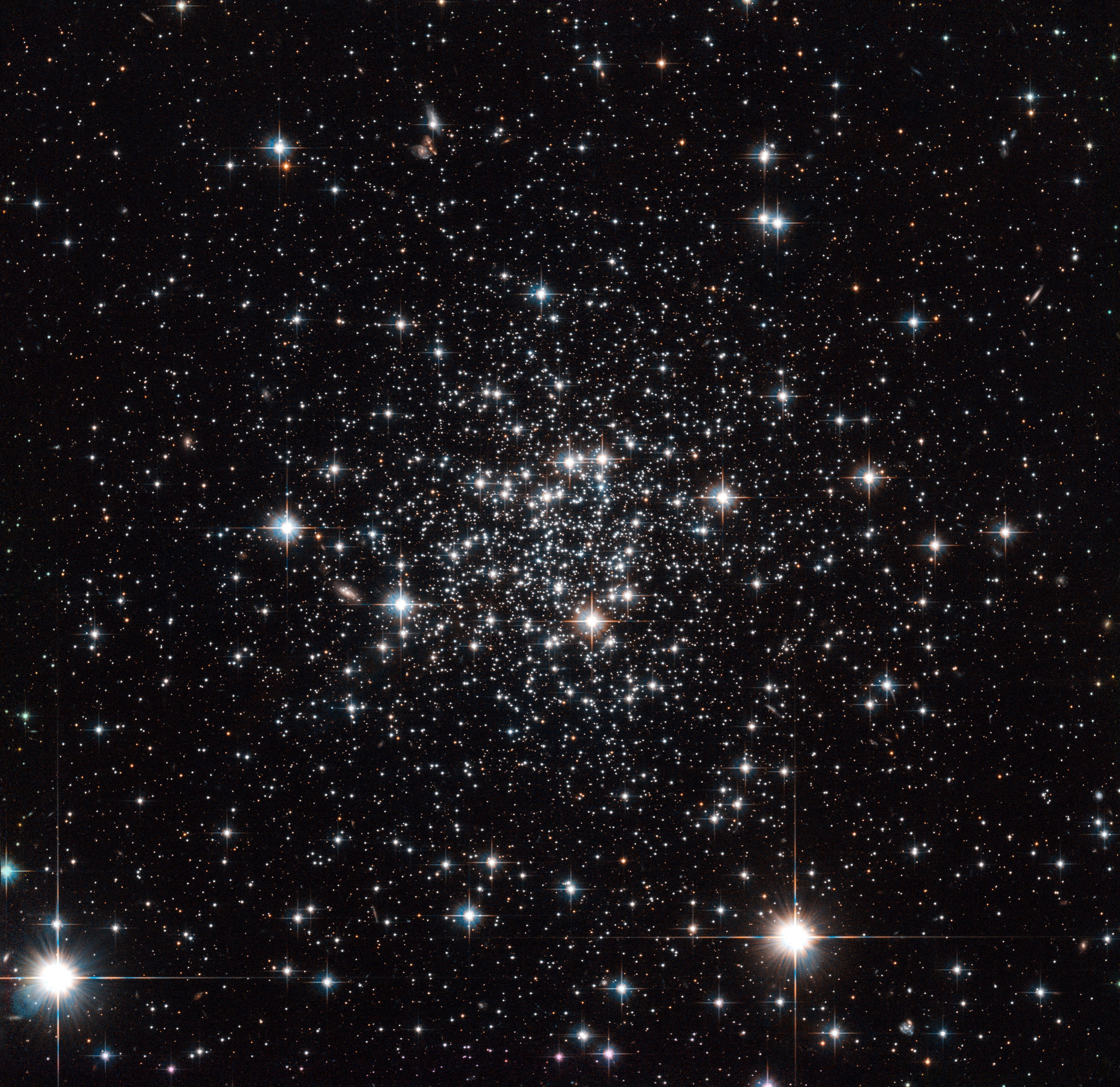
    Terzan 7 is a dense globular cluster over 75,000 light-years away on the opposite side of our Milky Way galaxy. Credit: NASA, ESA, and A. Sarajedini (University of Florida); Acknowledgement: Gilles Chapdelaine

    This newly released Hubble image shows the globular cluster Terzan 7, which is located roughly 75,000 light-years away from Earth.

    Named after its discoverer, the French-Armenian astronomer Agop Terzan, this is the globular cluster Terzan 7 — a densely packed ball of stars bound together by gravity. It lies just over 75,000 light-years away from us on the other side of our galaxy, the Milky Way. It is a peculiar cluster, quite unlike others we observe, making it an intriguing object of study for astronomers.

    Evidence shows that Terzan 7 used to belong to a small galaxy called the Sagittarius Dwarf Galaxy, a mini-galaxy discovered in 1994. This galaxy is currently colliding with, and being absorbed by, the Milky Way, which is a monster in size when compared to this tiny one. It seems that this cluster has already been kidnapped from its former home and now is part of our own galaxy.

    Astronomers recently discovered that all the stars in Terzan 7 were born at around the same time, and are about eight billion years old. This is unusually young for such a cluster. The shared birthday is another uncommon property; a large number of globular clusters, both in the Milky Way and in other galaxies, seem to have at least two clearly differentiated generations of stars that were born at different times.

    Some explanations suggest that there is something different about clusters that form within dwarf galaxies, giving them a different composition. Others suggest that clusters like Terzan 7 only have enough material to form one batch of stars, or that perhaps its youthfulness has prevented it from yet forming another generation.

    A version of this image was entered into the Hubble’s Hidden Treasures image processing competition by contestant Gilles Chapdelaine.


    Never miss a breakthrough: Join the SciTechDaily newsletter.
    Follow us on Google and Google News.

    Astronomy Hubble Space Telescope NASA
    Share. Facebook Twitter Pinterest LinkedIn Email Reddit

    Related Articles

    Hubble Reveals a Star Disk Three Times Hotter Than the Sun’s Surface

    A Star’s Unexpected Heatwave: FU Orionis Challenges Astrophysics Models

    NASA’s Hubble Reveals How the LMC Defied Galactic Destruction

    Legendary Star’s Smooth Disk Mystifies Astronomers, Challenges Planet Formation Theories

    Cosmic Horror Unveiled: NASA Reveals “Blood-Soaked Eyes” Staring From Deep Space [Video]

    Spanning 248 Billion Miles: Stunning Hubble Timelapse Captures a Star’s Violent Eruptions

    Jupiter’s Great Red Spot Enigma: Unexplained Oscillations Baffle Astronomers

    Unlocking Uranus: NASA’s Dual Observations Pave the Way to Discovering New Worlds

    Astronomers Baffled by Black Hole Jets Igniting Star Explosions

    Leave A Reply Cancel Reply

    • Facebook
    • Twitter
    • Pinterest
    • YouTube

    Don't Miss a Discovery

    Subscribe for the Latest in Science & Tech!

    Trending News

    Scientists Uncover Potential Brain Risks of Popular Fish Oil Supplements

    Scientists Discover a Surprising Way To Make Bread Healthier and More Nutritious

    After 60 Years, Scientists Uncover Unexpected Brain Effects of Popular Diabetes Drug Metformin

    New Research Uncovers Hidden Side Effects of Popular Weight-Loss Drugs

    Scientists Rethink Extreme Warming After Surprising Ocean Discovery

    Landmark Study Links Never Marrying to Significantly Higher Cancer Risk

    Researchers Discover Unknown Beetle Species Just Steps From Their Lab

    Largest-Ever Study Finds Medicinal Cannabis Ineffective for Anxiety, Depression, PTSD

    Follow SciTechDaily
    • Facebook
    • Twitter
    • YouTube
    • Pinterest
    • Newsletter
    • RSS
    SciTech News
    • Biology News
    • Chemistry News
    • Earth News
    • Health News
    • Physics News
    • Science News
    • Space News
    • Technology News
    Recent Posts
    • Researchers Uncover Source of Strange Deformation in Earth’s Largest Continental Rift
    • Scientists Solve Mystery of Where the Colorado River Vanished Millions of Years Ago
    • Not Just Alzheimer’s: Scientists Uncover Clues to a Second, Overlooked Disorder
    • Scientists Uncover Dangerous Connection Between Serotonin and Heart Valve Disease
    • Scientists Discover a “Protector” Protein That Could Help Reverse Hair Loss
    Copyright © 1998 - 2026 SciTechDaily. All Rights Reserved.
    • Science News
    • About
    • Contact
    • Editorial Board
    • Privacy Policy
    • Terms of Use

    Type above and press Enter to search. Press Esc to cancel.