
Close Menu
    Facebook X (Twitter) Instagram
    SciTechDaily
    • Biology
    • Chemistry
    • Earth
    • Health
    • Physics
    • Science
    • Space
    • Technology
    Facebook X (Twitter) Pinterest YouTube RSS
    SciTechDaily
    Home»Space»New Hubble View of Galaxy ESO 381-12
    Space

    New Hubble View of Galaxy ESO 381-12

    By SciTechDailyJuly 13, 2015No Comments2 Mins Read
    Facebook Twitter Pinterest Telegram LinkedIn WhatsApp Email Reddit
    Share
    Facebook Twitter LinkedIn Pinterest Telegram Email Reddit
    Hubble Views Ghostly Shells of Galaxy ESO 381-12
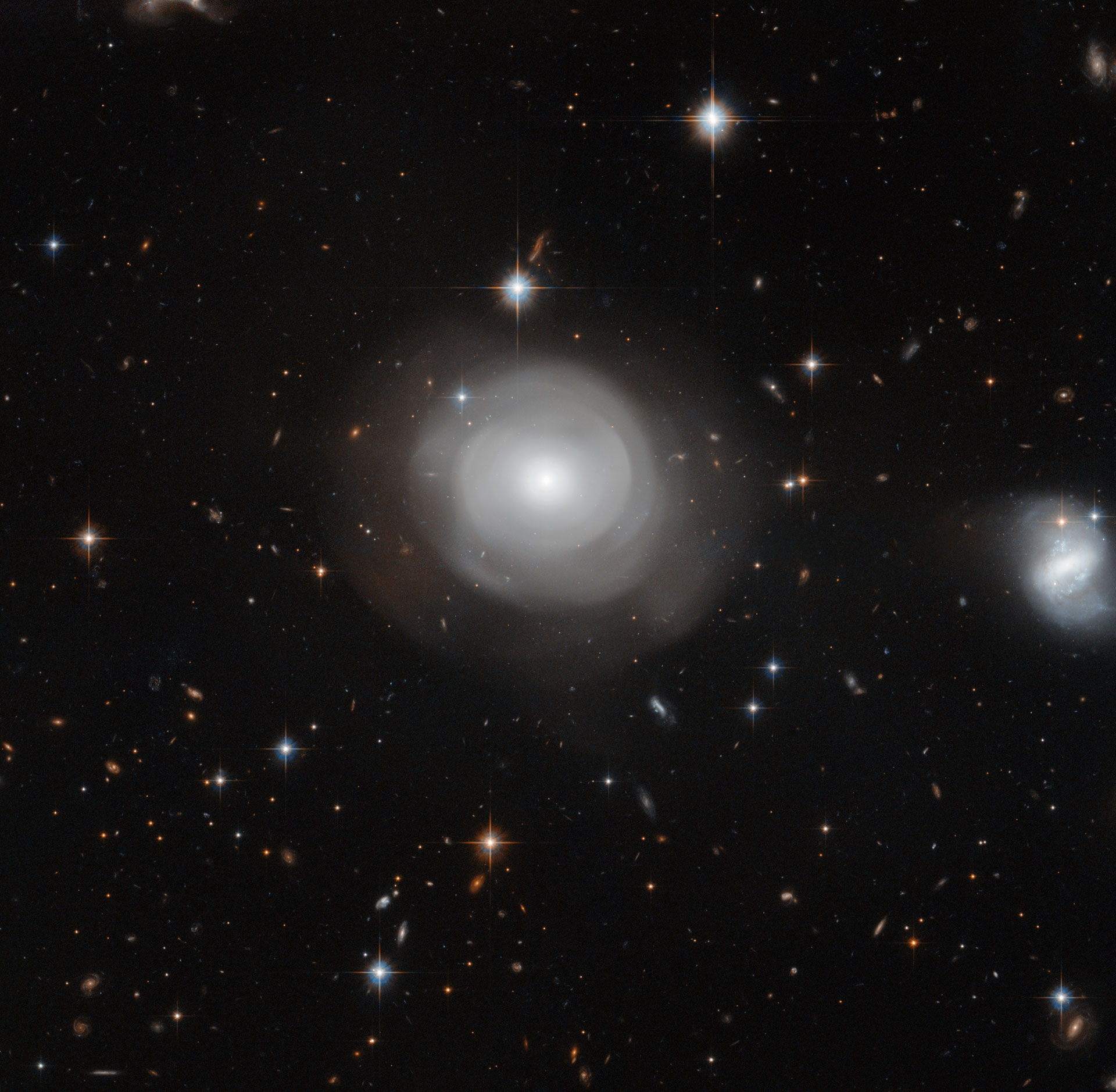
    galaxy ESO 381-12 is located roughly 270 million light-years from Earth in the constellation of Centaurus (The Centaur). Credit: NASA, ESA, P. Goudfrooij (STScI)

    The Hubble Space Telescope has captured a new image of the ghostly shells of galaxy ESO 381-12, set against a backdrop of distant galaxies.

    The strikingly uneven structure and the clusters of stars that orbit around the galaxy suggest that ESO 381-12 may have been part of a dramatic collision sometime in its relatively recent past.

    Located roughly 270 million light-years from Earth in the constellation of Centaurus (The Centaur), a bright constellation in the southern sky, ESO 381-12, also known as PGC 42871, is categorized as a lenticular galaxy — a hybrid galaxy type that shares properties with both spiral galaxies and elliptical galaxies.

    The delicate shells that bloom outwards from ESO 381-12 are very rarely found around this type of galaxy and their cause is a bit of a cosmic mystery. It is thought that PGC 42871 may have recently interacted with another galaxy, sending shock waves through its structure much like ripples in a pond. These galactic mergers are violent processes, smashing together material within the clashing galaxies and completely changing how they look and how they will evolve in the future. This violent event likely triggered a wave of star formation throughout the galaxy, leading to the creation of many hot young stars.


    This video pans over NASA/ESA Hubble Space Telescope observations of the galaxy ESO 381-12 as the NASA/ESA Hubble Space Telescope sees it.

    Astronomers have studied ESO 381-12 in detail because of its very unusual structure. It was one of a sample of galaxies explored by Hubble’s Advanced Camera for Surveys during a recent study of the properties of shell galaxies created in merger events a billion or so years ago.

    The prominent galaxy at the right of the frame, known as ESO 381-13 or PGC 42877, is a different beast altogether and both active star formation and dust can be seen within it. However, ESO 381-13 and the shell galaxy are at very similar distances from Earth and, despite their differences, may well be interacting.

    Never miss a breakthrough: Join the SciTechDaily newsletter.
    Follow us on Google and Google News.

    Astronomy Galaxy Hubble Space Telescope Popular
    Share. Facebook Twitter Pinterest LinkedIn Email Reddit

    Related Articles

    A Real ‘Galactic Portal’ – This Is an Actual Hubble Picture, Not CGI

    Hubble Snaps Spiral Galaxy’s Profile – From Hydra Constellation, 80 Million Light-Years Away

    Merging Galaxies Spotted by Hubble Space Telescope

    Hubble Image of the Week – A Distinctly Disorganized Dwarf Galaxy

    Hubble Views Dwarf Galaxy NGC 1140

    Hubble Views Spiral Galaxy NGC 3344

    Hubble Image of Peculiar Galaxy Pair Arp 116

    Hubble Captures a New Image of Messier 107

    Hubble Views the Needle Galaxy, NGC 4565

    Leave A Reply Cancel Reply

    • Facebook
    • Twitter
    • Pinterest
    • YouTube

    Don't Miss a Discovery

    Subscribe for the Latest in Science & Tech!

    Trending News

    AI Could Detect Early Signs of Alzheimer’s in Under a Minute – Far Before Traditional Tests

    What if Dark Matter Has Two Forms? Bold New Hypothesis Could Explain a Cosmic Mystery

    This Metal Melts in Your Hand – and Scientists Just Discovered Something Strange

    Beef vs. Chicken: Surprising Results From New Prediabetes Study

    Alzheimer’s Breakthrough: Scientists Discover Key Protein May Prevent Toxic Protein Clumps in the Brain

    Quantum Reality Gets Stranger: Physicists Put a Lump of Metal in Two Places at Once

    Scientists May Have Found the Key to Jupiter and Saturn’s Moon Mystery

    Scientists Uncover Brain Changes That Link Pain to Depression

    Follow SciTechDaily
    • Facebook
    • Twitter
    • YouTube
    • Pinterest
    • Newsletter
    • RSS
    SciTech News
    • Biology News
    • Chemistry News
    • Earth News
    • Health News
    • Physics News
    • Science News
    • Space News
    • Technology News
    Recent Posts
    • Simple and Cheap Blood Test Could Detect Cancer and Other Diseases Before Symptoms Appear
    • Century-Old Cleaning Chemical Linked to 500% Increased Risk of Parkinson’s Disease
    • What if Your Memories Never Happened? Physicists Take a New Look at the Boltzmann Brain Paradox
    • Students Found an Ancient Star That Shouldn’t Be in the Milky Way
    • Astronomers Solve 50-Year Mystery and Reveal Hidden Culprit Behind Strange X-Ray Emissions
    Copyright © 1998 - 2026 SciTechDaily. All Rights Reserved.
    • Science News
    • About
    • Contact
    • Editorial Board
    • Privacy Policy
    • Terms of Use

    Type above and press Enter to search. Press Esc to cancel.