

McMaster University research disproves the idea that menstrual cycle phases impact muscle growth, debunking cycle syncing for exercise.
New research from kinesiologists at McMaster University challenges the widely held belief that timing resistance training to specific phases of the menstrual cycle enhances muscle growth and strength.
The study found that exercising at different points in the cycle had no measurable effect—either positive or negative—on the body’s ability to synthesize new muscle proteins, a key process for muscle building and maintenance.
Published in the Journal of Physiology, these findings debunk the popular practice of “cycle syncing,” which suggests adjusting workouts based on hormonal fluctuations throughout the menstrual cycle.
“Our findings conflict with the popular notion that there is some kind of hormonal advantage to performing different exercises in each phase. We saw no differences, regardless of cycle timing,” explains Lauren Colenso-Semple, lead author of the study and a former graduate student in the Department of Kinesiology, who conducted the work while at McMaster.
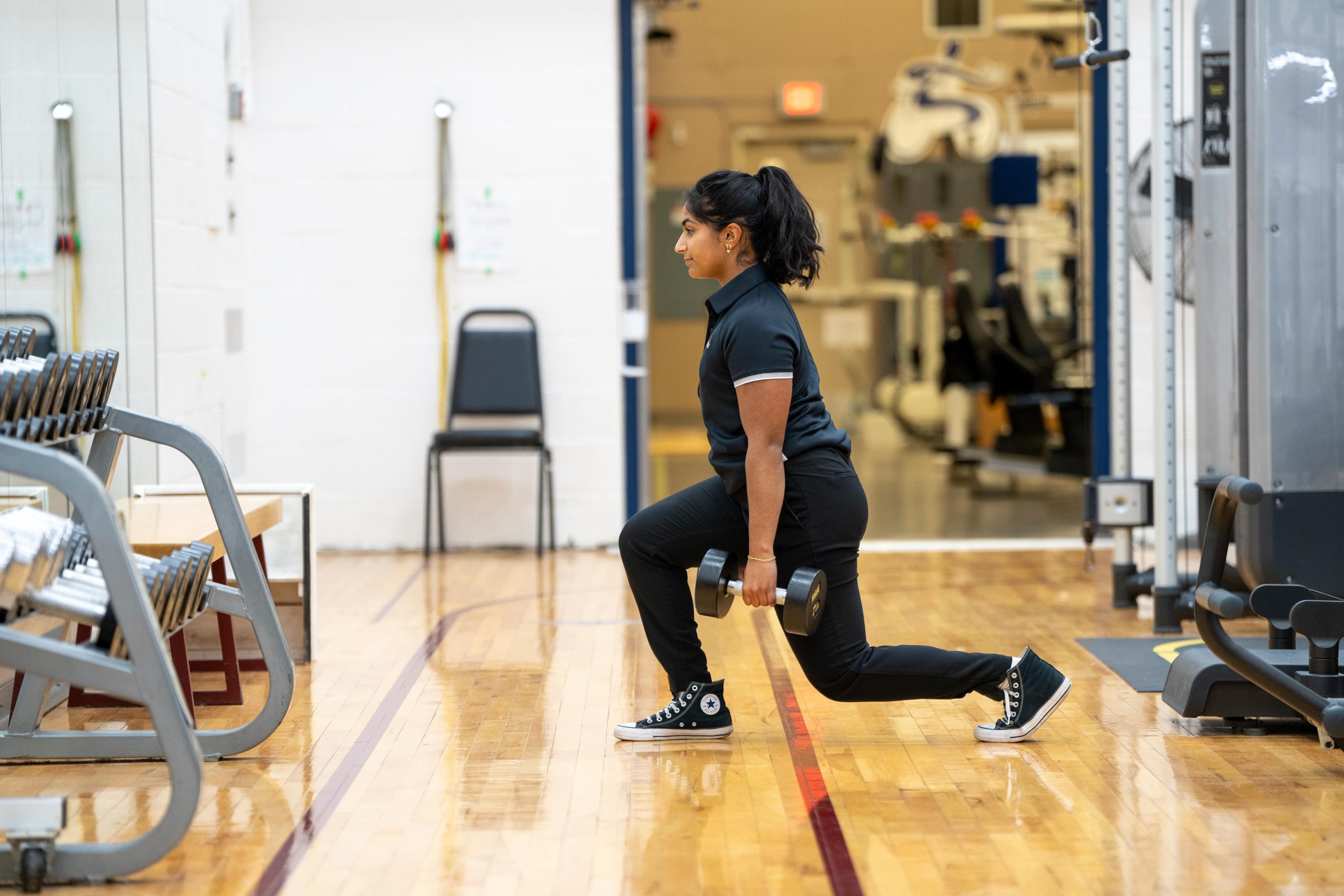
For the study, researchers monitored the menstrual cycles of participants—all healthy young women—for three months to confirm their cycles were normal. Contrary to popular belief, only a small percentage of women—about 12 percent—have a consistent 28-day cycle and ovulate regularly on day 14 or the ‘textbook’ menstrual cycle.
Testing Muscle Protein Synthesis Across Cycle Phases
Participants then ingested a tracer molecule, a benign substance designed to track and monitor muscle protein levels. They performed heavy resistance exercise during two distinct phases of their menstrual cycles: the follicular phase, when estrogen levels are at their peak, and the luteal phase, characterized by peak progesterone levels.
Researchers observed no effect of either menstrual cycle phase on the production of muscle proteins.
Cycle syncing has been made popular by internet influencers to coordinate workouts, certain diets, and lifestyle behaviors with the menstrual cycle. There are fitness apps for tracking cycles, and social media channels are rife with advice and recommendations.
Proponents routinely cite a handful of scientific studies on animals as evidence that fluctuations in ovarian hormones can affect how human muscles respond to exercise, but this study shows that not to be correct.
“Our work shows that women who want to lift weights and recondition their muscles should feel free to do so in any phase of their cycle. There is no physiological difference in response to the exercise,” says Stuart Phillips, the Canada Research Chair in Skeletal Muscle Health at McMaster who supervised the study. “It is important to tailor your training to how you feel.”
Scientists highlight the need for further research, particularly studies that focus on women’s health. This includes investigating how training, in relation to the menstrual cycle, affects women and how both oral and non-oral contraceptives influence their responses to exercise.
Reference: “Menstrual cycle phase does not influence muscle protein synthesis or whole-body myofibrillar proteolysis in response to resistance exercise” by Lauren M. Colenso-Semple, James McKendry, Changhyun Lim, Philip J. Atherton, Daniel J. Wilkinson, K. Smith and Stuart M. Phillips, 4 December 2024, The Journal of Physiology.
DOI: 10.1113/JP287342
S.M.P. has received grant funding from the Canadian Institutes for Health Research, the National Science and Engineering Research Council of Canada, the US National Institutes for Health, Roquette Freres, Nestle Health Sciences, Friesland Campina, The US National Dairy Council, Dairy Farmers of Canada and Myos. S.M.P. has received travel expenses and honoraria for speaking from Nestle Health Sciences and Nutricia. S.M.P. holds patents licensed to Exerkine Inc. but reports no financial gains.
Never miss a breakthrough: Join the SciTechDaily newsletter.
Follow us on Google and Google News.