
Their research focuses on the legacy of al-Ḥasan Ibn al-Haytham known in Latin as “Alhazen” and particularly his most influential work titled Book of Optics, reputed in Arabic as Kitab al-Manazir and first circulated in Europe via its Latin translation dubbed ‘Perspectiva’. Ibn al-Haytham was born in the southern Iraqi city of Basra in 965 during the Abbasid Caliphate.
The divisions IV-V of this authoritative book have been recently translated into English from Arabic and published by the Warburg Institute under the title “The Optics of Ibn al-Haytham, Books IV–V: On Reflection and Images Seen by Reflection.” Having already rendered divisions I-III into English, the Warburg Institute is bringing together a wide-ranging network of scientists “for a collaborative humanities-science investigation of [Ibn] al-Haytham and the questions his work provokes.
“The role of Alhazen [Ibn al-Haytham] in these processes is simultaneously well-known, but limited; only half of his scientific works have English translation and a quarter are not yet edited.”
Contributions and Methodology
Introducing the new translation, the Warburg Institute describes Ibn al-Haytham as “perhaps the greatest mathematician and physicist of the medieval Arabic/Islamic world. His reputation is based not only on the vast amount of material he was able to process, but also on his rigorous scientific methodology.
“He (Ibn al-Haytham) deals with both the mathematics of rays of light and the physical aspects of the eye in seven comprehensive books. His reinstatement of the entire science of optics sets the scene for the whole of the subsequent development of the subject … influencing figures such as William of Ockham, Kepler, Descartes, and Christaan Huygens.”
Professor Nader El-Bizri of Sharjah University’s College of Arts, Humanities, and Social Sciences has just published an academic review of the Warburg Institute’s translation of Ibn al-Haytham. The article, printed in the International Journal of the Classical Tradition, highlights the strong influence the Arab-Muslim optical scientist has exerted over the ages up to the present day.
Ibn al-Haytham’s Book of Optics, Prof. El-Bizri writes, “constituted a monumental foundational opus in the history of science and the visual arts from the Middle Ages to the early modern period in the European milieu and the Islamicate context … The reception of Ibn al-Haytham’s Optics in the European milieu took place from the High Middle Ages via Gerard of Cremona’s Toledo circle in terms of its Latinate translations, and subsequent influence on Franciscan, Dominican, and Jesuit opticians across Europe.
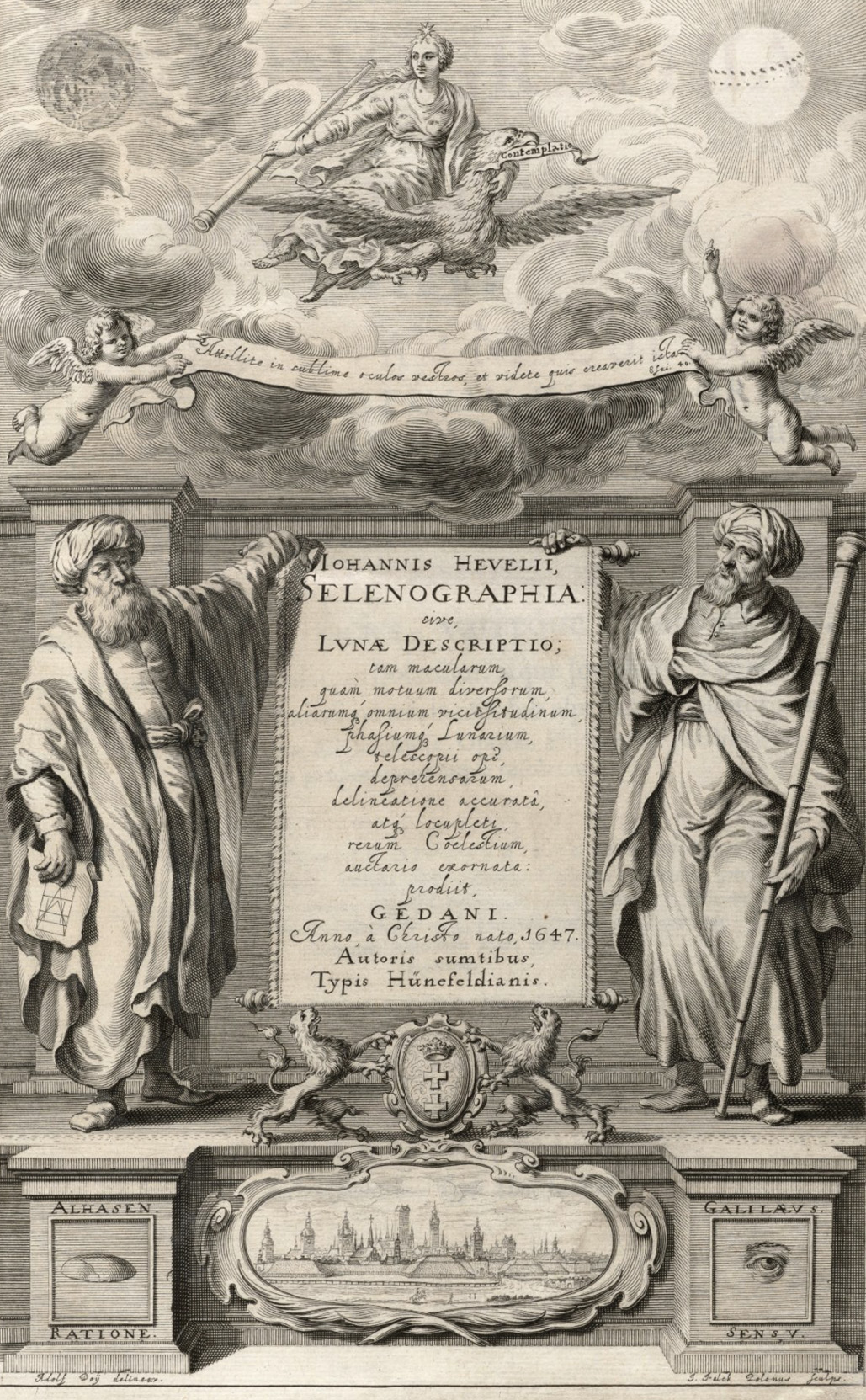
“It influenced François d’Aguilon’s Opticorum libri sex within the Antwerp Jesuit mathematical school and had a direct impact on Johannes Hevelius’s Selenographia. The Optics was also consulted by Girard Desargues, René Descartes, Johannes Kepler, and Christaan Huygens.”
Ongoing Translations and Impact
Prof. El-Bizri works closely with the Warburg Institute assisting its attempts to reintroduce Ibn al-Haytham to the west. “A remarkable thinker, not only did Ibn al-Haytham revolutionize optical thought by mathematizing its study, [but] his thinking also went on to have similar revolutionary effects in medieval Europe.”
The Warburg Institute is investing in rendering the writings of Ibn al-Haytham on optics into English, which Prof. El-Bizri describes as “voluminous.” “Ibn al-Haytham’s Book of Optics indicates with evidence the impact of Arabic sciences and philosophy on the history of science and the architectural and visual arts in Europe, as well as demonstrating how science and the arts influence each other in the manner the studies of optics in their mathematized physics inspired the invention of projective geometric constructions of perspective as a novel Renaissance method of painting and architectural design.”
Prof. El-Bizri adds “The impact of this book is fundamental not only in the history of science from the High Middle Ages till the early-modern period in Europe, but it was also foundational for architecture and the visual arts in the Italian Renaissance and up till the late Baroque era. Moreover, it has further significance in modern conceptions of the mathematization of physics, the reliance on experimentation in science, and the philosophical analysis of perception.”
Asked about the importance of translating Ibn al-Haytham into English despite the lapse of nearly 1000 years, Prof. El-Bizri says the Arab-Muslim scientist’s theories and methodologies, specifically those dealing with optics are still considered “seminal” in the literature. Ibn al-Haytham has had a “foundational impact on the history of science and the arts in Europe.”
The influence of Ibn al-Haytham’s writings in the European milieu, according to Prof. El-Bizri, cannot be overlooked. The Arab-Muslim scientist had “a notable effect on Biagio Pelacani da Parma’s Questiones super perspectiva communi, Leon Battista Alberti’s De pictura, Lorenzo Ghiberti’s Commentarii, culminating in the first printed Latin version in the publication of Friedrich Risner’s Opticae thesaurus in the sixteenth century.
“Then, in the seventeenth century, it influenced François d’Aguilon’s Opticorum libri sex within the Antwerp Jesuit mathematical school and had a direct impact on Johannes Hevelius’s Selenographia.”
In the Book of Optics, notes Prof. El-Bizri, Ibn al-Haytham establishes an “inventive and precise scientific experimental method (al-iʿtibār al-muḥarrar) with its controlled verificative repeated testing, as framed by isomorphic compositions between physics and mathematics.”
He adds that Ibn al-Haytham in his Optics “aims at elucidating the nature of visual perception through studies on the anatomy and physiology of the eyes, the optic nerves and the frontal part of the brain, along with cognitive psychology and the analysis of psychosomatic ocular motor kinaesthetic acts.”
Reference: “The Optics of Ibn al-Haytham, Books IV–V: On Reflection and Images Seen by Reflection” by Nader El-Bizri, 20 February 2024, International Journal of the Classical Tradition.
DOI: 10.1007/s12138-024-00654-4
Never miss a breakthrough: Join the SciTechDaily newsletter.
Follow us on Google and Google News.
5 Comments
It’s amazing what funding from Qatar can accomplish – just look at America’s colleges. A moslem physicist is discovered and paraded around? Does mean we should put 1500 years of death and persecution by lsIam into a memory hole?
I do wish we could dispense with religious identifications.
Headline should say “who,” not “that.”
Thank you for the note, title has been corrected.
Science stands on its own merits. Why do you feel the need to discuss or even mention the religious beliefs of scientists? When announcing a new discovery or study, do you typically highlight the scientist’s religion?