
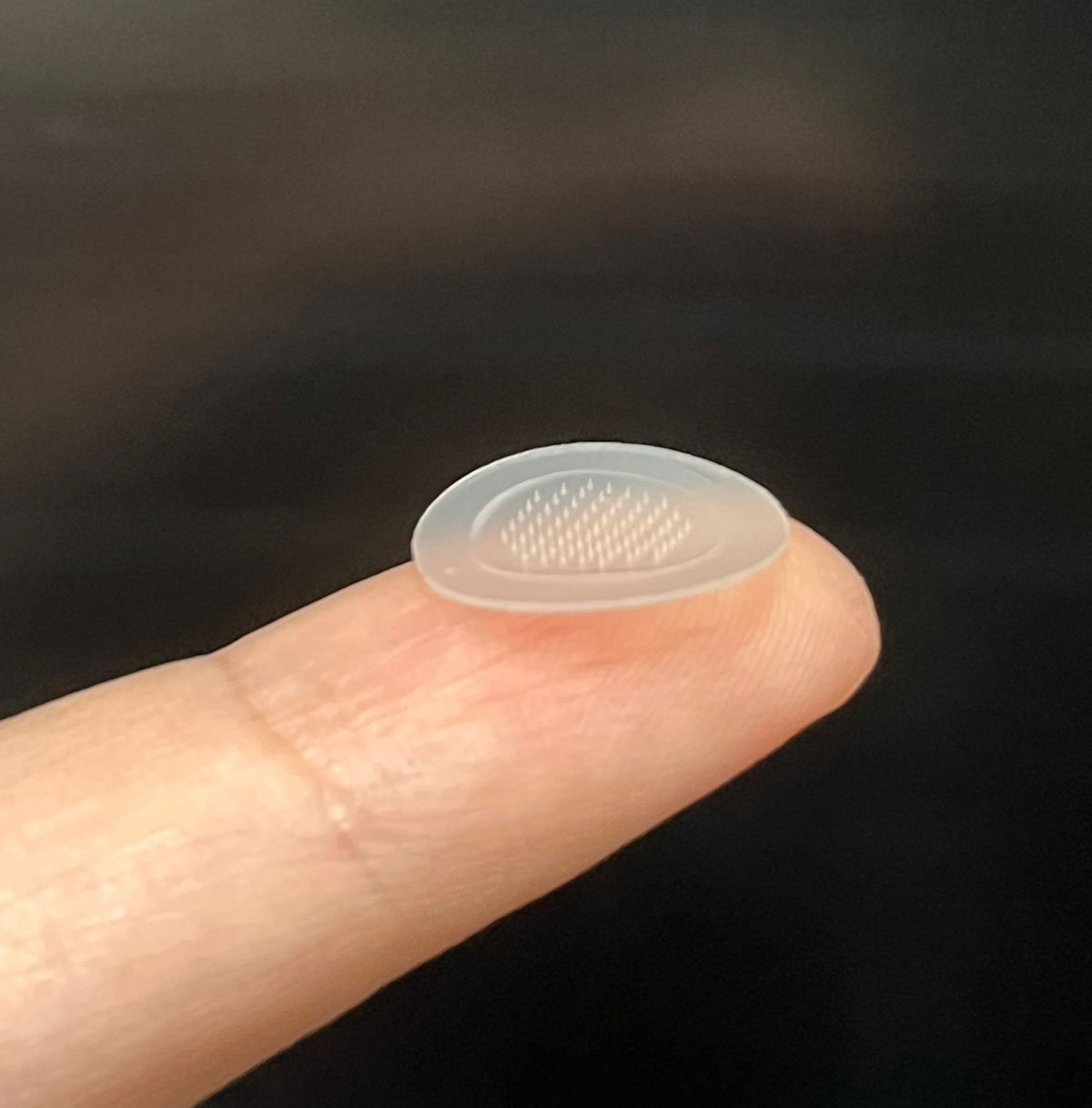
A new microarray acne patch eliminates pimples in just seven days and could pave the way for future medical treatments far beyond skincare.
Waking up with a pimple does not have to be stressful. Pimple patches are small, sticker-like bandages that cover a blemish and support healing.
A research team reporting in ACS Applied Materials & Interfaces created a two-step patch system that uses tiny spikes to grip the skin and deliver either antibacterial or anti-inflammatory ingredients directly to the pimple. In human clinical trials, pimples treated with this approach disappeared within seven days.
Often called acne stickers, these patches are typically made from polymers that soak up excess oil and moisture. Some versions include medications that calm inflammation or fight infection. Many medicated products use microarrays (rows of teensy spikes) that pass through the skin’s outer layer to deposit active compounds. However, microarrays can shift while being worn and may irritate the skin.
To address this issue, Shayan Fakhraei Lahiji, Yong-Hee Kim, and colleagues set out to develop a medicated acne patch with a microarray platform that stays in place.
Innovative Patch Design
To create their patch, the researchers first printed a microarray of arrowhead-shaped spikes using a specialized 3D printer. This unique shape helped the patch lock in place when attached to the skin. The patch’s backbone is made of hyaluronic acid — a gooey polymer that’s a common skincare ingredient —that was mixed with either antibacterial agents (including salicylic acid and Cannabis sativa extract) or anti-inflammatory agents (including niacinamide and chamomile extract).
These patches were clinically tested on 20 participants. On the first day, the participants applied the antibacterial patch, and for the next six days, they applied a new anti-inflammatory patch. The hyaluronic acid-based microarray dissolved into the skin within 30 to 90 minutes, with no pain or irritation. After three days, participants noted an 81% reduction in acne lesions in the treated areas compared to untreated pimples, and after seven days, the treated pimples were gone altogether. Additionally, researchers noted a significant reduction in sebum — an oily substance that causes acne. Around 95% of participants report that they were satisfied with the results of the treatment.
The researchers plan to make their new patch available for purchase in fall 2025, in both South Korea and the United States. In addition, the technology could be reformulated to deliver other therapies, beyond just acne-fighting compounds.
“Our work highlights the potential of microarray patches as a platform for applications beyond acne treatment, ranging from skin disorders to obesity therapies and vaccine delivery,” explains Kim.
Reference: “Dual-Phase Antibacterial and Anti-inflammatory Self-Locking Microarray Patches for the Effective Treatment of Acne Vulgaris” by Jisook Park, Jaehyun Kim, Shayan Fakhraei Lahiji and Yong-Hee Kim, 31 July 2025, ACS Applied Materials & Interfaces.
DOI: 10.1021/acsami.5c07718
The authors acknowledge funding from the Technology Development Program of the Korean Ministry of SMEs and Startups; the Korea Health Technology R&D Project through the Korea Health Industry Development Institute; and the Korean Ministry of Health & Welfare.
The authors are employees of Cursus Bio Inc., a company focusing on microarray-based technologies.
Never miss a breakthrough: Join the SciTechDaily newsletter.
Follow us on Google and Google News.
1 Comment
So…..instead of pimples, people will have these little patches all over their faces? Don’t pimples last less than a week normally? I’ve gotten lots of acne over my life and I’d rather have pimples that go away in a few days than wear patches on my face for a week. Good grief.