
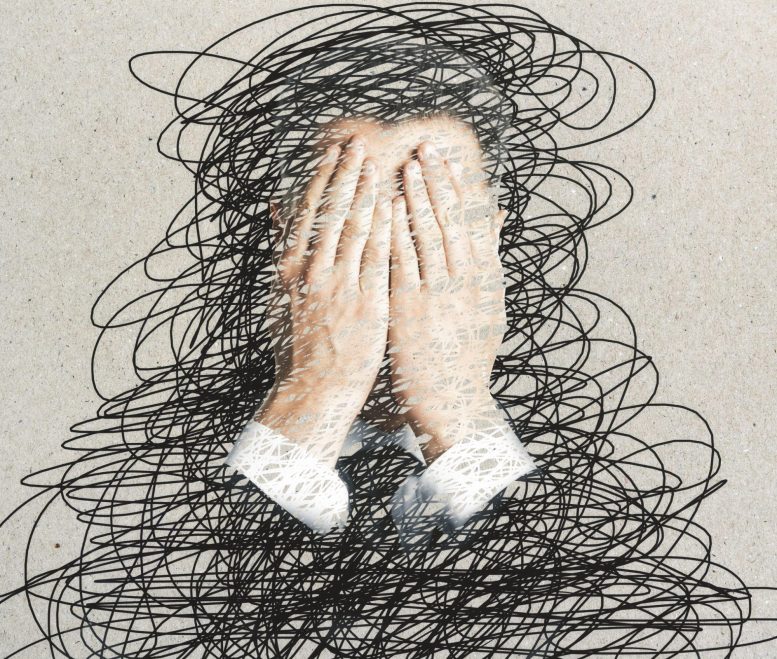
COVID-19 stress affected men and women differently, with job concerns impacting men and family worries affecting women.
Do you recall the early days of the 2020 Corona pandemic? When businesses, eateries, cinemas, and theaters were shut down. When gatherings with friends and family were restricted. When children had to adapt to learning from their bedrooms and travel was out of the question.
Nowadays, it seems that many have moved past those challenging times. However, the multiple measures implemented to combat the virus undoubtedly placed immense pressure on many. Concerns about job security, anxiety over ailing family members, and the tension of balancing work-from-home with homeschooling in cramped spaces: All this has not remained without effects, as numerous studies show.
The Crucial Factor Is Anxiety
How and to what extent have these experiences affected the mental health and quality of life of women and men in the first year of the COVID-19 pandemic? This has been investigated by a research team of the University and the University Hospital Würzburg. In detail, the scientists were interested in the relationship between worries about the workplace and about other people with a person’s own mental health problems such as anxiety and depression, and with their quality of life in general, how these are influenced by the support from friends or at work – and whether the results show differences between men and women.

The findings are unambiguous: in this complex of different variables and influencing factors, anxiety plays a central part. There are, however, distinct gender-specific differences: “In men, anxiety increases along with concerns about the job, an effect which does not show in women. On the other hand, we were able to register an increase in anxiety levels in women parallel to an increase in their worries about family and friends,” says Grit Hein. In addition, the study shows that women in such times respond positively to support from friends and family by experiencing enhanced quality of life. In men, this phenomenon did not manifest itself.
Data on the Influence of Gender Was Lacking
Grit Hein is a Professor of Translational Social Neuroscience at the Clinic and Polyclinic for Psychiatry, Psychosomatics, and Psychotherapy at the University Hospital. She and her postdoc Martin Weiß led the study, the results of which have now been published in the journal Scientific Reports.
“In the past, numerous studies have investigated the influence of psychosocial factors such as support from friends and colleagues and financial, professional, or personal worries on mental health and the quality of life. Yet, data on whether these correlations are the same for men and women were lacking,” says Grit Hein, explaining the background of the study. Broadening earlier studies, the Würzburg research team has therefore now examined the influence of these factors in relation to gender.
A Study With Around 2,900 Participants
The team obtained the relevant information from a large group of test subjects: the participants of the so-called STAAB study. This study comprises a cohort of around 5,000 randomly selected volunteers from the general population of Würzburg and originally focused on the development of cardiovascular diseases. During the COVID-19 pandemic, the program was spontaneously expanded to include the psychosocial impacts of the pandemic, the lockdown, and other side effects.
A total of 2,890 people (1,520 women and 1,370 men) took part in the survey. Their ages ranged from 34 to 85 years, with a median of 60 years. Between June and October 2020, they had to fill out an extensive questionnaire about their mental health. Among other things, they were asked to provide information about how strongly they felt supported by their social environment, their colleagues and superiors, and whether they had someone with whom they could discuss their problems. They were also asked to what extent bans on the contact with parents and grandparents burdened them and how much stress they felt at work or at school. Financial problems or worries about them were the subject of further questions.
To evaluate the data, Hein and her team used a special method: the so-called network analysis. “Analyses based on a network approach enable a graphical representation of all variables as individual nodes,” Hein explains. Thus, it is possible to identify variables that are particularly related to other variables. The network can, for example, show complex relationships between symptoms of different mental disorders and thus explain possible comorbidities.
Results Fit Traditional Gender Norms
Grit Hein and Martin Weiß were hardly surprised by the results. “The observation that men are more strongly associated with work and women more strongly with family and friends can be traced back to traditional gender norms and roles,” Hein explains. Hence, men usually feel more affected by job insecurity and unemployment, which leads to higher psychological stress. Women, on the other hand, experience more strain when they feel that they are neglecting their family.
It is also plausible that women cope better psychologically when they receive support from friends and family: “This is in line with the traditional female family role, which includes a stronger tendency to maintain close social contacts and to seek social support in order to reduce stress and increase well-being,” says Hein.
Even though these findings are unambiguous, the study leaders point to a number of limitations. The most important: “Since the COVID-19 pandemic presented a very specific context, it remains to be clarified whether our results are transferable to general pandemic-independent situations.” One finding, however, is indisputable: “Our results underline the need to consider social aspects in therapeutic interventions in order to improve the mental health of women and men.”
Reference: “Differential network interactions between psychosocial factors, mental health, and health-related quality of life in women and men” by Martin Weiß, Marthe Gründahl, Jürgen Deckert, Felizitas A. Eichner, Mirjam Kohls, Stefan Störk, Peter U. Heuschmann, Grit Hein and the STAAB-COVID Study Group, 19 July 2023, Scientific Reports.
DOI: 10.1038/s41598-023-38525-8
The study was funded by the Bavarian Ministry of Research and Art, the German Ministry of Research and Education, and the German Research Foundation.
Never miss a breakthrough: Join the SciTechDaily newsletter.
Follow us on Google and Google News.