
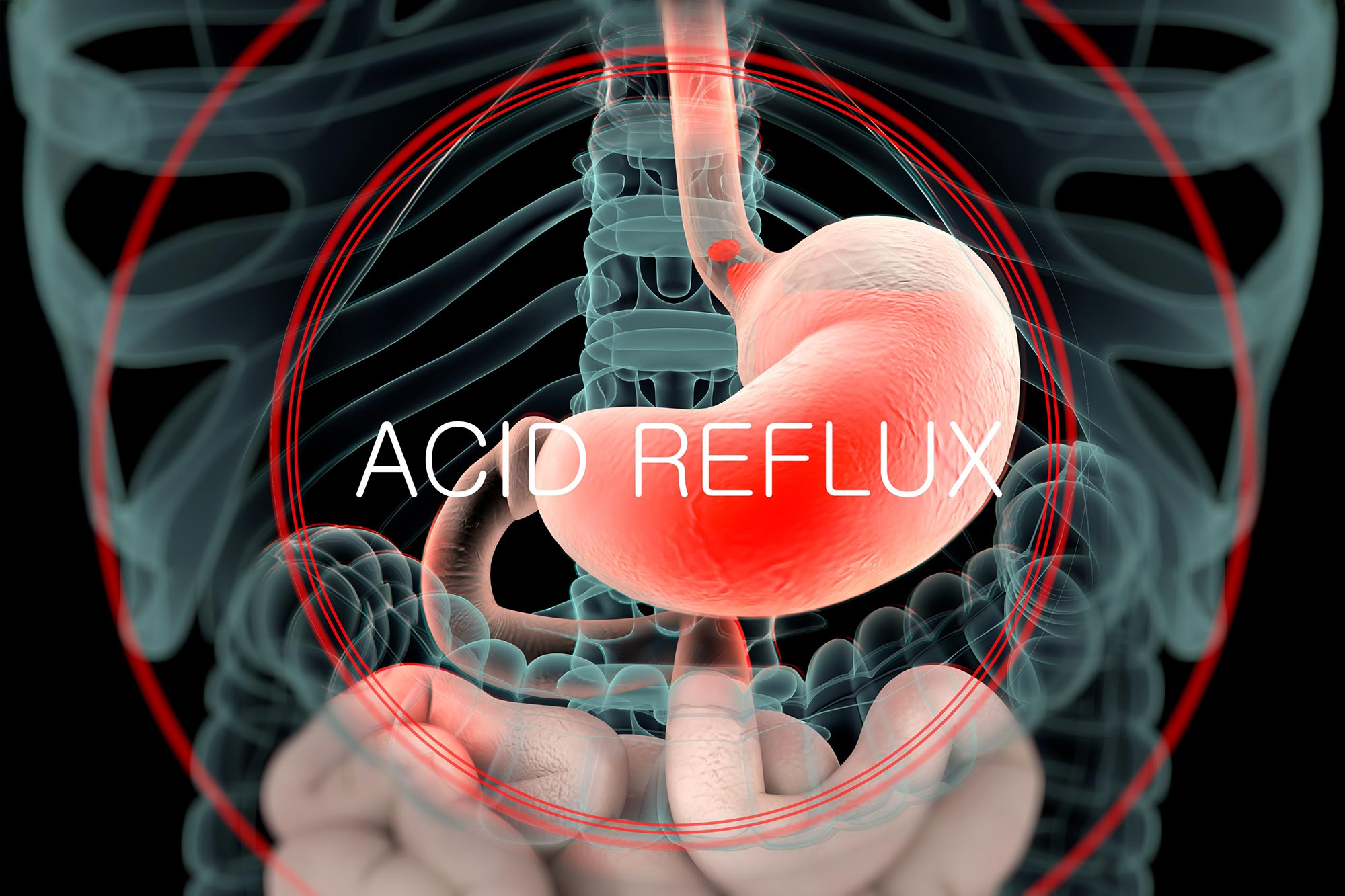
Proton pump inhibitors (PPIs) like pantoprazole (Protonix) and omeprazole (Prilosec OTC, Zegerid, OmePPi) are commonly used to reduce stomach acid, treating conditions like heartburn and ulcers. These drugs are designed to activate only in highly acidic environments, targeting the stomach’s proton pumps. However, long-term use has been linked to various health risks, raising concerns about their effects beyond the stomach.
Researchers recently discovered that PPIs can be activated in neutral pH environments due to their interaction with zinc-binding proteins. This unexpected activation may disrupt essential proteins, particularly those involved in the immune system, offering new insight into PPI-related side effects and potential risks.
How PPIs Reduce Gastric Acid
Excess stomach acid can lead to more than just heartburn — it can also cause chronic conditions like gastritis and stomach ulcers. To manage these issues, doctors often prescribe proton pump inhibitors (PPIs), a class of medications that includes pantoprazole, omeprazole, and rabeprazole. These drugs work by blocking the proton pump, an enzyme in the stomach lining responsible for acid production, thereby reducing acid levels.
PPIs are prodrugs, meaning they start in an inactive form and require activation inside the body. This activation occurs in the stomach’s acidic environment, where protons (hydrogen ions) trigger the transformation of the PPI into its active form. Because the proton pump naturally produces a high concentration of protons, PPIs are designed to activate specifically at this site, effectively shutting down acid production. According to current understanding, this proton-dependent activation keeps PPIs targeted to the stomach.
Health Risks of Long-Term PPI Use
While short-term PPI use is generally safe, long-term use has been linked to potential health risks. Some studies suggest prolonged use may increase the risk of heart attacks, strokes, dementia, and infections. This raises an important question: Can PPIs activate outside the stomach and affect other proteins, even in environments that aren’t highly acidic? Scientists are now investigating whether PPIs may have effects beyond what was previously thought.
A team of researchers led by biochemist Tobias Dick and chemist Aubry Miller, both at the DKFZ, have been looking into this question. They used a method known as click chemistry, a strategy for labeling molecules that was awarded the Nobel Prize three years ago. They used it to track rabeprazole, a typical representative of PPIs, in human cells in the culture dish, far from an acidic environment.
A Surprising Discovery: PPIs Activate in Neutral pH
In the process, the team made a surprising observation: the PPI was activated in the pH-neutral interior of the cells and bound to dozens of proteins there. Further analysis showed that these were zinc-binding proteins. “This led us to hypothesize that protein-bound zinc can lead to the activation of PPIs, independently of the presence of protons,” explains biologist Teresa Marker, first author of the publication.
In the course of further investigations, the researchers were able to show that protein-bound zinc does in fact form a chemical bond with the PPI, which then leads to the activation of the PPI. The activated PPI is highly reactive and combines on the spot with the zinc-carrying protein. This in turn disrupts the structure and function of the attacked protein.
“From a chemical point of view, this result makes sense, because zinc can mimic the effect of protons and behave like an acid,” explains chemist Aubry Miller of the DKFZ.
New Perspectives on PPI Side Effects
Among the zinc-carrying proteins that were most affected by the PPI, some play a role in the immune system. However, further studies are needed to determine whether the newly discovered activation mechanism is associated with the known or suspected side effects of PPIs. “These results open up new perspectives for a better understanding of the side effects of PPIs,” summarizes Tobias Dick.
Reference: “Site-specific activation of the proton pump inhibitor rabeprazole by tetrathiolate zinc centres” by Teresa Marker, Raphael R. Steimbach, Cecilia Perez-Borrajero, Marcin Luzarowski, Eric Hartmann, Sibylle Schleich, Daniel Pastor-Flores, Elisa Espinet, Andreas Trumpp, Aurelio A. Teleman, Frauke Gräter, Bernd Simon, Aubry K. Miller and Tobias P. Dick, 20 February 2025, Nature Chemistry.
DOI: 10.1038/s41557-025-01745-8
Never miss a breakthrough: Join the SciTechDaily newsletter.
Follow us on Google and Google News.