
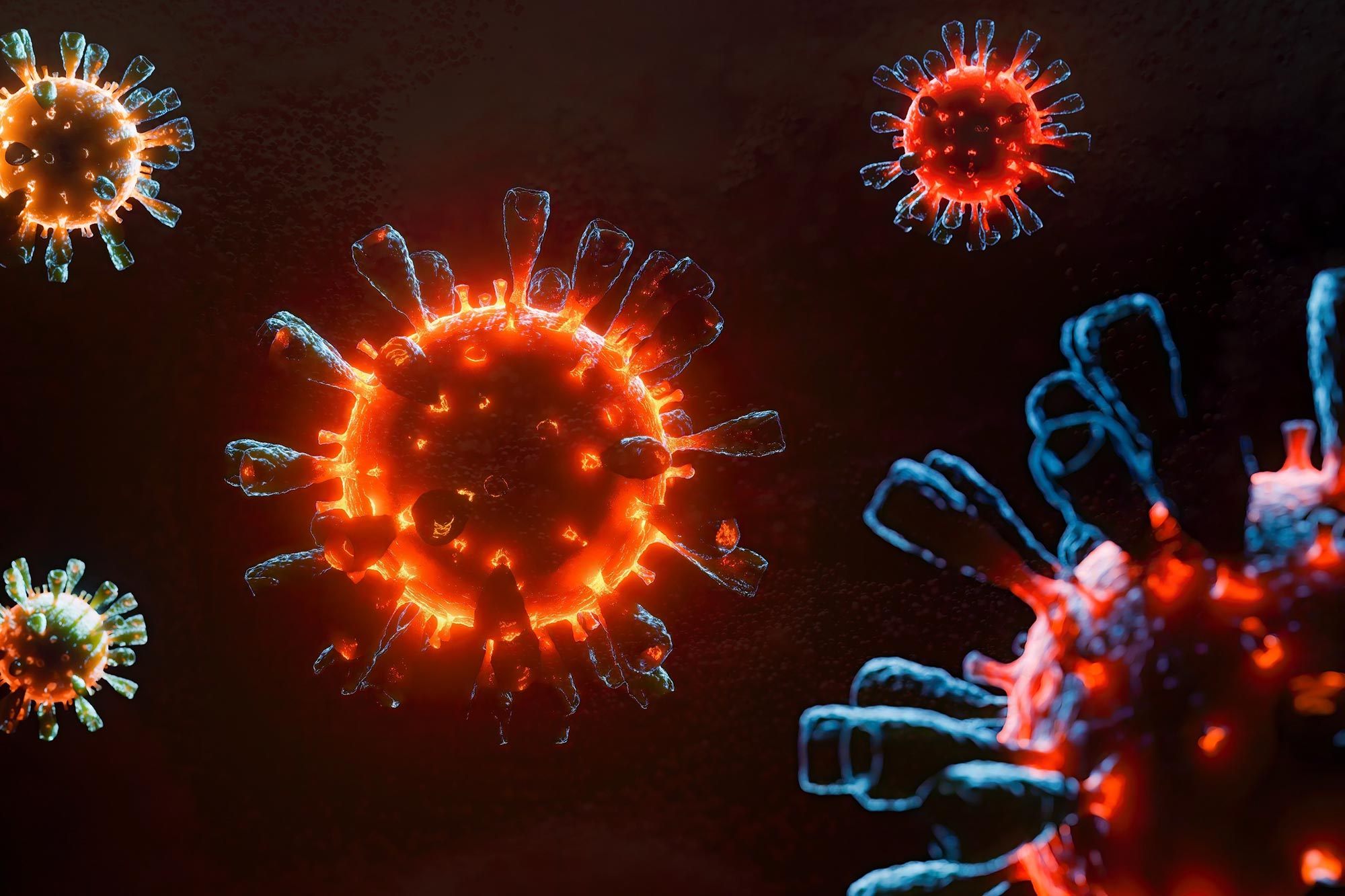
A new study identifies raccoon dogs and civet cats as likely carriers of SARS-CoV-2 at the Huanan market, supporting the theory that infected animals caused the COVID-19 pandemic. The findings highlight the need to understand pandemic origins and prevent future zoonotic spillovers.
A recent global study has compiled a list of wildlife species found in the market believed to be the source of SARS-CoV-2, the virus that caused the COVID-19 pandemic, in late 2019. This research is based on new metatranscriptomic data analysis provided by the Chinese Center for Disease Control and Prevention (CDC).
The data come from more than 800 samples collected in and around the Huanan Seafood Wholesale market beginning on January 1, 2020, and from viral genomes reported from early COVID-19 patients. The research appears September 19 in the journal Cell.
“This is one of the most important datasets that exists on the origin of the COVID-19 pandemic,” says co-corresponding author Florence Débarre of the French National Centre for Scientific Research (CNRS). “We’re extremely grateful that the data exist and were shared.”
“This paper adds another layer to the accumulating evidence that all points to the same scenario: that infected animals were introduced into the market in mid- to late November 2019, which sparked the pandemic,” says co-corresponding author Kristian Andersen of Scripps Research.
“We have analyzed, in new and rigorous ways, the vitally important data that the Chinese CDC team collected,” says co-corresponding author Michael Worobey of the University of Arizona. “This is an authoritative analysis of that data and how it fits in with the rest of the huge body of evidence we have about how the pandemic started.”
The Market Investigation in Early 2020
On January 1, 2020, after the animals were removed and just hours after the market was closed, investigators from the Chinese CDC went to the market to collect samples. They swabbed the floors, walls, and other surfaces of the stalls; they came back days later to focus on surfaces in stalls selling wildlife, such as a cage and carts used to move animals, and then also collected samples from the drains and sewers.
They performed metatranscriptomic sequencing of the samples, a technique aiming to obtain all RNA sequences (and which can pick up DNA as well) from all organisms present in the samples—viruses, bacteria, plants, animals, humans. The Chinese CDC team, led by Liu Jun, published their data and results in 2023 in the journal Nature. However, the article left unresolved the exact identities of the animal species found in the data that could represent plausible intermediate hosts. The Chinese CDC shared their sequencing data on public and open repositories.
According to the latest analysis of these data being published in Cell, SARS-CoV-2 was present in some of the same stalls as wildlife sold at the market—including raccoon dogs (small fox-like animals with markings similar to raccoons) and civet cats (small carnivorous mammals related to mongooses and hyenas). In some cases, genetic material from the SARS-CoV-2 virus and these animals was even found on the same swabs. The exact animal species were identified by genotyping their mitochondrial genomes in the samples.
“Many of the key animal species had been cleared out before the Chinese CDC teams arrived, so we can’t have direct proof that the animals were infected,” Débarre says. “We are seeing the DNA and RNA ghosts of these animals in the environmental samples, and some are in stalls where SARS-CoV-2 was found too. This is what you would expect under a scenario in which there were infected animals in the market.”
“These are the same sorts of animals that we know facilitated the original SARS coronavirus jumping into humans in 2002,” Worobey adds. “This is the most risky thing we can do—take wild animals that are teeming with viruses and then play with fire by bringing them into contact with humans living in the heart of big cities, whose population densities make it easy for these viruses to take hold.”
Evolutionary Analysis and Market Spillovers
The international team also performed evolutionary analysis of the earliest viral genomes reported in the pandemic, including these environmental sequences, and inferred the most likely progenitor genotypes of the virus that infected humans and led to the COVID-19 pandemic. The results imply that there were very few, if any, humans infected prior to the market outbreak. This is consistent with spillovers from animals to humans within the market. There may also have been spillovers of limited impact in the immediate upstream animal trade.
“In this paper, we show that the sequences linked to the market are consistent with a market emergence,” Débarre says. “The main diversity of SARS-CoV-2 was in the market from the very beginning.”
The new study landed on a short list of animal species in the wet market found co-occurring or close to viral samples that could represent the most likely intermediate hosts for SARS-CoV-2. The common raccoon dog, a species susceptible to SARS-CoV-2 and that carried SARS-CoV in 2003, was found to be the most genetically abundant animal in the samples from market wildlife stalls. Genetic material from masked palm civets, which were also associated with the earlier outbreak of SARS-CoV, was also found in a stall with SARS-CoV-2 RNA. Other species such as the Hoary bamboo rat and Malayan porcupines were also found to be present in SARS-CoV-2-positive samples, as well as a multitude of other species.
While the data cannot prove whether one or more of these animals may have been infected, the team’s analyses provide a clear list of the species that most plausibly could have carried the virus and genetic information that could be used to help trace where they originated.
The investigators stress the importance of understanding the origins of the COVID-19 pandemic, especially in light of other recent spillovers, such as the spread of avian flu viruses in cattle in the United States. “There has been a lot of disinformation and misinformation about where SARS-CoV-2 originated,” Worobey says. “The reason it’s so important to find out is that this affects national security and public health, not just in the United States but around the world. And the truth is, since the pandemic started more than four years ago, although there has been an increased focus on lab safety, not much has been done to decrease the chance of a zoonotic scenario like this happening again.”
Reference: “Genetic tracing of market wildlife and viruses at the epicenter of the COVID-19 pandemic” by Alexander Crits-Christoph, Joshua I. Levy, Jonathan E. Pekar, Stephen A. Goldstein, Reema Singh, Zach Hensel, Karthik Gangavarapu, Matthew B. Rogers, Niema Moshiri, Robert F. Garry, Edward C. Holmes, Marion P.G. Koopmans, Philippe Lemey, Thomas P. Peacock, Saskia Popescu, Andrew Rambaut, David L. Robertson, Marc A. Suchard, Joel O. Wertheim, Angela L. Rasmussen, Kristian G. Andersen, Michael Worobey and Florence Débarre, 19 September 2024, Cell.
DOI: 10.1016/j.cell.2024.08.010
Never miss a breakthrough: Join the SciTechDaily newsletter.
Follow us on Google and Google News.
4 Comments
“We have analyzed, in new and rigorous ways, the vitally important data that the Chinese CDC team collected,…” Say no more. If these scientists accept China’s data on this, then our scientists are naive and too trusting.
So, back to square one, eh? An old “market animals” cover story. What a twist, am I right?
The Yanks were so ready to pin it all on the Wuhan biolab… all until it turned out the Wuhan biolab was (and still is) financed by the Yanks.
I don’t think even my aunt Karen is gonna buy your cover stories this time sound.
*around.
The lab-manipulated pathogen called Cov2 wasn’t passed to via pangolins, bats, dogs or any other animal species. It was “released” on an unsuspecting public, as proved in a document publicly presented to top EU officials by investigator Dr David Martin. The horse has bolted, so it’s too late to close the stable door with more deep state propaganda.