
Close Menu
    Facebook X (Twitter) Instagram
    SciTechDaily
    • Biology
    • Chemistry
    • Earth
    • Health
    • Physics
    • Science
    • Space
    • Technology
    Facebook X (Twitter) Pinterest YouTube RSS
    SciTechDaily
    Home»Space»New Technology Is a “Science Multiplier” for Astronomy
    Space

    New Technology Is a “Science Multiplier” for Astronomy

    By Indiana UniversitySeptember 27, 2020No Comments4 Mins Read
    Facebook Twitter Pinterest Telegram LinkedIn WhatsApp Email Reddit
    Share
    Facebook Twitter LinkedIn Pinterest Telegram Email Reddit
    Atronomy Concept
    Federal funding plays a crucial role in advancing astronomy through new technology. Many key breakthroughs in the field over the past three decades have directly or indirectly benefited from this early seed funding.

    Federal funding of new technology is crucial for astronomy, according to results of a study released on September 21, 2020, in the Journal of Astronomical Telescopes, Instruments and Systems.

    The study tracked the long-term impact of early seed funding obtained from the National Science Foundation. Many of the key advances in astronomy over the past three decades benefited directly or indirectly from this early seed funding.
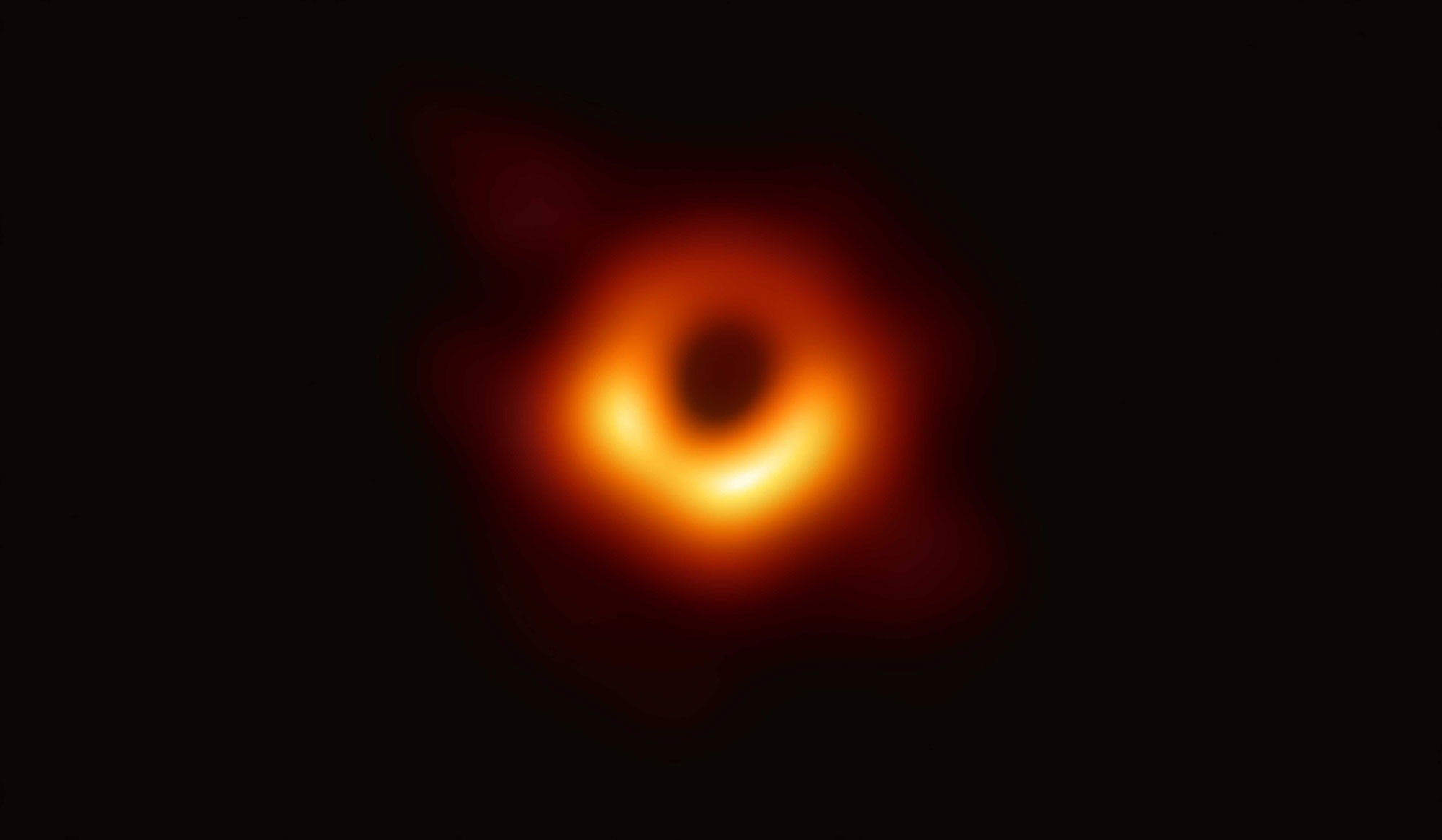
    First Image of a Black Hole
    The first image of a black hole by the the Event Horizon Telescope in 2019 was enabled in part b support for the NSF’s Advanced Technologies and Instrumentation program. Credit: EHT

    Over the past 30 years, the NSF Advanced Technologies and Instrumentation program has supported astronomers to develop new ways to study the universe. Such devices may include cameras or other instruments as well as innovations in telescope design. The study traced the origins of some workhorse technologies in use today back to their humble origins years or even decades ago in early grants from NSF. The study also explored the impact of technologies that are just now advancing the state-of-the-art.

    Peter Kurczynski
    A new study has tracked the long-term impact of early seed funding obtained from the National Science Foundation on many key advances in astronomy over the past three decades. Credit: Rutgers University

    The impact of technology and instrumentation research unfolds over the long term. “New technology is a science multiplier,” said study author Peter Kurczynski, who served as a Program Director at the National Science Foundation and is now the Chief Scientist of Cosmic Origins at NASA Goddard Space Flight Center. “It enables new ways of observing the universe that were never before possible.” As a result, astronomers are able to make better observations, and gain deeper insights, into the mysteries of the cosmos.

    The study also looked at the impact of grant supported research in the peer-reviewed literature. Papers resulting from technology and instrumentation grants are cited with the same frequency as those resulting from pure science grants, according to the study. Instrumentation scientists “write papers to the same degree, and with the same impact as their peers who do not build instruments,” said Staša Milojevic, associate professor of informatics and the director of the Center for Complex Network and Systems Research in the Luddy School of Informatics, Computing and Engineering at Indiana University, who is a coauthor of the study.

    Stasa Milojevi
    Staša Milojevi, Indiana University. A new study has tracked the long-term impact of early seed funding obtained from the National Science Foundation on many key advances in astronomy over the past three decades. Credit: Indiana University

    Also noteworthy is that NSF grant supported research was cited more frequently overall than the general astronomy literature. NSF is considered to have set the gold standard in merit review process for selecting promising research for funding.

    An anonymous reviewer described the article as a “go-to record for anyone needing to know the basic history of many breakthroughs in astronomical technology.” Better observations have always improved our understanding of the universe. From the birth of modern astronomy in the middle ages to the present day, astronomers have relied upon new technologies to reveal the subtle details of the night sky with increasing sophistication.

    This study comes at a critical time of reflection on the nation’s commitment to Science, Technology, Engineering, and Math. U.S. preeminence in STEM is increasingly challenged by China and Europe. This study reveals that investments in technology have a tremendous impact for science. Astronomers today are still reaping the benefits of research that was begun decades ago. The future of astronomy depends upon technologies being developed today.

    Reference: “Enabling discoveries: a review of 30 years of advanced technologies and instrumentation at the National Science Foundation” by Peter L. Kurczynski and Stasa Milojevic, 21 September 2020, Journal of Astronomical Telescopes, Instruments and Systems.
    DOI: 10.1117/1.JATIS.6.3.030901

    A post on the NSF Science Matter blog provides an in-depth look at one discovery enabled by the support of the ATI program: Downloading the first image of a black hole by the Event Horizon Telescope in 2019.

    Never miss a breakthrough: Join the SciTechDaily newsletter.
    Follow us on Google and Google News.

    Astronomy Astrophysics Indiana University National Science Foundation
    Share. Facebook Twitter Pinterest LinkedIn Email Reddit

    Related Articles

    World’s Largest Space Camera Snaps Breathtaking First Photos of the Universe

    Gravitational Waves Detected Using “Cosmic Clocks” and Unseen Spatial Distortions

    New Research Challenges Longstanding Beliefs About the Isolation of “Hot Jupiters”

    Cracking the Magnetic Code: Distant Radio Signals Reveal Earth-Like Exoplanets’ Hidden Force

    Ruins of Ancient Star Cluster Discovered at the Fringes of Our Galaxy

    Surprising Insights Into Star Formation From Unprecedented Survey of the “Nurseries” Where Stars Are Born

    Unusual Comet – 1000 Times More Massive Than Typical – Discovered in Outer Solar System by Dark Energy Survey

    Simulations Shed Light on the Formation of Stars in the Earliest Galaxies

    Large Synoptic Survey Telescope Headed to the Final Design Stage

    Leave A Reply Cancel Reply

    • Facebook
    • Twitter
    • Pinterest
    • YouTube

    Don't Miss a Discovery

    Subscribe for the Latest in Science & Tech!

    Trending News

    Breakthrough Bowel Cancer Trial Leaves Patients Cancer-Free for Nearly 3 Years

    Natural Compound Shows Powerful Potential Against Rheumatoid Arthritis

    100,000-Year-Old Neanderthal Fossils in Poland Reveal Unexpected Genetic Connections

    Simple “Gut Reset” May Prevent Weight Gain After Ozempic or Wegovy

    2.8 Days to Disaster: Scientists Warn Low Earth Orbit Could Suddenly Collapse

    Common Food Compound Shows Surprising Power Against Superbugs

    5 Simple Ways To Remember More and Forget Less

    The Atomic Gap That Could Cost the Semiconductor Industry Billions

    Follow SciTechDaily
    • Facebook
    • Twitter
    • YouTube
    • Pinterest
    • Newsletter
    • RSS
    SciTech News
    • Biology News
    • Chemistry News
    • Earth News
    • Health News
    • Physics News
    • Science News
    • Space News
    • Technology News
    Recent Posts
    • After 37 Years, the World’s Longest-Running Soil Warming Experiment Uncovers a Startling Climate Secret
    • NASA Satellite Captures First-Ever High-Res View of Massive Pacific Tsunami
    • ADHD Isn’t Just a Deficit: Study Reveals Powerful Hidden Strengths
    • Scientists Uncover “Astonishing” Hidden Property of Light
    • Scientists Discover Stem Cells That Could Regrow Teeth and Bone
    Copyright © 1998 - 2026 SciTechDaily. All Rights Reserved.
    • Science News
    • About
    • Contact
    • Editorial Board
    • Privacy Policy
    • Terms of Use

    Type above and press Enter to search. Press Esc to cancel.