

Researchers have identified an early postnatal window that allows gene transfer to circulating blood stem cells, advancing the development of potential treatments for genetic disorders.
A team of scientists from the San Raffaele-Telethon Institute for Gene Therapy (SR-Tiget) in Milan, Italy, has discovered a specific period shortly after birth when circulating blood stem cells can be effectively targeted with gene therapy directly inside the body. Published in Nature, the study opens new possibilities for treating certain genetic blood disorders without requiring stem cell transplantation or chemotherapy.
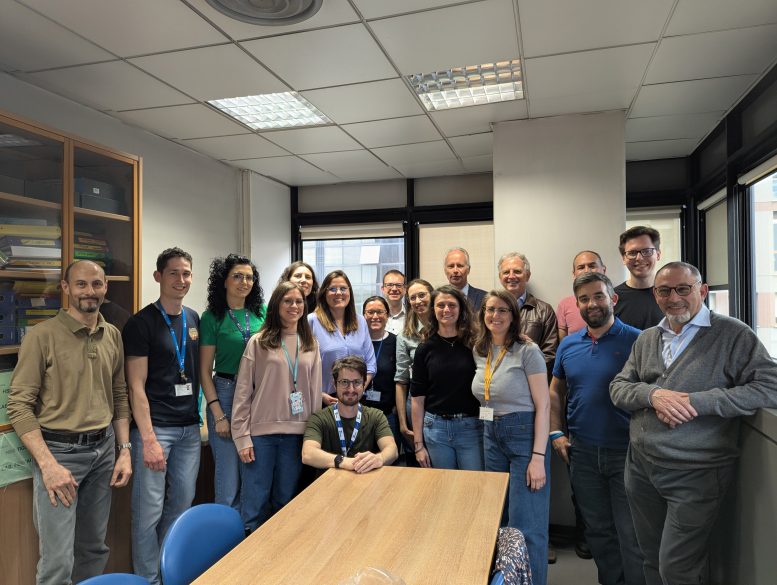
SR-Tiget is internationally recognized for its leadership in lentiviral vector–based gene therapy and has a strong record of translating advanced research into clinical treatments. The study was led by Dr. Michela Milani, under the supervision of Professor Luigi Naldini, Director of SR-Tiget, and Dr. Alessio Cantore, group leader at the institute.
A step forward for in vivo gene therapy
Gene therapy using lentiviral vectors has already achieved major clinical success when performed ex vivo, where a patient’s stem cells are genetically modified in the lab and reinfused after chemotherapy. One notable example is the gene therapy for metachromatic leukodystrophy (MLD), developed at SR-Tiget and approved in both Europe and the United States. Although effective, this method is invasive and requires significant resources.
The new study explores an alternative approach: delivering lentiviral vectors directly into the bloodstream, known as in vivo therapy. The researchers found that in newborn mice—and up to two weeks after birth—there are significantly more hematopoietic stem and progenitor cells (HSPCs) in circulation compared to older animals. This early postnatal window enables gene transfer through a simple injection, resulting in long-term engraftment and the production of multiple types of blood cells.
“After birth, blood stem cells need to move from the liver, where they have resided throughout the last months of pregnancy to their definitive home in the bone marrow. We found that as they so travel in the circulation they can be more easily accessed by intravenously delivered vectors and thus be genetically modified without the need to harvest and process them outside of the body,” says Dr. Milani.
Therapeutic benefit in disease models
The researchers tested the approach in mouse models of three genetic diseases:
- ADA-SCID is a severe immune deficiency caused by the absence of functional lymphocytes.
- Autosomal recessive osteopetrosis is a bone disease resulting from defective blood-derived cells involved in bone remodeling.
- Fanconi anemia is a bone marrow failure syndrome caused by impaired DNA repair, which especially affects stem cells. Research on the Fanconi anemia model was conducted in collaboration with Paula Rio and Juan Bueren at CIEMAT/CIBERER in Madrid, Spain.
In all three models, in vivo gene transfer led to significant therapeutic benefits, prolonging life. Notably, in Fanconi anemia, corrected stem cells progressively repopulated the blood system and prevented bone marrow failure, mirroring the survival and growth advantage over defective cells seen in human gene therapy studies.
To further increase the number of circulating stem cells and expand the treatment window, the team used clinically approved mobilizer drugs(G-CSF and Plerixafor) to force stem cells out of their tissue niches, achieving higher gene transfer efficiencies and extending the therapeutic/interventional window to older mice. They also optimized the lentiviral vectors to improve their stability and uptake.
Toward clinical translation
Importantly, the team detected circulating HSPCs also in the blood of human newborns and over the first months of life — consistent with their observations in mice. These data support the hypothesis that this window of opportunity may exist in humans as well.
“This study provides proof of concept that in vivo lentiviral gene delivery to blood stem cells is feasible during a short but accessible period early in life as a gene therapy strategy for blood disorders. While the efficiency currently remains limited as compared to established ex vivo treatments, it may suffice, if replicated in human babies, to benefit some genetic diseases such as severe immunodeficiencies or Fanconi anemia,” says Dr. Cantore.
“Intriguingly, when we harvest stem cells from the blood of adult mice or humans, even upon mobilization, they require activation stimuli to enable efficient lentiviral gene transfer. On the contrary, at these early ages, not only there are more stem cells in the circulation, but they are also more permissive to gene transfer. Further studies will investigate the biological bases of this higher permissiveness and how we could replicate it at later ages,” adds Professor Naldini.
Reference: “In vivo haemopoietic stem cell gene therapy enabled by postnatal trafficking” by Michela Milani, Anna Fabiano, Marta Perez-Rodriguez, Raisa Jofra Hernandez, Alessandra Zecchillo, Erika Zonari, Sofia Ottonello, Luca Basso-Ricci, Cesare Canepari, Monica Volpin, Valeria Iannello, Valentina Capo, Pamela Quaranta, Luca Seffin, Fabio Russo, Mauro Biffi, Leonardo Ormoli, Chiara Brombin, Filippo Carlucci, Antonella Forlino, Marta Filibian, Eugenio Montini, Serena Scala, Anna Villa, Juan Antonio Bueren, Paula Rio, Alessandro Aiuti, Alessio Cantore and Luigi Naldini, 28 May 2025, Nature.
DOI: 10.1038/s41586-025-09070-3
Funding: Fondazione Telethon, Fondazione Cariplo, Ministero dell’Università e della Ricerca, Else Kröner Fresenius Prize for Medical Research 2020, Ministry of Economy and Competitiveness | Instituto de Salud Carlos III (Institute of Health Carlos III), Ministry of Science, Innovation and Universities (Spain), NextGeneration EU
Never miss a breakthrough: Join the SciTechDaily newsletter.
Follow us on Google and Google News.