

Findings suggest men planning to conceive should be cautious with antioxidant supplements, as excessive intake may affect sperm and early craniofacial development in offspring.
Antioxidants are often promoted as powerful supplements that can help prevent chronic illnesses and cancer, treat conditions such as COPD and dementia, and even slow aspects of aging. Because of these claims, antioxidant supplements have become widely used in many areas of health and wellness.
They are also commonly recommended in the treatment of male infertility. However, new research from the Texas A&M College of Veterinary Medicine and Biomedical Sciences (VMBS) suggests that regularly consuming large amounts of certain antioxidants may have unintended biological effects. The study found that high doses can alter sperm DNA and may influence craniofacial development in offspring.
The research, published in the journal Frontiers in Cell and Developmental Biology, was led by Dr. Michael Golding. His team investigated two widely used antioxidant compounds, N-acetyl-L-cysteine (NAC) and selenium (Se), using mouse models to better understand how these supplements might affect reproduction and development.
In the experiments, male mice were given antioxidant supplements for six weeks. Their offspring were later examined for developmental differences. The researchers discovered that the offspring of males exposed to these antioxidants showed changes in skull and facial shape, even though the treated fathers themselves did not show obvious health problems.
The findings indicate that men may need to be cautious about consuming very high doses of antioxidant supplements, particularly if they are planning to conceive a child in the near future.
When good goes too far
Antioxidants such as NAC are commonly used to counter oxidative stress. This type of cellular stress can occur after heavy alcohol consumption and has been linked to damage in many tissues of the body. NAC is a frequent ingredient in nutritional supplements and is also found in many multivitamins.
Golding’s laboratory has long studied how parental alcohol exposure affects the health of future offspring. Previous research from his team has shown that excessive alcohol consumption in fathers can be associated with a range of developmental issues in children, including craniofacial abnormalities. Because alcohol produces oxidative stress, the researchers wanted to test whether adding NAC or Se to the diet of male mice could offset those effects.
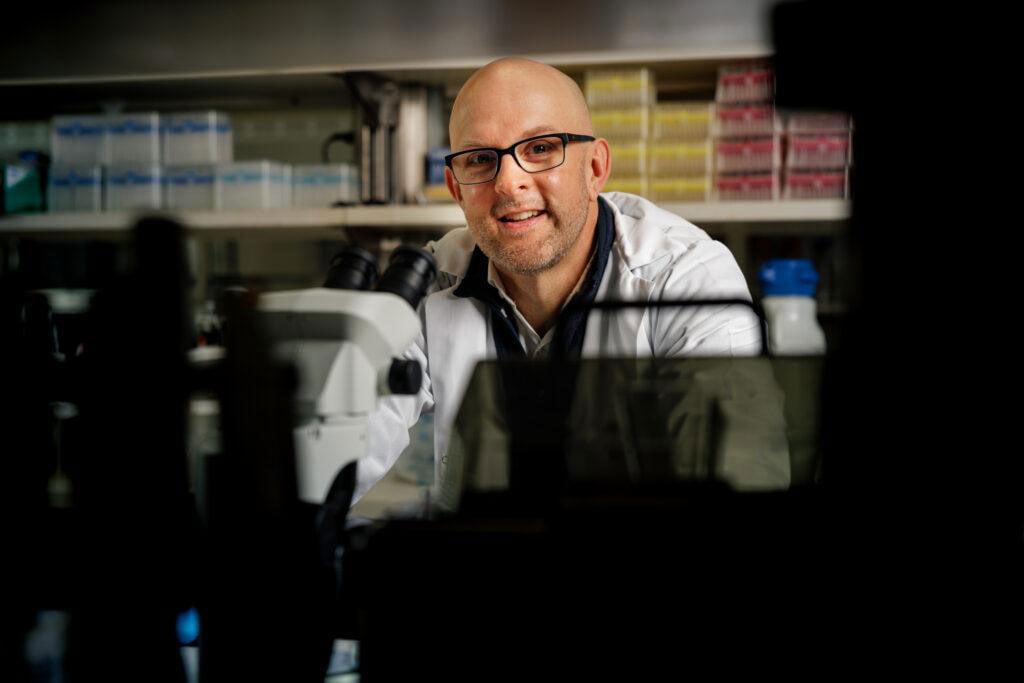
“We know alcohol causes oxidative stress and we were looking to push back on it by adding a supplement known to lower oxidative stress,” said Golding, a professor in the VMBS’ Department of Veterinary Physiology and Pharmacology. “When we realized that offspring born to males that had only been given NAC were displaying skull and facial differences, it was a surprise because this molecule is universally thought to be good.
“When we sat down to think it through, we realized that it makes sense — you take a multivitamin to ensure that you’re in balance, but if the thing that you’re taking to ensure you’re in balance is unbalanced (the dose of antioxidants is too high), then you’re not doing a good thing.”
Scientists have long known that extremely high doses of antioxidants can sometimes produce unintended effects. Previous studies have shown, for example, that antioxidant supplementation can reduce the training benefits of exercise in endurance athletes. In professional athletes, excessive supplementation has even been linked to poorer performance outcomes.
“Sperm health is another performance metric; it’s just not one that we think about in everyday life,” Golding said. “If you’re taking a high-dose antioxidant, you could be diminishing your reproductive fitness, and part of the journey toward the bad outcome is going to be the effects on the offspring.”
What the face reveals about the brain
One of the most unexpected results of the study involved differences in female offspring. In particular, these mice showed eyes that were positioned closer together and smaller skulls. These physical features are also associated with fetal alcohol syndrome.
“There’s a very commonly accepted truism in pediatric medicine that the face mirrors the brain, because the brain and the face form at the same time,” Golding said. “When your face migrates (during gestation), it’s using cues from your brain to know where to go, and if the two things are not aligned, there’s either a delay or some kind of abnormality in brain development.
“So, if you see abnormalities in the midline of the face, you’re probably going to see midline abnormalities in the brain,” he said. “People with these abnormalities typically have problems with impulse control, neurological conditions like epilepsy, and other developmental issues.”
Whether the offspring observed in this study will also show differences in central nervous system function remains unknown. The researchers say further experiments will be necessary to determine whether these craniofacial changes are associated with neurological effects.
The dose makes the difference
Golding describes the findings as part of an emerging and largely unexplored area of research. While antioxidants can play beneficial roles in the body, taking excessive amounts without a clear medical reason may disrupt normal biological balance.
Because many men regularly consume supplements that contain large quantities of antioxidants, including NAC and other antioxidant-rich compounds, Golding emphasizes the importance of paying attention to dosage levels listed on supplement labels. NAC, in particular, is commonly included in multivitamins and is sometimes present in high concentrations.
“The larger message here is that there’s a balance,” Golding said. “Think of yourself as a plant — if you stick your plant out in the sun too long, it’s going to get dehydrated. If you overwater your plant, it gets root rot. But if you have the right balance of sunshine and water, that’s when growth occurs. Health is in that domain.
“If your vitamins are providing 1,000% of the recommended daily amount, you should be cautious,” he said. “If you stick to the 100% range, then you should be OK.”
Reference: “Therapy to teratology: chronic paternal antioxidant supplementation alters offspring placental architecture and craniofacial morphogenesis in a mouse model” by Destani D. Derrico, Katherine Z. Scaturro, Erin E. Murray, Eliezar Guillen, Nathan S. Truss, Katherine A. Fairly, Samantha L. Higgins, Sanat S. Bhadsavle and Michael C. Golding, 18 December 2025, Frontiers in Cell and Developmental Biology.
DOI: 10.3389/fcell.2025.1697843
This work was supported by a Medical Research Grant from the W. M. Keck Foundation (MCG) and NIH grant R01AA028219 from the NIAAA (MCG). DDD received support through the Texas A&M University Interdisciplinary Degree Programs Merit Fellowship. SH received funding from the NIH training grant T32GM135115.
Never miss a breakthrough: Join the SciTechDaily newsletter.
Follow us on Google and Google News.
4 Comments
Number 1, men can’t concieive. Does anyone there a Sci Myth Daily proofread this crap?
Hmm. One issue is that many supplements that are life saving for old people are only helpful because they replace shortages that develop with age.
Glynac is a perfect example.
This reminds me of the studies of supplements that help existing cancers grow faster. No one wants cancer to grow faster but cancer uses our bodies resources to grow. When cancer hits you have to stop giving your body everything it needs because the cancer uses it faster than your body does. Until then you’re healthier if you get everything your body needs.
Both of these issues require time as a factor to determine if it it is good for you or bad but both are life saving if used when needed.
Total horse sh** hit piece by a journalist against NAC. Remember when Fauci & the FDA tried to pull NAC from the market? Yeah. It’s still going on. (Don’t blame the researcher in this case).
So what’s the deal? The mice were fed 400mg/kg/day of NAC for 6 weeks. A 180lb man would have to consume 32 grams a day to equal what was fed to the mice! The typical dose of an NAC supplement is 600mg, like the bottle I have right here in my hand. Imagine taking 20X the normal dose of any ‘sage and effective OTC drug. Tylenol, for example. Think your sperm & offspring would be affected? You bet. 600mg of ibuprofen 2x a day reduces testosterone by 30% after a few weeks. Imagine taking 20X as much for 6 weeks.
Interestingly, the researchers stated in their paper the following benefits of NAC in male fertility and that a normal dose PREVENTS craniofacial birth defects in the offspring of certain pregnant women:
“NAC and selenium supplementation have demonstrated beneficial effects on markers of male fertility (Ahmadi et al., 2016; Buhling et al., 2019; de Ligny et al., 2022). Further, given that gestational NAC supplementation can attenuate the programmed susceptibility to obesity and insulin resistance in offspring of mothers maintained on a high-fat diet and correct FASD-related craniofacial phenotypes induced by gestational alcohol exposure (Charron et al., 2020; Parnell et al., 2010), we selected these antioxidants for our studies.
Always read the actual study referred to in any fear porn article that claims something good is bad for you. The devil is often in the dose.
Why don’t you define what a ‘high dose’ of NAC is !?!?