
Close Menu
    Facebook X (Twitter) Instagram
    SciTechDaily
    • Biology
    • Chemistry
    • Earth
    • Health
    • Physics
    • Science
    • Space
    • Technology
    Facebook X (Twitter) Pinterest YouTube RSS
    SciTechDaily
    Home»Biology»Preserved Frogs May Hold Past Clues About Batrachochytrium Dendrobatidis
    Biology

    Preserved Frogs May Hold Past Clues About Batrachochytrium Dendrobatidis

    By Dave DeFusco, Yale UniversityJune 20, 2012No Comments3 Mins Read
    Facebook Twitter Pinterest Telegram LinkedIn WhatsApp Email Reddit
    Share
    Facebook Twitter LinkedIn Pinterest Telegram Email Reddit
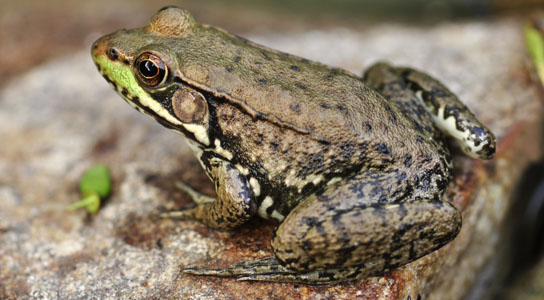
    frogs hold clues to deadly pathogen
    Frogs hold clues to deadly pathogen

    Using a molecular test called quantitative polymerase chain reaction, a new study examined 164 preserved amphibians for the presence of Batrachochytrium dendrobatidis, finding Bd in specimens dating back to the 1960s.

    A Yale graduate student has developed a novel means for charting the history of a pathogen deadly to amphibians worldwide.

    Katy Richards-Hrdlicka, a doctoral candidate at the Yale School of Forestry & Environmental Studies, examined 164 preserved amphibians for the presence of Batrachochytrium dendrobatidis, or Bd, an infectious pathogen driving many species to extinction. The pathogen is found on every continent inhabited by amphibians and in more than 200 species. Bd causes chytridiomycosis, which is one of the most devastating infectious diseases to vertebrate wildlife.

    Richards-Hrdlicka swabbed the skin of 10 species of amphibians dating back to 1963 and preserved in formalin at the Peabody Museum of Natural History. Those swabs were then analyzed for the presence of the deadly pathogen.

    “I have long proposed that the millions of amphibians maintained in natural-history collections around the world are just waiting to be sampled,” she said.

    The samples were then analyzed using a highly sensitive molecular test called quantitative polymerase chain reaction (qPCR) that can detect Bd DNA, even from specimens originally fixed in formalin. Formalin has long been recognized as a potent chemical that destroys DNA.

    “This advancement holds promise to uncover Bd’s global or regional date and place of arrival, and it could also help determine if some of the recent extinctions or disappearances could be tied to Bd,” said Richards-Hrdlicka. “Scientists will also be able to identify deeper molecular patterns of the pathogen, such as genetic changes and patterns relating to strain differences, virulence levels and its population genetics.”

    Richards-Hrdlicka found Bd in six specimens from Guilford, Connecticut dating back to 1968, the earliest record of Bd in the Northeast. Four other animals from the 1960s were infected and came from Hamden, Litchfield and Woodbridge. From specimens collected in the 2000s, 27 infected with Bd came from Woodbridge and southern Connecticut. In other related work, she found that nearly 30 percent of amphibians in Connecticut today are infected, yet show no outward signs of infection.

    Amphibian populations and species around the world are declining or disappearing as a result of land-use change, habitat loss, climate change and disease. The chytrid fungus, caused by Bd, suffocates amphibians by preventing them from respiring through their skin. Since Bd’s identification in the late 1990s, there has been an intercontinental effort to document amphibian populations and species infected with it. Richards-Hrdlicka’s work will enable researchers to look to the past for additional insight into the pathogen’s impact.

    Reference: “Extracting the Amphibian Chytrid Fungus from Formalin-fixed Specimens” by Kathryn L. Richards-Hrdlicka, 19 June 2012, Methods in Ecology and Evolution.
    DOI: 10.1111/j.2041-210X.2012.00228.x

    Never miss a breakthrough: Join the SciTechDaily newsletter.
    Follow us on Google and Google News.

    Amphibians Disease Pathogens Yale University
    Share. Facebook Twitter Pinterest LinkedIn Email Reddit

    Related Articles

    Yale Study Shows Gradual Environmental Change is an Ally to Viral Pathogens

    New Design Makes Previously Inaccessible Proteins Vulnerable to Drugs

    Chitinase 3-like-1, A Key to Fighting Pneumonia

    Stem Cells Regenerate Tissue in an Uninjured Mammal

    Understanding the Internal Process That Makes Salmonella Dangerous

    Nanoparticles Stop Lymphoma in Mice

    A Potential Therapeutic Target for Treating Pulmonary Fibrosis

    Yale Neurologists Discover the Source of Diabetic Neuropathy Pain

    Human Presence Increases Indoor Bacteria

    Leave A Reply Cancel Reply

    • Facebook
    • Twitter
    • Pinterest
    • YouTube

    Don't Miss a Discovery

    Subscribe for the Latest in Science & Tech!

    Trending News

    Largest-Ever Study Finds Medicinal Cannabis Ineffective for Anxiety, Depression, PTSD

    250-Million-Year-Old Egg Solves One of Evolution’s Biggest Mysteries

    Living With Roommates Might Be Changing Your Gut Microbiome Without You Knowing

    Century-Old Cleaning Chemical Linked to 500% Increased Risk of Parkinson’s Disease

    What if Your Memories Never Happened? Physicists Take a New Look at the Boltzmann Brain Paradox

    One of the Universe’s Largest Stars May Be Getting Ready To Explode

    Scientists Discover Enzyme That Could Supercharge Ozempic-Like Weight Loss Drugs

    Popular Sweetener Linked to DNA Damage – “It’s Something You Should Not Be Eating”

    Follow SciTechDaily
    • Facebook
    • Twitter
    • YouTube
    • Pinterest
    • Newsletter
    • RSS
    SciTech News
    • Biology News
    • Chemistry News
    • Earth News
    • Health News
    • Physics News
    • Science News
    • Space News
    • Technology News
    Recent Posts
    • Challenging the Narrative: New Study Shows U.S. Life Expectancy Is Rising Across All States
    • Mystery Illness Kills 5 in Burundi As Doctors Scramble for Answers
    • Bone-Strengthening Discovery Could Reverse Osteoporosis
    • The Most Elusive Number in Physics Just Got Even More Mysterious
    • Scientists Uncover Hidden Trigger Behind Stem Cell Aging
    Copyright © 1998 - 2026 SciTechDaily. All Rights Reserved.
    • Science News
    • About
    • Contact
    • Editorial Board
    • Privacy Policy
    • Terms of Use

    Type above and press Enter to search. Press Esc to cancel.