
Close Menu
    Facebook X (Twitter) Instagram
    SciTechDaily
    • Biology
    • Chemistry
    • Earth
    • Health
    • Physics
    • Science
    • Space
    • Technology
    Facebook X (Twitter) Pinterest YouTube RSS
    SciTechDaily
    Home»Earth»Quick COVID Breathalyzer Could Allow Mass Screening in Public Places – Such As Conferences and Weddings
    Earth

    Quick COVID Breathalyzer Could Allow Mass Screening in Public Places – Such As Conferences and Weddings

    By American Chemical SocietyFebruary 13, 2022No Comments3 Mins Read
    Facebook Twitter Pinterest Telegram LinkedIn WhatsApp Email Reddit
    Share
    Facebook Twitter LinkedIn Pinterest Telegram Email Reddit
    Quick COVID Breathalyzer
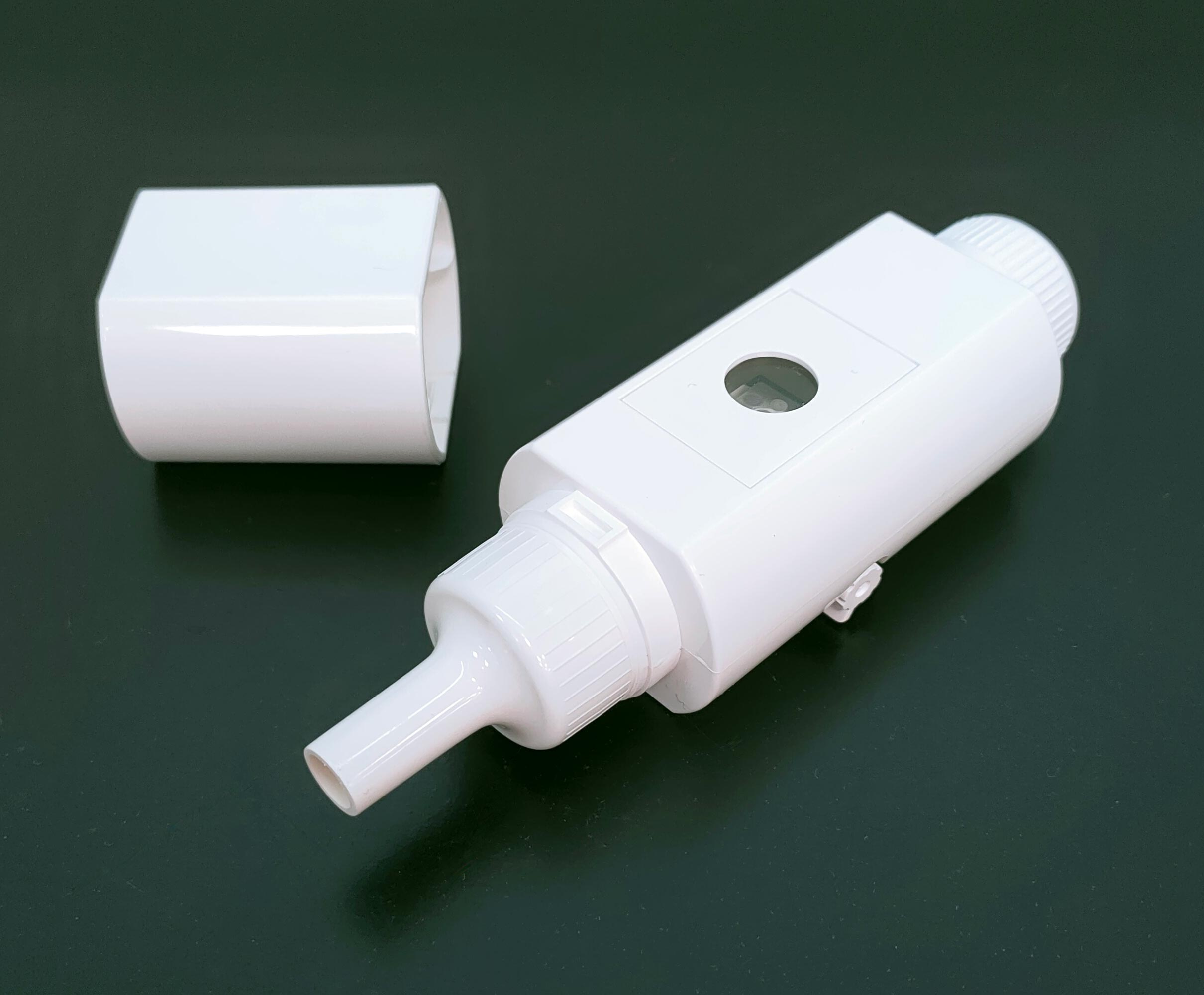
    A SERS-based breathalyzer can distinguish volatile organic compounds in the breath of COVID-positive people in less than 5 minutes. Credit: Shi Xuan Leong and Yong Xiang Leong, Nanyang Technological University

    Researchers developed a portable COVID-19 breathalyzer that accurately diagnoses infections in under five minutes, showing promise for rapid, on-site screening.

    According to experts, bringing an end to the pandemic will require rapid screening of people attending large gatherings, such as conferences and weddings. Even those who are asymptomatic can still transmit COVID-19 to others, making it important to identify and isolate them until they are no longer contagious. Now, researchers reporting in ACS Nano have developed a prototype “breathalyzer” that can sensitively and accurately diagnose COVID-19, even in asymptomatic individuals, in less than 5 minutes.

    Currently, the “gold standard” for COVID-19 testing is a technique called reverse transcription-polymerase chain reaction (RT-PCR), which is slow, requires an uncomfortable nasopharyngeal swab for sample collection and must be performed in a lab. The rapid antigen test is much quicker but has a higher rate of false negatives and positives. Scientists have also developed breathalyzer-type tests for COVID-19, which rely on differences in concentrations of volatile organic compounds exhaled by those infected with the coronavirus, but most require bulky, nonportable instruments for analysis. Xing Yi Ling and colleagues wanted to develop a quick, convenient and accurate breathalyzer test that would be suitable for on-site screening of large numbers of people.

    The researchers designed a handheld breathalyzer that contains a chip with three surface-enhanced Raman scattering (SERS) sensors attached to silver nanocubes. When a person exhales into the device for 10 seconds, compounds in their breath chemically interact with the sensors. Then, the researchers load the breathalyzer into a portable Raman spectrometer that characterizes the bound compounds based on changes to the molecular vibrations of the SERS sensors.

    The team found that Raman spectra from COVID-positive and -negative people were different in regions responsive to ketones, alcohols, and aldehydes, which they used to develop a statistical model for COVID diagnosis. They tested the breathalyzer on 501 people in hospitals and airports in Singapore, who were shown by RT-PCR to be negative (85.2%), positive and symptomatic (8.6%), or positive and asymptomatic (6.2%) for the coronavirus. The method had a 3.8% false-negative and 0.1% false-positive rate, comparable to RT-PCR tests, but it could be completed on-site in less than 5 minutes. The breathalyzer could someday be a new tool to reduce the silent spread of COVID-19 in communities, the researchers say.

    Reference: “Noninvasive and Point-of-Care Surface-Enhanced Raman Scattering (SERS)-Based Breathalyzer for Mass Screening of Coronavirus Disease 2019 (COVID-19) under 5 min” by Shi Xuan Leong, Yong Xiang Leong, Emily Xi Tan, Howard Yi Fan Sim, Charlynn Sher Lin Koh, Yih Hong Lee, Carice Chong, Li Shiuan Ng, Jaslyn Ru Ting Chen, Desmond Wei Cheng Pang, Lam Bang Thanh Nguyen, Siew Kheng Boong, Xuemei Han, Ya-Chuan Kao, Yi Heng Chua, Gia Chuong Phan-Quang, In Yee Phang, Hiang Kwee Lee, Mohammad Yazid Abdad, Nguan Soon Tan, and Xing Yi Ling, 18 January 2022, ACS Nano.
    DOI: 10.1021/acsnano.1c09371

    The authors acknowledge funding from the National Medical Research Council, Singapore, A*STAR Singapore, the Max Planck Institute-Nanyang Technological University Joint Lab and Nanyang Technological University.

    Never miss a breakthrough: Join the SciTechDaily newsletter.
    Follow us on Google and Google News.

    American Chemical Society COVID-19 Infectious Diseases Public Health Sensor Spectroscopy
    Share. Facebook Twitter Pinterest LinkedIn Email Reddit

    Related Articles

    Synthetic Peptide Mimics: Possible New Antivirals Against COVID-19 and Herpes

    Ending the COVID-19 Pandemic: Progress Toward One Drug To Treat All Coronaviruses

    COVID-19: Sneeze Cam Reveals Best Fabric Combos for Cloth Masks

    Copper Foam Is Highly Efficient, Durable as a Filter for Reusable Masks and Air Cleaners

    COVID, One Year Later: What Do We Know Now? [Video]

    Disinfected by the Sun: New Cotton Face Mask Kills Up to 99.9999% of Bacteria and Viruses in Daylight

    You’re Using Disinfectants Wrong. Here’s How to Destroy 99.9% of Viruses/Coronaviruses and Bacteria [Video]

    Not Sure if You’ve Already Had Coronavirus? This Test Might Tell You (Video)

    How Effective Are Cloth Masks Against Coronavirus? [Video]

    Leave A Reply Cancel Reply

    • Facebook
    • Twitter
    • Pinterest
    • YouTube

    Don't Miss a Discovery

    Subscribe for the Latest in Science & Tech!

    Trending News

    Scientists Warn: America’s Most Popular Cooking Oil May Be Harming Your Intestines

    Scientists Say a 59,000-Year-Old Neanderthal Tooth Shows Evidence of Surgery

    Scientists Finally Think They Know Why T. rex Had Tiny Arms

    This Alien Planet Has Rock Clouds That Vaporize Before Sunset

    The Simple Habit That Could Lower Your Cancer Risk

    146,000-Year-Old Discovery Rewrites the Story of Human Creativity

    The Type of Alcohol You Drink Could Affect How Long You Live

    This Common Vitamin May Help Stop Prediabetes From Turning Into Diabetes

    Follow SciTechDaily
    • Facebook
    • Twitter
    • YouTube
    • Pinterest
    • Newsletter
    • RSS
    SciTech News
    • Biology News
    • Chemistry News
    • Earth News
    • Health News
    • Physics News
    • Science News
    • Space News
    • Technology News
    Recent Posts
    • Researchers Discover Cannabis Compounds That May Fight Obesity Without the High
    • It Took 40 Years for Technology To Catch Up to This Revolutionary Zipper Design
    • NASA’s Psyche Spacecraft Just Used Mars as a Giant Slingshot
    • Scientists Just Found Evidence That Asteroids May Have Helped Create Life on Earth
    • Researchers Reveal the Surprisingly Easy Habit Linked to Longer Healthier Lives
    Copyright © 1998 - 2026 SciTechDaily. All Rights Reserved.
    • Science News
    • About
    • Contact
    • Editorial Board
    • Privacy Policy
    • Terms of Use

    Type above and press Enter to search. Press Esc to cancel.