
Close Menu
    Facebook X (Twitter) Instagram
    SciTechDaily
    • Biology
    • Chemistry
    • Earth
    • Health
    • Physics
    • Science
    • Space
    • Technology
    Facebook X (Twitter) Pinterest YouTube RSS
    SciTechDaily
    Home»Earth»Ray-Finned Fish Survived Mass Extinction Event 360 Million Years Ago
    Earth

    Ray-Finned Fish Survived Mass Extinction Event 360 Million Years Ago

    By University of BirminghamNovember 17, 2022No Comments4 Mins Read
    Facebook Twitter Pinterest Telegram LinkedIn WhatsApp Email Reddit
    Share
    Facebook Twitter LinkedIn Pinterest Telegram Email Reddit
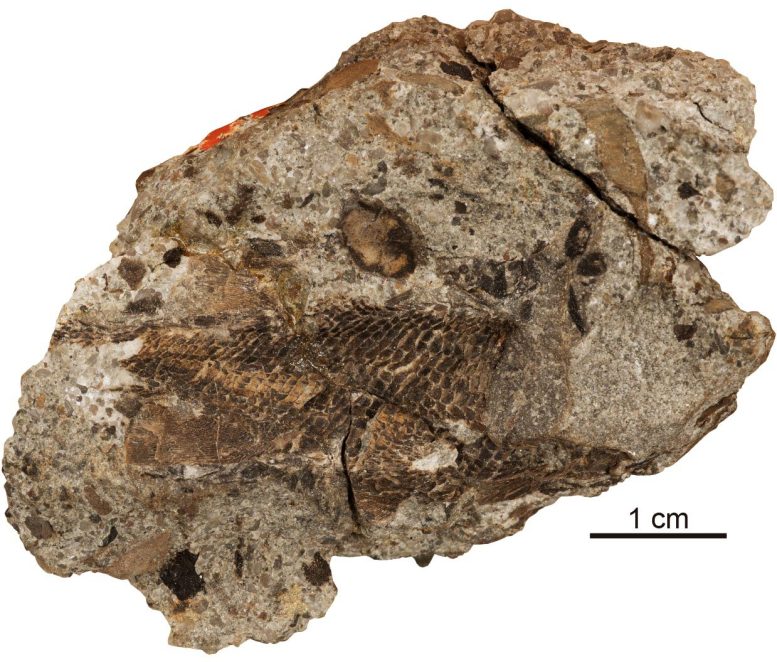
    Palaeoneiros Clackorum Skull and Shoulder Girdle
    Palaeoneiros clackorum skull and shoulder girdle. Credit: Museum of Comparative Zoology, Harvard University; © President and Fellows of Harvard College

    Ray-finned fish evolved gradually during the Devonian, with diversification starting before the mass extinction event.

    According to new research, ray-finned fish, now the most diverse group of backboned animals, were not as hard hit by a mass extinction event as scientists previously thought.

    The extinction event that ended the Devonian period 360 million years ago corresponds to a major change in the kinds of fishes populating ancient seas and lakes. Ray-finned fishes, the staple of the aquarium and dinner table, were uncommon before this major crisis, and their success had been linked to new opportunities in the aftermath of the extinction.

    After the extinction, in a period called the Carboniferous, the once rare ray-fins make up a sizeable percentage of fish species. These new Carboniferous fishes also show features indicating more diverse diets and styles of swimming.

    However, a new study to be published today (November 17) in the journal Nature Ecology and Evolution, suggests that this shift might not have been as stark as a literal reading of the fossil record suggests. What at first seems like a sudden explosion of diversity instead appears to have had a long—but previously undetected—fuse.
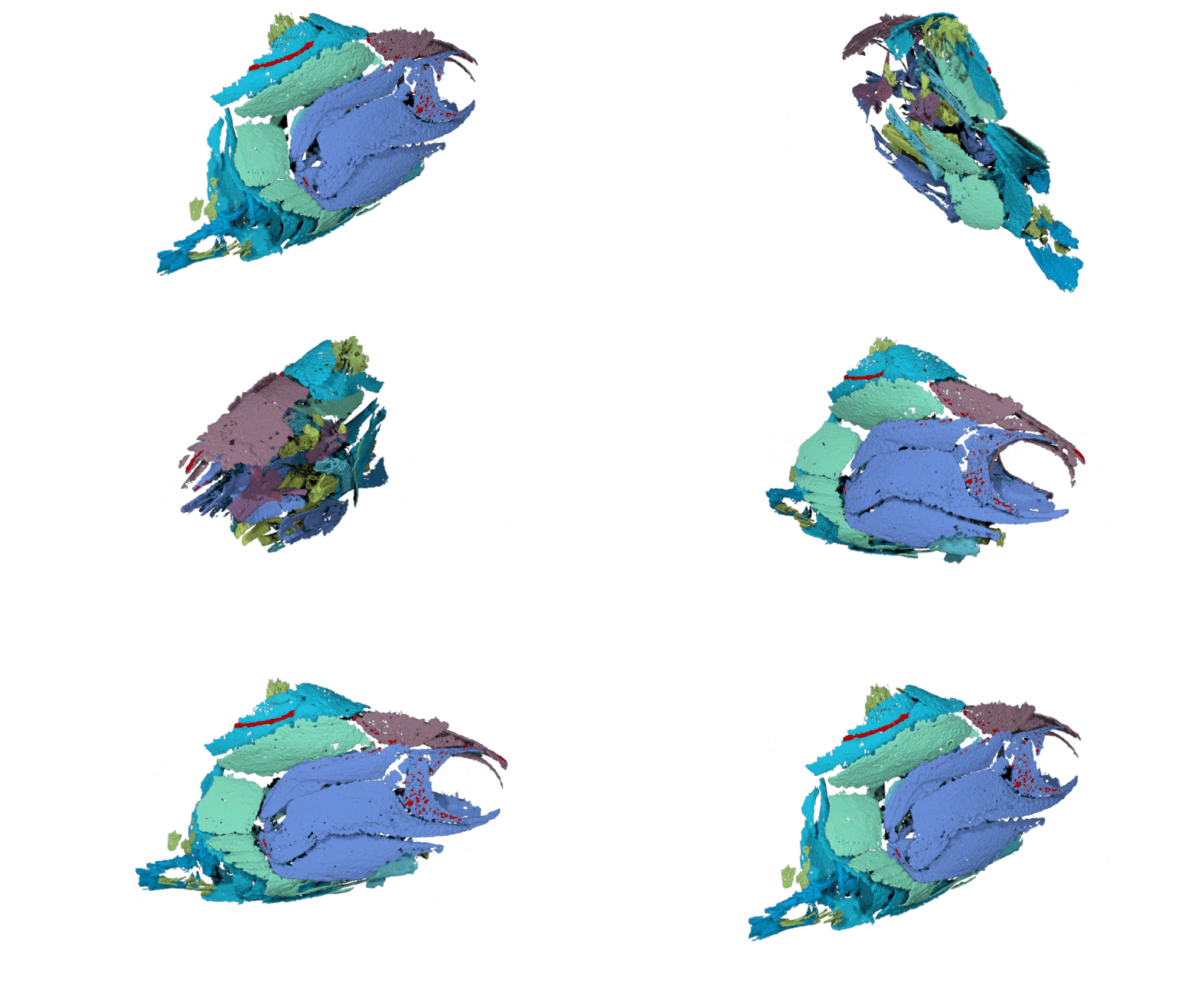
    Palaeoneiros Clackorum Skull and Shoulder Girdle
    Palaeoneiros clackorum skull and shoulder girdle. Credit: Museum of Comparative Zoology, Harvard University; © President and Fellows of Harvard College

    Fossil Insights into Early Diversification

    In the study, the researchers investigated a tiny fossil specimen from the Late Devonian period, around 370 million years ago. The fossil, named Palaeoneiros clackorum, was found over a century ago in the US state of Pennsylvania. It had previously received little attention because of its size: at only 2.2 inches (55 mm) long it was too small to study via conventional means.

    However, using CT scanning technology, the team was able to peer inside the fossil’s tiny skull and discover features that showed where Palaeoneiros fit in the family tree of fishes. To their surprise, it showed specific internal details not found in Devonian ray-fins, but instead typical of younger species from the Carboniferous.

    This would mean the ray-finned fish started to diversify much earlier during the Devonian period, accumulating small but important changes to the internal structure of the head. These occurred before the outwardly obvious changes appearing during the Carboniferous including new kinds of teeth and highly specialized bodies shaped like everything from eels to angelfish.

    A Complex Picture of Fish Survival

    Lead researcher Dr. Sam Giles said: “These findings overturn previous assumptions about species diversification around the boundary of the Devonian and Carboniferous periods. It shows a much more complex picture in which, rather than just a handful of survivors, we can see hints of extensive diversification and survival from one period into the other.”

    These results suggest that further investigation of other neglected fossils might provide more clues about how ray-finned fishes responded to the extinction at the end of the Devonian. Dr. Giles and her colleagues look to apply a similar approach to other specimens they have identified, with the goal of better understanding this critical time period. “The fossil record provides us with a remarkable opportunity to see how biology responds to major environmental crises,” Dr. Giles said. “And I think we’re getting closer to figuring out how—or if—this spectacularly diverse group’s rise relates to one of the most catastrophic extinctions in Earth’s history.”

    Reference: “A Late Devonian actinopterygian suggests high lineage survivorship across the end-Devonian mass extinction” by Sam Giles, Kara Feilich, Rachel C. M. Warnock, Stephanie E. Pierce and Matt Friedman, 17 November 2022, Nature Ecology & Evolution.
    DOI: 10.1038/s41559-022-01919-4

    Never miss a breakthrough: Join the SciTechDaily newsletter.
    Follow us on Google and Google News.

    Evolution Extinction Event Fish Marine Biology University of Birmingham
    Share. Facebook Twitter Pinterest LinkedIn Email Reddit

    Related Articles

    Melting Glaciers May Produce Thousands of Miles of New Pacific Salmon Habitat

    Key to Past & Future Habitat of West Coast Marine Species Is Ocean ‘Breathability’

    “Global Diversity Curves Are Misleading” – Ocean Biodiversity Has Not Increased Substantially for Hundreds of Millions of Years

    Sturgeon “Methuselah Fish” Genome Sequenced – Important Piece of Evolutionary Puzzle

    Microplastic Pollution Found in Deep Sediments on the Ocean Floor

    Finding Nemo’s Cousins: Meet the Little Fish That Can See UV Light

    Invasive Species to Blame for High Mercury Concentrations in Great Lakes Fish

    Old Theory on How Piranhas Keep Their Teeth Sharp Finally Proven With New Technology

    First Day of Dinosaur Extinction Recorded by Rocks at Asteroid Impact Site

    Leave A Reply Cancel Reply

    • Facebook
    • Twitter
    • Pinterest
    • YouTube

    Don't Miss a Discovery

    Subscribe for the Latest in Science & Tech!

    Trending News

    New Study Reveals Why Ozempic Works Better for Some People Than Others

    Climate Change Is Altering a Key Greenhouse Gas in a Way Scientists Didn’t Expect

    New Study Suggests Gravitational Waves May Have Created Dark Matter

    Scientists Discover Why the Brain Gets Stuck in Schizophrenia

    Scientists Engineer “Tumor-Eating” Bacteria That Devour Cancer From Within

    Even “Failed” Diets May Deliver Long-Term Health Gains, Study Finds

    NIH Scientists Discover Powerful New Opioid That Relieves Pain Without Dangerous Side Effects

    Collapsing Plasma May Hold the Key to Cosmic Magnetism

    Follow SciTechDaily
    • Facebook
    • Twitter
    • YouTube
    • Pinterest
    • Newsletter
    • RSS
    SciTech News
    • Biology News
    • Chemistry News
    • Earth News
    • Health News
    • Physics News
    • Science News
    • Space News
    • Technology News
    Recent Posts
    • The Surprising Reason You Might Want To Sleep Without a Pillow
    • Household Cats Could Hold the Secret to Fighting Breast Cancer
    • Scientists Say This Natural Hormone Reverses Obesity by Targeting the Brain
    • This 15,000-Year-Old Discovery Changes What We Know About Early Human Creativity
    • 35-Million-Year-Old Mystery: Strange Arachnid Discovered Preserved in Amber
    Copyright © 1998 - 2026 SciTechDaily. All Rights Reserved.
    • Science News
    • About
    • Contact
    • Editorial Board
    • Privacy Policy
    • Terms of Use

    Type above and press Enter to search. Press Esc to cancel.