
Close Menu
    Facebook X (Twitter) Instagram
    SciTechDaily
    • Biology
    • Chemistry
    • Earth
    • Health
    • Physics
    • Science
    • Space
    • Technology
    Facebook X (Twitter) Pinterest YouTube RSS
    SciTechDaily
    Home»Health»Regular Aspirin Use Linked to Age-Related Macular Degeneration
    Health

    Regular Aspirin Use Linked to Age-Related Macular Degeneration

    By University of SydneyJanuary 28, 2013No Comments3 Mins Read
    Facebook Twitter Pinterest Telegram LinkedIn WhatsApp Email Reddit
    Share
    Facebook Twitter LinkedIn Pinterest Telegram Email Reddit
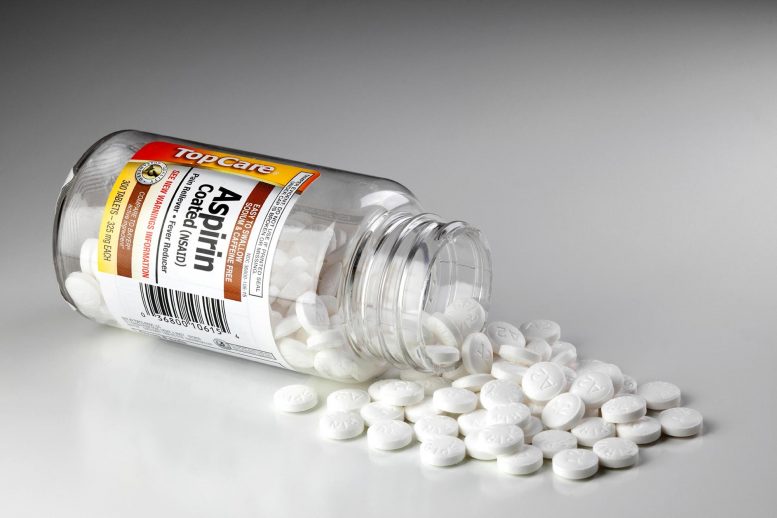
    Aspirin
    A new study links regular aspirin use to a higher incidence of neovascular AMD, a common cause of blindness in older individuals.

    A new study found that regular aspirin use is significantly associated with an increased incidence of neovascular AMD, a leading cause of blindness in older people.

    Researchers at the Center for Vision Research from the Westmead Millennium Institute for Medical Research (WMI), a close affiliate of the University of Sydney, have found that regular aspirin consumption is associated with an increased risk of neovascular age-related macular degeneration (AMD) — a leading cause of blindness in older people.

    The research shows that the risk appears to be independent of a history of smoking, which is also a known preventable risk factor for AMD.

    Aspirin is one of the most widely used medications in the world with more than 100 billion tablets consumed each year. Aspirin is commonly used in the prevention of cardiovascular disease, such as myocardial infarction (heart attack) and ischemic stroke.

    While a five-year European study published last year suggested that regular aspirin use (defined as once or more per week in the past year) was associated with AMD, other studies had reported inconsistent findings.

    The study by the Center for Vision Research’s Gerald Liew, PhD, and colleagues was conducted over a much longer period and found clear evidence of the risk.

    They conducted a prospective analysis of data from an Australian study (the Blue Mountains Eye Study) that included four examinations during a 15-year period.

    Of 2,389 participants, 257 individuals (10.8 percent) were regular aspirin users. After the 15-year follow-up, 63 individuals from the 2,389 participants developed incident neovascular AMD, according to the results.

    “The cumulative incidence of neovascular AMD among nonregular aspirin users was 0.8 percent at five years, 1.6 percent at 10 years, and 3.7 percent at 15 years,” said the director of WMI’s Center for Vision Research, Professor Paul Mitchell.

    “Among regular aspirin users, the cumulative incidence was 1.9 percent at five years, 7 percent at 10 years and 9.3 percent at 15 years, respectively, indicating that regular aspirin use is significantly associated with an increased incidence of neovascular AMD. This increase was around 2.5-fold, after accounting for potentially confounding variables.”

    The report’s authors note that any decision concerning whether to stop aspirin therapy is “complex and needs to be individualized.”

    “Currently, there is insufficient evidence to recommend changing clinical practice, except perhaps in patients with strong risk factors for neovascular AMD (eg existing late AMD in the fellow eye) in whom it may be appropriate to raise the potentially small risk of incident neovascular AMD with long-term aspirin therapy,” the authors conclude.

    Further confirmation of these findings will also be important.

    Reference: “The Association of Aspirin Use With Age-Related Macular Degeneration” by Gerald Liew, PhD; Paul Mitchell, PhD; Tien Yin Wong, PhD; Elena Rochtchina, MAppStat and Jie Jin Wang, PhD, 25 February 2013, JAMA Internal Medicine.
    DOI: 10.1001/jamainternmed.2013.1583

    Never miss a breakthrough: Join the SciTechDaily newsletter.
    Follow us on Google and Google News.

    Disease Medicine University of Sydney
    Share. Facebook Twitter Pinterest LinkedIn Email Reddit

    Related Articles

    Breakthrough Research May Lead to “Exercise in a Bottle”

    Scientists Turn Diseased Cells Against Themselves

    Genomic Test Accurately Distinguishes between Viral and Bacterial Infections

    Experimental Compound Improves Learning and Memory in Mice with Down Syndrome

    Fluoxetine (Prozac) Shows Promise as an Antiviral Agent

    New Drug Candidate Kills Cancer Cells Better Than Cisplatin

    Intensive Glycemic Control Does Not Definitively Reduce the Risk of Impaired Kidney Function

    Protein NLRP12 Protects Against Colon Cancer

    Transplants Without the Need for Lifelong Immunosupression

    Leave A Reply Cancel Reply

    • Facebook
    • Twitter
    • Pinterest
    • YouTube

    Don't Miss a Discovery

    Subscribe for the Latest in Science & Tech!

    Trending News

    Popular Vitamin B3 Supplements May Help Cancer Cells Survive, Scientists Warn

    Scientists Discover Strange Property of Rice and Turn It Into a Smart Material

    NASA Artemis II Skips Burn As Astronaut Captures Stunning View of Earth

    NASA’s Artemis II: Humans Just Left Earth Orbit for the First Time Since 1972

    What Causes Chronic Pain? Scientists Identify Key Culprit in the Brain

    Semaglutide Shows Surprising Mental Health Benefits in Massive 100,000-Person Study

    This Liquid Snapped Instead of Flowing and Scientists Were Shocked

    Breakthrough Alzheimer’s Drug Rewires the Brain Instead of Just Clearing Plaques

    Follow SciTechDaily
    • Facebook
    • Twitter
    • YouTube
    • Pinterest
    • Newsletter
    • RSS
    SciTech News
    • Biology News
    • Chemistry News
    • Earth News
    • Health News
    • Physics News
    • Science News
    • Space News
    • Technology News
    Recent Posts
    • Scientists Uncover the Secret “Glue” That Helps Soil Hold Water
    • Climate Change Is Altering a Key Greenhouse Gas in a Way Scientists Didn’t Expect
    • Why Antarctic Sea Ice Suddenly Collapsed After Decades of Growth
    • Astronomers Discover the Most Pristine Star Ever Found
    • New Study Suggests Gravitational Waves May Have Created Dark Matter
    Copyright © 1998 - 2026 SciTechDaily. All Rights Reserved.
    • Science News
    • About
    • Contact
    • Editorial Board
    • Privacy Policy
    • Terms of Use

    Type above and press Enter to search. Press Esc to cancel.