

A radio telescope in the Western Australian outback has captured a spectacular new view of the center of the galaxy in which we live, the Milky Way. The image from the Murchison Widefield Array (MWA) telescope shows what our galaxy would look like if human eyes could see radio waves.
Astrophysicist Dr. Natasha Hurley-Walker, from the Curtin University node of the International Center for Radio Astronomy Research (ICRAR), created the images using the Pawsey Supercomputing Center in Perth.
“This new view captures low-frequency radio emission from our galaxy, looking both in fine detail and at larger structures,” she said. “Our images are looking directly at the middle of the Milky Way, towards a region astronomers call the Galactic Center.”
The data for the research comes from the GaLactic and Extragalactic All-sky MWA survey, or ‘GLEAM’ for short.
The survey has a resolution of two arcminutes (about the same as the human eye) and maps the sky using radio waves at frequencies between 72 and 231 MHz (FM radio is near 100 MHz).
“It’s the power of this wide frequency range that makes it possible for us to disentangle different overlapping objects as we look toward the complexity of the Galactic Center,” Dr. Hurley-Walker said. “Essentially, different objects have different ‘radio colors’, so we can use them to work out what kind of physics is at play.”
Using the images, Dr. Hurley-Walker and her colleagues discovered the remnants of 27 massive stars that exploded in supernovae at the end of their lives.
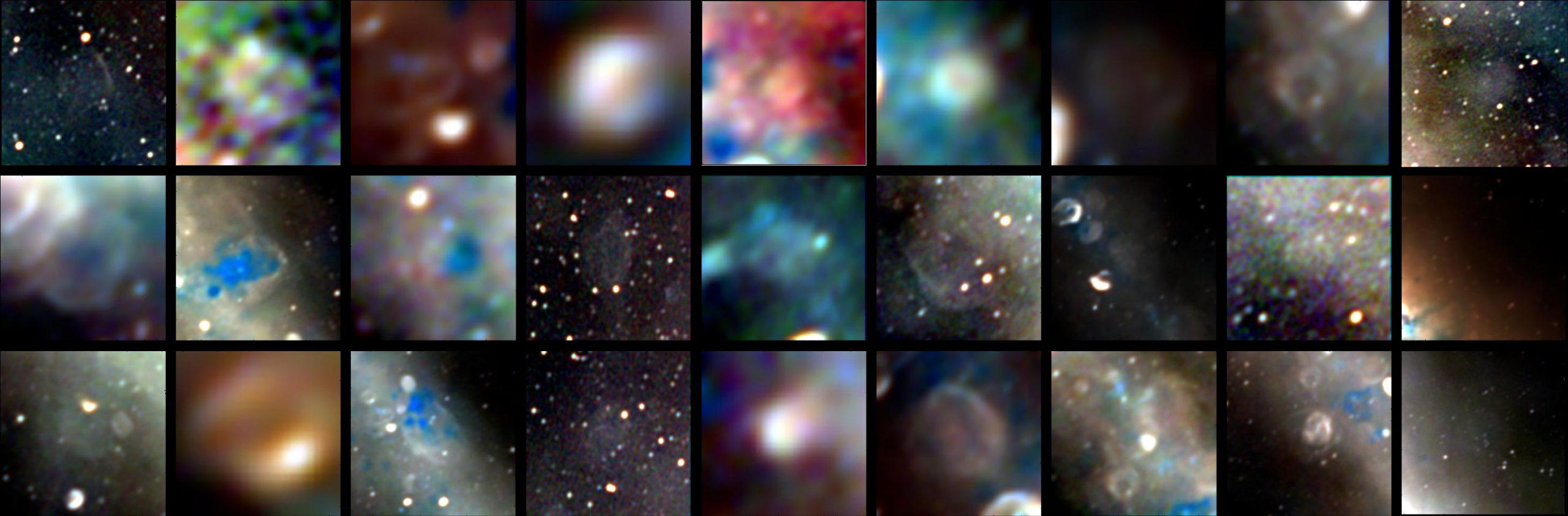
These stars would have been eight or more times more massive than our Sun before their dramatic destruction thousands of years ago. Younger and closer supernova remnants, or those in very dense environments, are easy to spot, and 295 are already known. Unlike other instruments, the MWA can find those which are older, further away, or in very empty environments.
Dr. Hurley-Walker said one of the newly-discovered supernova remnants lies in such an empty region of space, far out of the plane of our galaxy, and so despite being quite young, is also very faint. “It’s the remains of a star that died less than 9,000 years ago, meaning the explosion could have been visible to Indigenous people across Australia at that time,” she said.
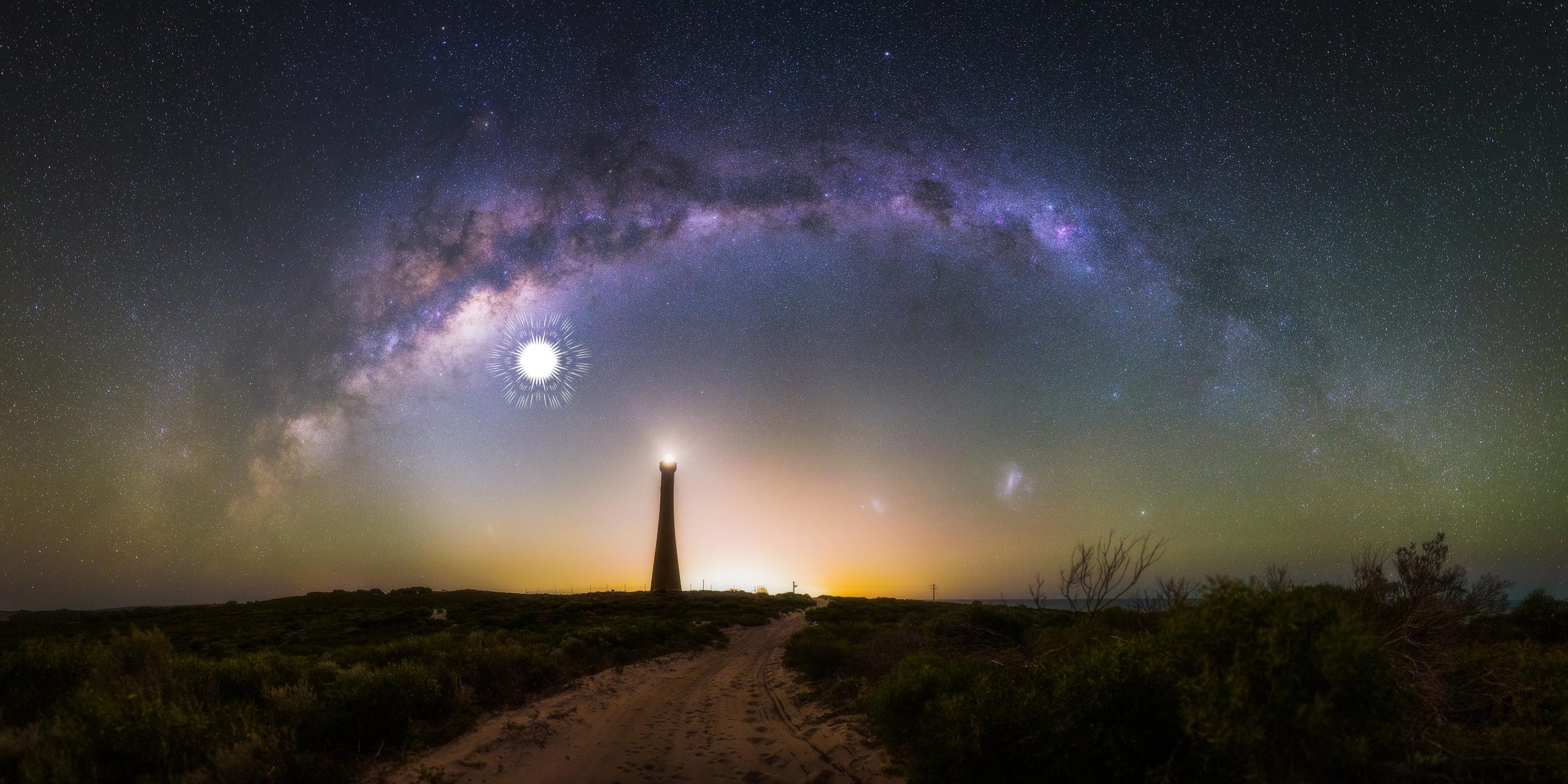
An expert in cultural astronomy, Associate Professor Duane Hamacher from the University of Melbourne, said some Aboriginal traditions do describe bright new stars appearing in the sky, but we don’t know of any definitive traditions that describe this particular event.
“However, now that we know when and where this supernova appeared in the sky, we can collaborate with Indigenous elders to see if any of their traditions describe this cosmic event. If any exist, it would be extremely exciting,” he said.
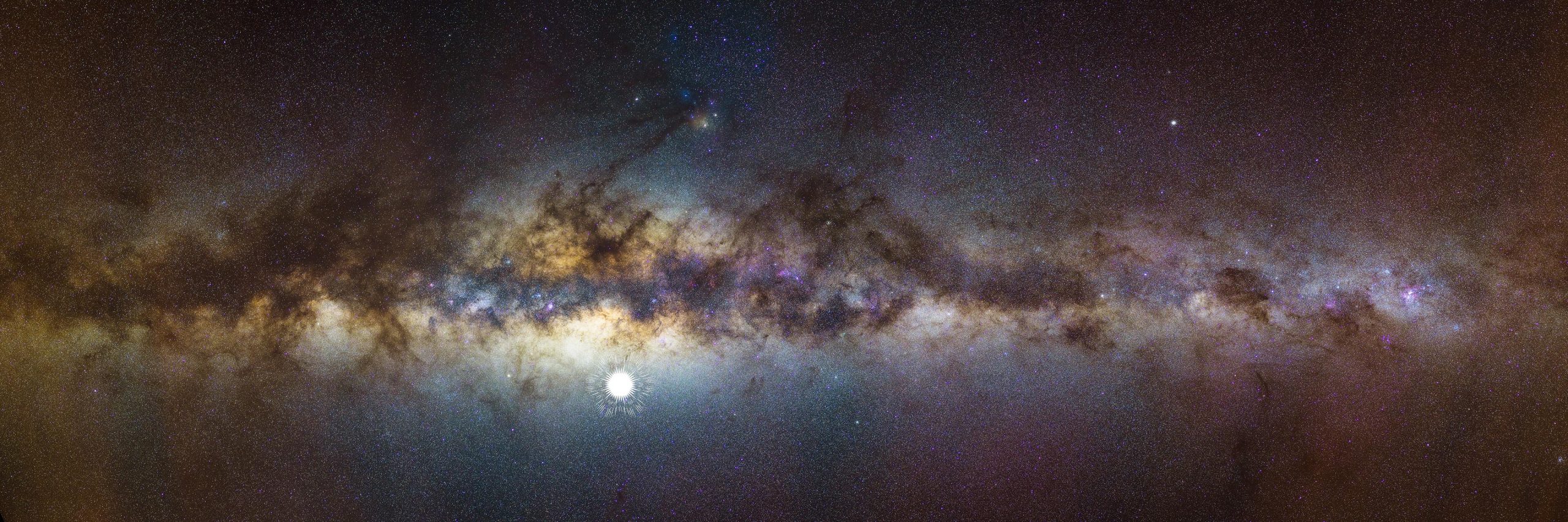
Dr. Hurley-Walker said two of the supernova remnants discovered are quite unusual “orphans,” found in a region of the sky where there are no massive stars, which means future searches across other such regions might be more successful than astronomers expected.
Other supernova remnants discovered in the research are very old, she said.
“This is really exciting for us, because it’s hard to find supernova remnants in this phase of life—they allow us to look further back in time in the Milky Way.”
The MWA telescope is a precursor to the world’s largest radio telescope, the Square Kilometre Array, which is due to be built in Australia and South Africa from 2021.
“The MWA is perfect for finding these objects, but it is limited in its sensitivity and resolution,” Dr. Hurley-Walker said.
“The low-frequency part of the SKA, which will be built at the same site as the MWA, will be thousands of times more sensitive and have much better resolution, so should find the thousands of supernova remnants that formed in the last 100,000 years, even on the other side of the Milky Way.”
The new images of the Galactic Center can be viewed via a web browser using the GLEAMoscope app or through an android device using the GLEAM app.
https://vimeo.com/188100116
A unique timelapse movie showing the sky above a ‘tile’ of the Murchison Widefield Array radio telescope, located in outback Western Australia. The ‘normal’ optical sky transitions to a view of the sky at radio wavelengths. The Milky Way is visible as a band across the sky and the dots beyond are some of the 300,000 galaxies observed by the telescope for the GLEAM survey. Credit: Radio image by Dr. Natasha Hurley-Walker (ICRAR/Curtin) and the GLEAM Team. MWA tile and landscape by Dr. John Goldsmith / Celestial Visions.
References:
‘New candidate radio supernova remnants detected in the GLEAM survey over 345° < l < 60°, 180° < l < 240°’, published in Publications of the Astronomical Society of Australia (PASA) on November 20th, 2019.
‘Candidate radio supernova remnants observed by the GLEAM survey over 345° < l < 60°, 180° < l < 240°’, published in Publications of the Astronomical Society of Australia (PASA) on November 20th, 2019.
‘GaLactic and Extragalactic All-sky Murchison Widefield Array (GLEAM) survey II: Galactic Plane 345° < l < 67°, 180° < l < 240°’, published in Publications of the Astronomical Society of Australia (PASA) on November 20th, 2019.
ICRAR
The International Center for Radio Astronomy Research (ICRAR) is a joint venture between Curtin University and The University of Western Australia with support and funding from the State Government of Western Australia.
The Murchison Widefield Array
The Murchison Widefield Array (MWA) is a low-frequency radio telescope and is the first of four Square Kilometre Array (SKA) precursors to be completed.
A consortium of partner institutions from seven countries (Australia, USA, India, New Zealand, Canada, Japan, and China) financed the development, construction, commissioning, and operations of the facility. The MWA consortium is led by Curtin University.
Never miss a breakthrough: Join the SciTechDaily newsletter.
Follow us on Google and Google News.