
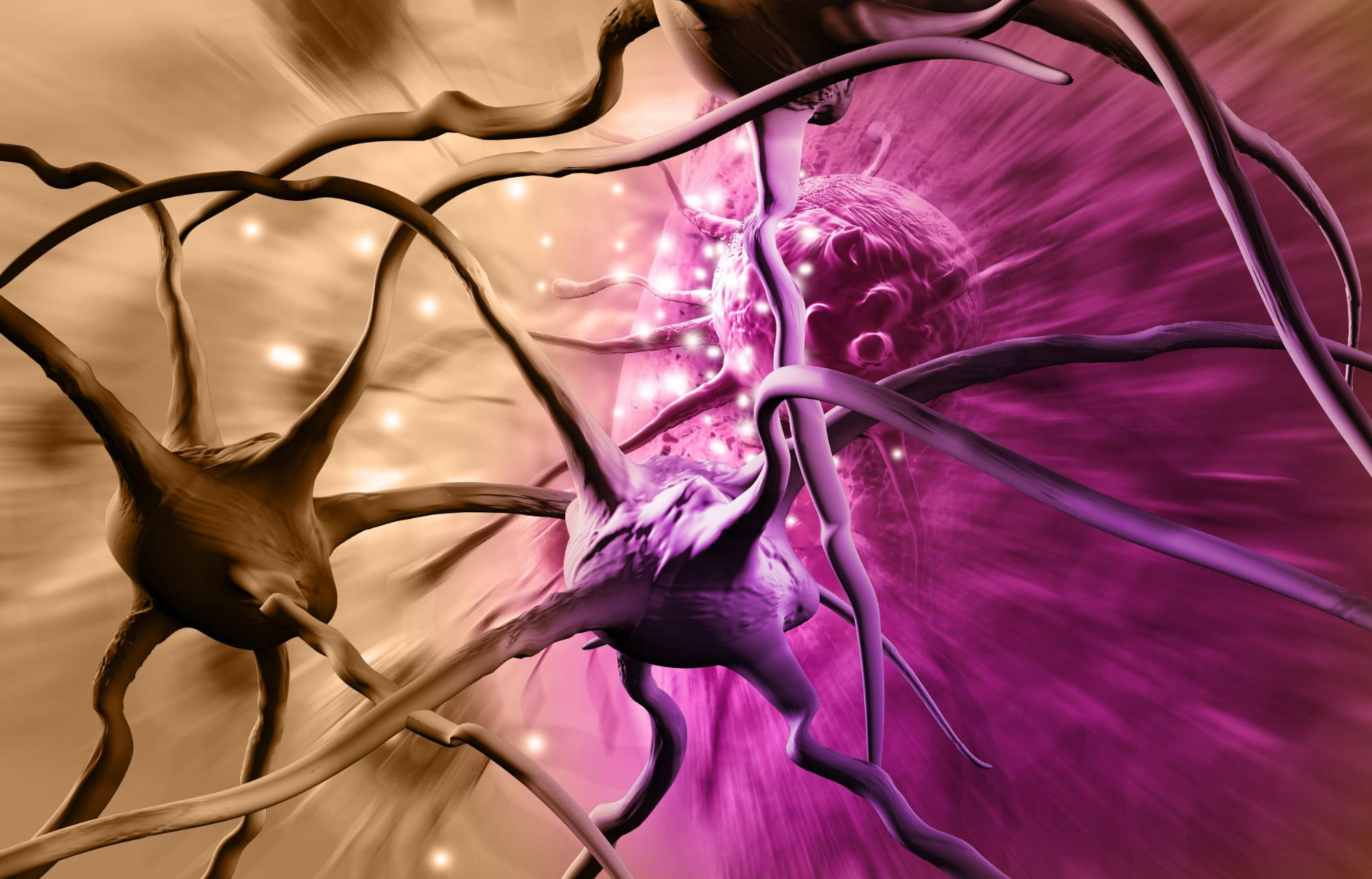
A hidden communication network between brain cells and glioblastoma tumors may be key to slowing this aggressive cancer.
Canadian scientists have identified a previously overlooked biological process that could slow the advance of glioblastoma, the deadliest and most treatment-resistant form of brain cancer. Their findings also point to an existing drug that may be able to interfere with this process, potentially accelerating the search for new therapies.
Glioblastoma is notoriously difficult to treat because it rapidly invades surrounding brain tissue and adapts to conventional therapies such as surgery, radiation, and chemotherapy. The new research shows that the tumor does not act alone. Instead, it recruits help from nearby brain cells that were once believed to play only protective roles in healthy tissue.
The team found that certain brain cells actively communicate with cancer cells, sending molecular signals that promote tumor growth and spread. When researchers interrupted this signaling in laboratory models, tumor growth slowed dramatically, revealing a previously hidden weakness in the disease.
The results are especially significant because they suggest a new use for an existing HIV medication. Patients with glioblastoma currently have very limited treatment options, and survival is often measured in months, making any potential shortcut to new therapies particularly meaningful.
The study was published on Jan. 21, 2026 in Neuron and was led by researchers from McMaster University and The Hospital for Sick Children (SickKids). The co-first authors are Kui Zhai, a research associate in the Singh Lab at McMaster, and Nick Mikolajewicz, who was a postdoctoral fellow in the Moffat Lab at SickKids at the time of the research.
“Glioblastoma isn’t just a mass of cancer cells, it’s an ecosystem,” says Sheila Singh, co-senior author of the study and professor of surgery at McMaster University. “By decoding how these cells talk to each other, we’ve found a vulnerability that could be targeted with a drug that’s already on the market,” adds Singh, who is also director of the Centre for Discovery in Cancer Research at McMaster.
How Brain Cells Help Tumors Thrive
Scientists have long known that glioblastoma forms dense networks of interconnected cells that support one another, allowing the tumor to grow and resist treatment. This study set out to determine which normal brain cells become part of that network and how they contribute to the cancer’s success.
The researchers focused on oligodendrocytes, a type of brain cell that normally protects nerve fibers by forming insulation around them. Under cancerous conditions, these cells were found to change their behavior. Instead of supporting healthy brain function, they began interacting with tumor cells in ways that enhanced cancer growth.
This interaction occurs through a specific signaling pathway that helps create a tumor-friendly environment. When the researchers blocked this pathway in laboratory experiments, glioblastoma growth slowed substantially, demonstrating that the cancer depends on this cellular cooperation to survive.
The discovery is particularly compelling because the signaling pathway involves a receptor called CCR5, which plays a role in immune system communication. That same receptor is already targeted by Maraviroc, an HIV drug that is approved and widely used. Repurposing such a drug could shorten the time needed to move from laboratory findings to clinical testing, since its safety profile is already well understood.
“The cellular ecosystem within glioblastoma is far more dynamic than previously understood. In uncovering an important piece of the cancer’s biology, we also identified a potential therapeutic target that could be addressed with an existing drug. This finding opens a promising path to explore whether blocking this pathway can speed progress toward new treatment options for patients,” said Jason Moffat, co-senior author of the study, senior scientist and head of the Genetics & Genome Biology program at SickKids.
Building on Earlier Breakthroughs
The breakthrough builds on Singh and Moffat’s 2024 study published in Nature Medicine, which discovered that a migration path used by cells during brain development can be hijacked for cancer cell invasion. Together, these discoveries highlight a new era of glioblastoma research focused on dismantling the tumor’s complex communication networks.
Reference: “Reactive oligodendrocytes promote glioblastoma progression through CCL5/CCR5-mediated glioma stem cell maintenance” by Nicholas Mikolajewicz, Kui Zhai, Anish Puri, Petar Miletic, Nazanin Tatari, Jiarun Wei, Neil Savage, Zhi Huang, Qian Huang, Seon Yong Lee, Mahta Jan-Ahmadnejad, Roseanne Nguyen, David Chen, Tiegan Korman, Daniel Mobilio, Maxwell Topley, Jack Qinyu Lu, Matthew R. Voisin, Zsolt Zador, Shawn C. Chafe, Chitra Venugopal, Kevin R. Brown, Gelareh Zadeh, Hong Han, Julien Muffat, Shideng Bao, Sheila K. Singh and Jason Moffat, 21 January 2026, Neuron.
DOI: 10.1016/j.neuron.2025.12.012
This research work was supported by the 2020 William Donald Nash Brain Tumor Research Fellowship and the Canadian Institutes for Health Research. Singh is a Tier 1 Canada Research Chair in Human Cancer Stem Cell Biology and Moffat is the GlaxoSmithKline Chair in Genetics & Genome Biology at The Hospital for Sick Children.
Never miss a breakthrough: Join the SciTechDaily newsletter.
Follow us on Google and Google News.
1 Comment
Do you notice the FDA approves drugs that SLOWS down disease or extands life but NOT cure it? They call their approvals as therapies or treatments, not cures. Look at words and what they mean. Their subtle messages. Money by the pill is huge compared to one-shot cures. Not one disase foundation has closed down due to a cure. Research results that are positive gets the public believing it is good being worked for and they send donations in which keeps researchers in paychecks. They are ‘discovery mills’. Our medical advancments should look like 22nd century by now. The 1960’s idea of radiation and chemo for cancer still after the first quarter of the 21st century is absurd. There seems to be around 4 new cures found by researchers every month but nothing ever comes to fruition.