
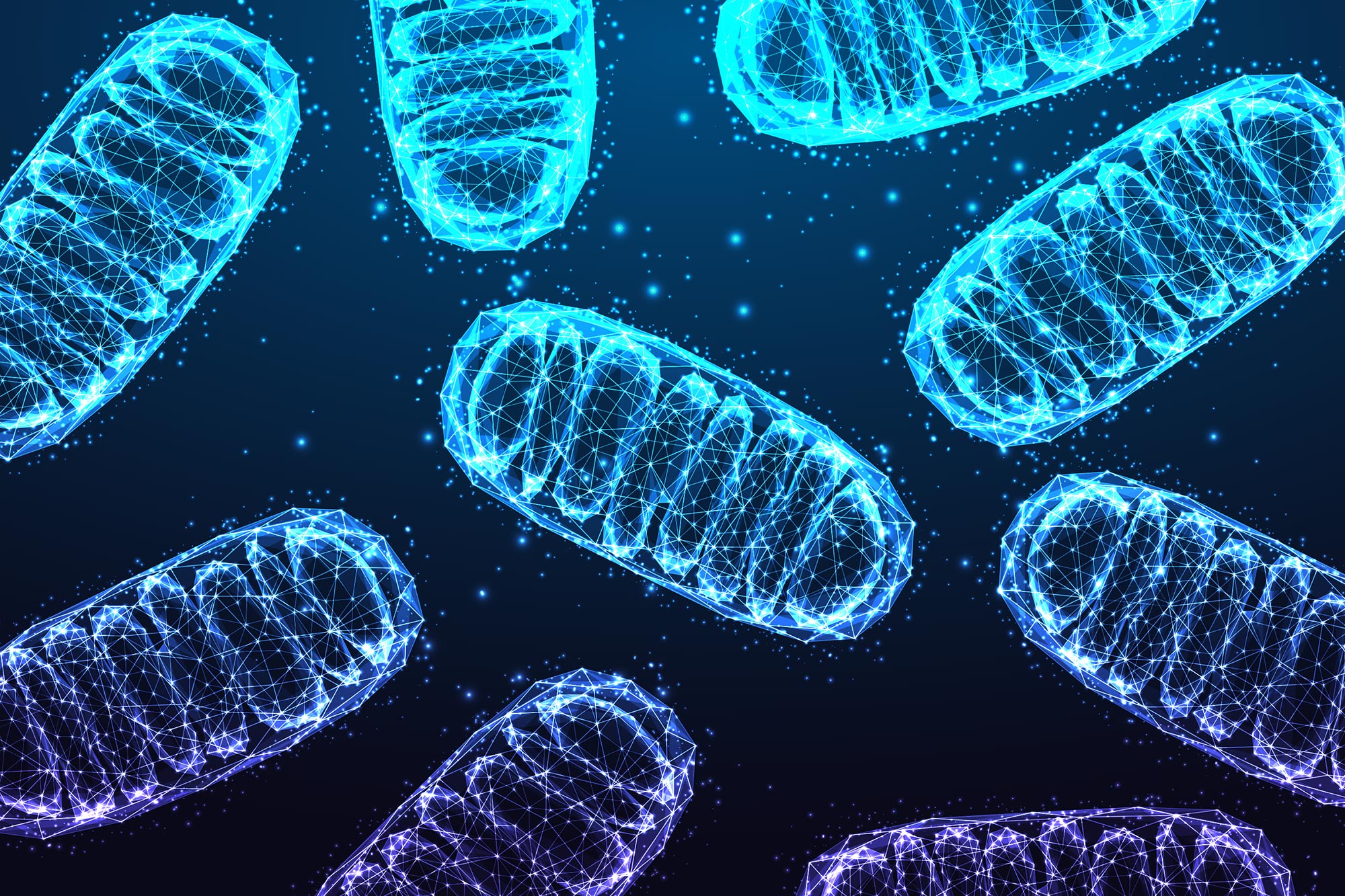
The findings may have important implications for diseases linked to mitochondrial dysfunction.
A newly identified form of DNA damage inside mitochondria, the small structures that supply energy to our cells, may help explain how the body detects and reacts to stress. The UC Riverside-led research, published in the Proceedings of the National Academy of Sciences, points to possible links with diseases tied to mitochondrial dysfunction, including cancer and diabetes.
Mitochondria carry their own genetic code, called mitochondrial DNA (mtDNA), which is crucial for energy production and for sending signals both within the cell and to its surroundings. Scientists have long recognized that mtDNA can be easily harmed, but the underlying reasons were not fully understood. The new study highlights the role of glutathionylated DNA (GSH-DNA) adducts as a key source of this damage.
Adducts form when a chemical, such as a carcinogen, attaches itself to DNA and creates a bulky tag. Without proper repair, these alterations can result in mutations that raise the likelihood of disease.
A “sticky” problem for mitochondrial DNA
Experiments in cultured human cells revealed that these adducts build up in mtDNA at levels as much as 80 times higher than in the DNA found in the cell’s nucleus. This pattern indicates that mtDNA is especially susceptible to this form of injury.
Linlin Zhao, senior author and an associate professor of chemistry at UCR, explained that mtDNA makes up only a small fraction — about 1-5% — of all the DNA in a cell. It is circular in shape, has just 37 genes, and is passed down only from the mother. In contrast, nuclear DNA (nDNA) is linear in shape and inherited from both parents.
“mtDNA is more prone to damage than nDNA,” Zhao said. “Each mitochondrion has many copies of mtDNA, which provides some backup protection. The repair systems for mtDNA are not as strong or efficient as those for nuclear DNA.”
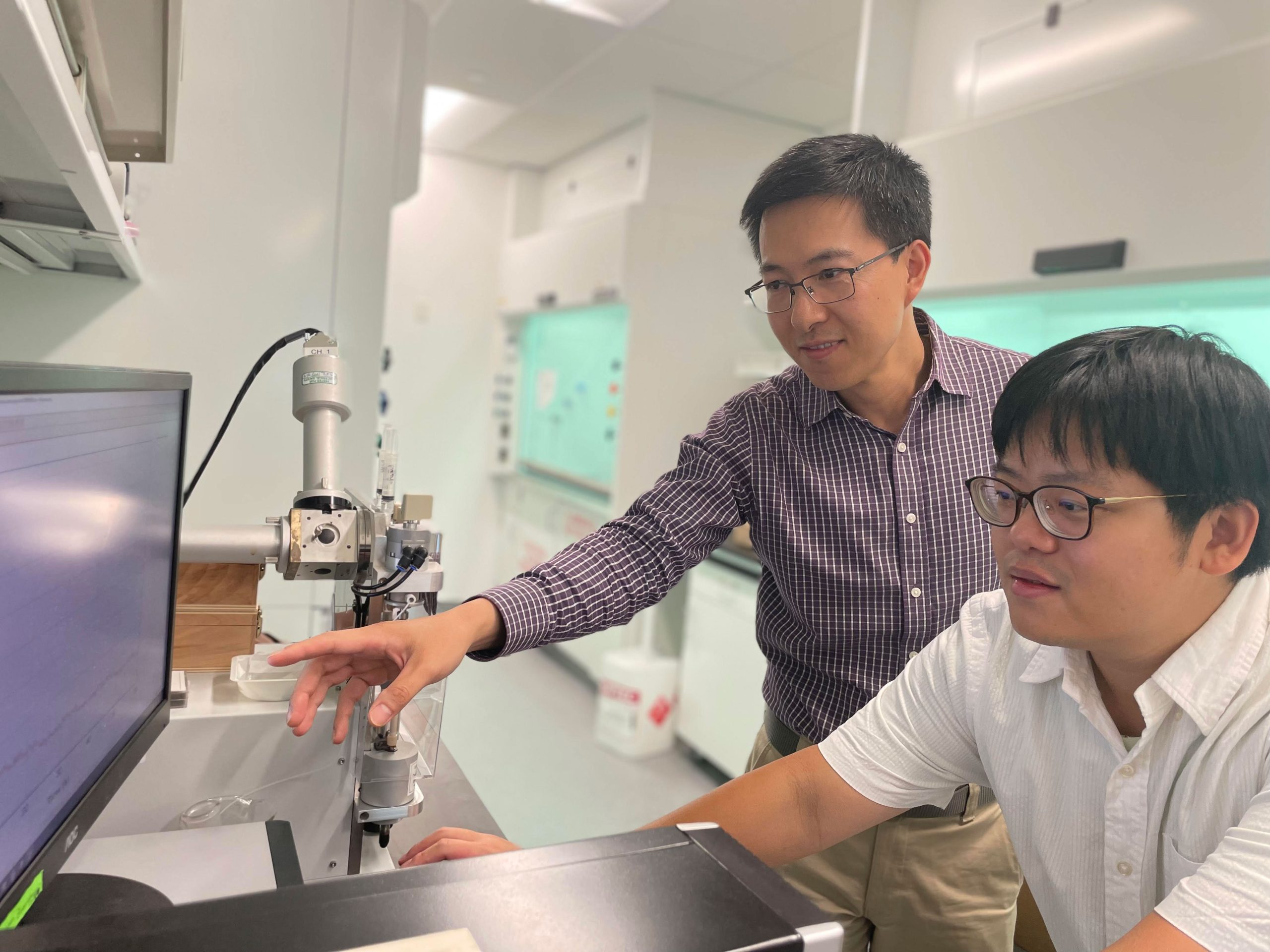
Lead researcher and first author, Yu Hsuan Chen, a doctoral student in Zhao’s lab, likened the mitochondrion to the cell’s engine and signaling hub.
“When the engine’s manual — the mtDNA — gets damaged, it’s not always by a spelling mistake, a mutation,” Chen said. “Sometimes, it’s more like a sticky note that gets stuck to the pages, making it hard to read and use. That’s what these GSH-DNA adducts are doing.”
From DNA damage to disease
The researchers linked the accumulation of the sticky lesions to significant changes in mitochondrial function. They observed a decrease in proteins needed for energy production and a simultaneous increase in proteins that help with stress response and mitochondrial repair, suggesting the cell fights back against the damage.
The researchers also used advanced computer simulations to model the effect of the adducts.
“We found that the sticky tags can actually make the mtDNA less flexible and more rigid,” Chen said. “This might be a way the cell ‘marks’ damaged DNA for disposal, preventing it from being copied and passed on.”
The team’s findings hold promise for understanding diseases. According to Zhao, the discovery of GSH-DNA adducts opens a new frontier for research into how damaged mtDNA can act as a stress signal.
“Problems with mitochondria and inflammation linked to damaged mtDNA have been connected to diseases such as neurodegeneration and diabetes,” he said. “When mtDNA is damaged, it can escape from the mitochondria and trigger immune and inflammatory responses. The new type of mtDNA modification we’ve discovered could open new research directions to understand how it influences immune activity and inflammation.”
Reference: “Glutathionylated DNA adducts accumulate in mitochondrial DNA and are regulated by AP endonuclease 1 and tyrosyl-DNA phosphodiesterase 1” by Yu Hsuan Chen, Martin Esparza Sanchez, Ta I Hung, Jin Tang, Wenyan Xu, Jiekai Yin, Yinsheng Wang, Chia-En A. Chang, Huimin Zhang, Junjie Chen and Linlin Zhao, 19 November 2025, Proceedings of the National Academy of Sciences.
DOI: 10.1073/pnas.2509312122
The research was supported by grants from the National Institutes of Health and UCR.
Never miss a breakthrough: Join the SciTechDaily newsletter.
Follow us on Google and Google News.