

The EXCITE mission is set to launch a scientific balloon to observe the atmospheres of exoplanets using infrared technology, focusing on hot Jupiters.
This NASA-backed project aims to expand our understanding of other worlds by employing advanced spectroscopic techniques and capturing detailed temperature profiles across entire planetary orbits, paving the way for future space research and technology.
EXCITE Mission
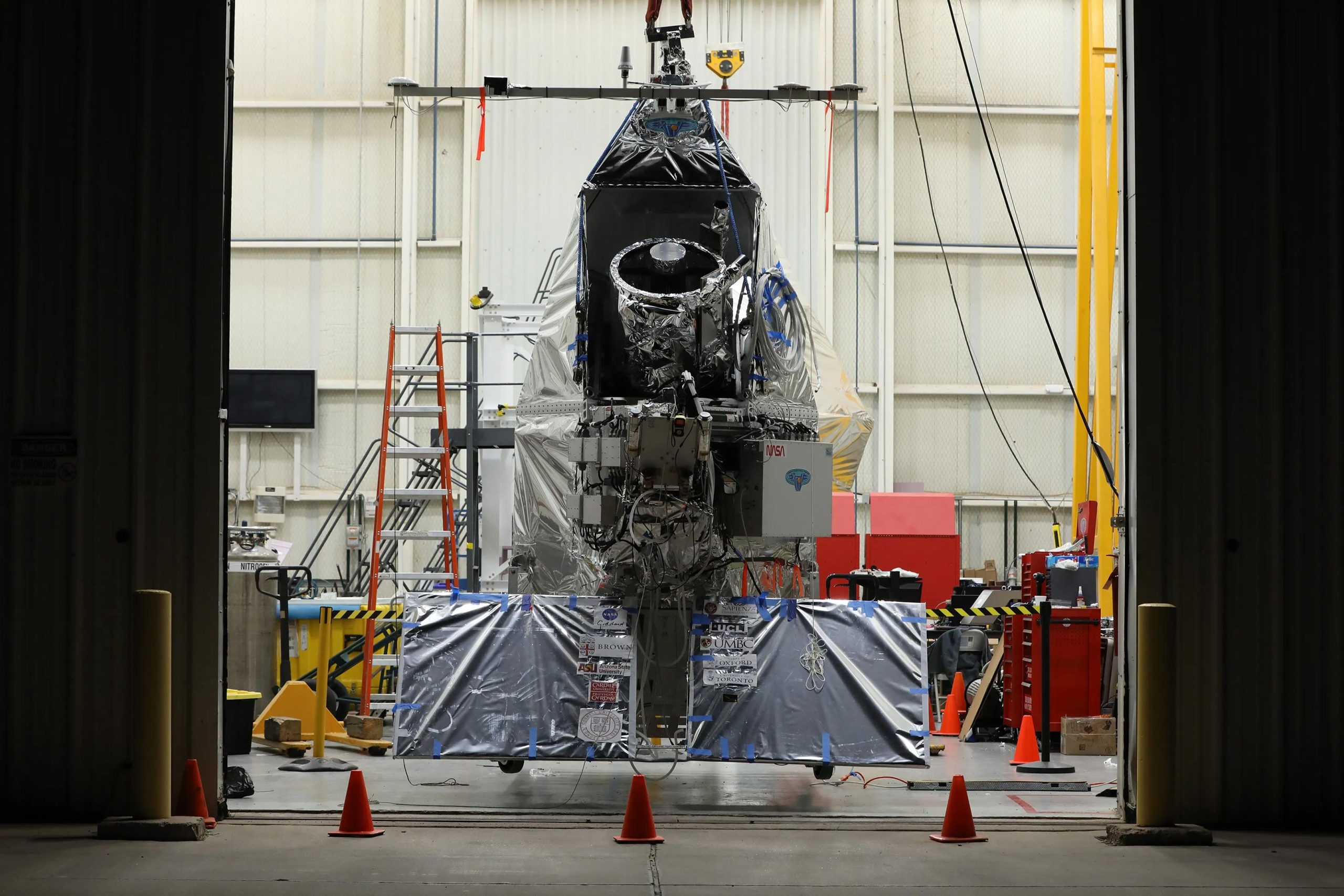
Scientists and engineers are ready to fly an infrared mission called EXCITE (EXoplanet Climate Infrared TElescope) to the edge of space.
EXCITE is designed to study atmospheres around exoplanets, or worlds beyond our solar system, during circumpolar long-duration scientific balloon flights. But first, it must complete a test flight during NASA’s fall 2024 scientific ballooning campaign from Fort Sumner, New Mexico.
“EXCITE can give us a three-dimensional picture of a planet’s atmosphere and temperature by collecting data the whole time the world orbits its star,” said Peter Nagler, the mission’s principal investigator at NASA’s Goddard Space Flight Center in Greenbelt, Maryland. “Only a handful of these types of measurements have been done before. They require a very stable telescope in a position to track a planet for several days at a time.”
Unveiling Hot Jupiters
EXCITE will study hot Jupiters, giant gas exoplanets that complete an orbit once every one to two days and have temperatures in the thousands of degrees. The worlds are tidally locked, which means the same side always faces the star.
The telescope will observe how heat is distributed across the planet, from the scalding hemisphere facing the star to the relatively cooler nightside.
It will also determine how molecules in a world’s atmosphere absorb and emit light over the entire orbit, a process called phase-resolved spectroscopy. Not only can this data reveal the presence of compounds — like water, methane, carbon dioxide, and others — but also how they circulate globally as the planet orbits its star.
A Leap in Exoplanetary Science
NASA’s Hubble, James Webb, and retired Spitzer space telescopes have collected a handful of these measurements between them.
In 2014, for example, Hubble and Spitzer observed an exoplanet called WASP-43 b. To collect data over the world’s 22-hour day, scientists needed 60 hours of Hubble time and 46 hours from Spitzer. Resource-intensive studies like this on space-based observatories are difficult. Time is a limited resource, and studies must compete with hundreds of other requests for that time.
The Benefits of Balloon-Based Observatories
“During its first science flight, EXCITE aims to fly for over a dozen days from the Columbia Scientific Balloon Facility’s site in Antarctica,” said Kyle Helson, an EXCITE team member and a research scientist at the University of Maryland, Baltimore County and NASA Goddard. “And at the pole, the stars we’ll study don’t set, so our observations won’t be interrupted. We hope that the mission will effectively double the number of phase-resolved spectra available to the science community.”
EXCITE will fly to about 132,000 feet (40 kilometers) via a scientific balloon filled with helium. That takes it above 99.5% of Earth’s atmosphere. At that altitude, the telescope will be able to observe multiple infrared wavelengths with little interference.
Collaboration and Future Prospects
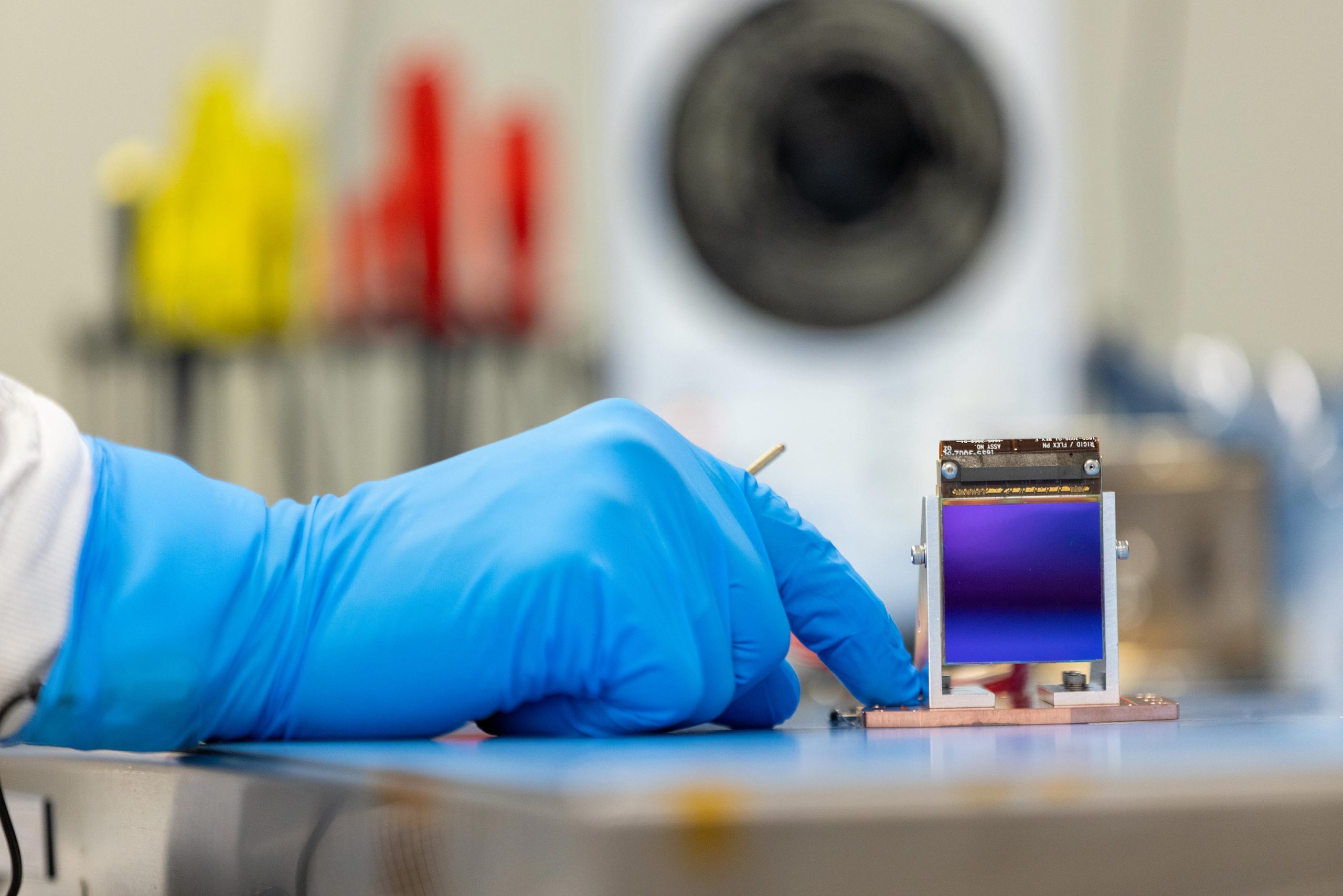
“The telescope collects the infrared light and beams it into the spectrometer, where it kind of goes through a little obstacle course,” said Lee Bernard, an EXCITE team member and a graduate research assistant at Arizona State University in Tempe. “It bounces off mirrors and through a prism before reaching the detector. Everything must be aligned very precisely — just a few millimeters off center and the light won’t make it.”
The spectrometer rests inside a vessel called a cryostat situated behind the telescope. The cryostat cools the spectrometer’s detector — once a flight candidate from Webb’s NIRSpec (Near InfraRed Spectrograph) — to about 350 degrees below zero Fahrenheit (minus 210 degrees Celsius) so it can measure tiny intensity changes in the infrared light.
The entire telescope and cryostat assembly rests in a rowboat-shaped base where it can rotate along three axes to maintain stable pointing down to 50 milliarcseconds. That’s like holding a steady gaze on a U.S. quarter coin from 65 miles away.
“Several different institutions contributed to EXCITE’s subsystems,” said Tim Rehm, an EXCITE team member and a graduate research assistant at Brown University in Providence, Rhode Island. “It’s great to see them all assembled and working together. We’re excited to do this test flight, and we’re looking forward to all the future science flights we hope to have.”
Summary and Future Outlook
The EXCITE instrument was primarily built by NASA Goddard, Brown, Arizona State University, and StarSpec Technologies in Ontario, with additional support from collaborators in the U.S., Canada, Italy, and the United Kingdom.
NASA’s scientific balloons offer frequent, low-cost access to near-space to conduct scientific investigations and technology maturation in fields such as astrophysics, heliophysics, and atmospheric research, as well as training for the next generation of leaders in engineering and science. To follow the missions in the 2024 Fort Sumner fall campaign, visit NASA’s CSBF (Columbia Scientific Balloon Facility) website for real-time updates of a balloon’s altitude and GPS location during flight.
NASA’s Wallops Flight Facility in Virginia manages the agency’s scientific balloon flight program with 10 to 15 flights each year from launch sites worldwide. Peraton, which operates CSBF in Texas, provides mission planning, engineering services, and field operations for NASA’s scientific balloon program. The CSBF team has launched more than 1,700 scientific balloons over some 40 years of operations. NASA’s balloons are fabricated by Aerostar. The NASA Scientific Balloon Program is funded by the NASA Headquarters Science Mission Directorate Astrophysics Division.
Never miss a breakthrough: Join the SciTechDaily newsletter.
Follow us on Google and Google News.