
Close Menu
    Facebook X (Twitter) Instagram
    SciTechDaily
    • Biology
    • Chemistry
    • Earth
    • Health
    • Physics
    • Science
    • Space
    • Technology
    Facebook X (Twitter) Pinterest YouTube RSS
    SciTechDaily
    Home»Health»Reversing Time From Within: Can Gut Bacteria Delay Aging?
    Health

    Reversing Time From Within: Can Gut Bacteria Delay Aging?

    By Xia & He Publishing Inc.November 29, 2024No Comments4 Mins Read
    Facebook Twitter Pinterest Telegram LinkedIn WhatsApp Email Reddit
    Share
    Facebook Twitter LinkedIn Pinterest Telegram Email Reddit
    Clock Microbiome Concept
    Aging is a complex process involving genetic changes and physiological shifts, with the gut microbiome emerging as a critical yet understudied factor influencing health. New research explores the evolving gut microbiome’s role in aging, its impact on immunity, metabolism, and diseases, and highlights interventions like probiotics and diet to promote healthy aging.

    The gut microbiome profoundly influences aging, and its modulation may support healthy aging and disease prevention.

    Aging is a universal and intricate process impacting all living organisms, marked by key genetic features like telomere shortening, genomic instability, and epigenetic alterations. As time progresses, aging induces physical, biochemical, and metabolic changes within the human body.

    One significant yet understudied factor in this process is the gut microbiome (GM)—a diverse microbial community that profoundly influences health. This review delves into the dynamic interplay between the gut microbiome and aging, highlighting microbiota-dependent mechanisms that regulate aging, and examines interventions aimed at promoting healthy aging through microbiome modulation.

    Dynamics of Gut Microbiome Across Lifespan

    From birth, the gut microbiome evolves, influenced by childbirth mode, breastfeeding, and early-life exposure to microbes. In infancy, the microbiome is less diverse, dominated by Bifidobacterium in breastfed babies and Bacteroides in formula-fed infants.
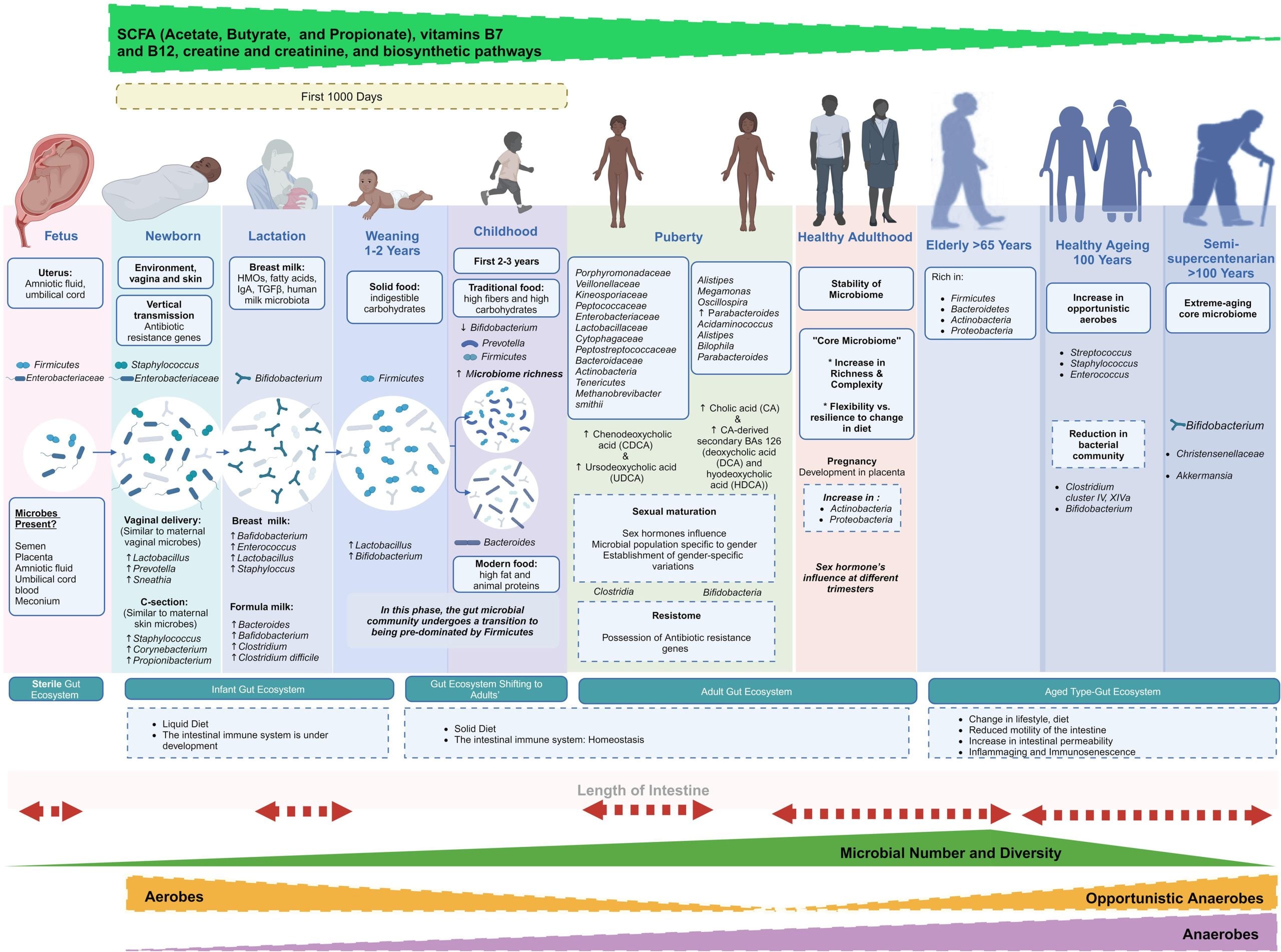
    Gut Microbiome Alterations From Infancy to Old Age in Humans
    The composition of the gut microbiome exhibits genus-level variations across different age groups. The early-age gut microbiome is shaped by the embryonic environment, type of delivery, and exposure to microbes through breast/formula feeding. During weaning, the microbiome undergoes changes from a simple (less diverse) to a complex (more diverse) microbial mixture and attains stability until adulthood. During puberty, the microbiota differentiates based on the sex of the host due to associated hormonal changes. In elderly individuals, the microbiota is affected by lifestyle, dietary habits, and immunosenescence of the intestinal immune system. In this age group, the microbiome is mainly dominated by pathogenic and opportunistic microbes. The major changes in the metabolites associated with human GM and the length of the intestine concerning the aging process are also shown. Created by biorander.com. GM, gut microbiota; HMOs, human milk oligosaccharides; IgA, immunoglobulin A; SCFA, short-chain fatty acids; TGF-β, transforming growth factor-β. Credit: Tulika Prakash

    By adulthood, a robust “core microbiome” develops, modulating immune and metabolic functions. Puberty introduces sex-related changes in the microbiome, primarily due to hormonal influences. In older adults, microbial diversity decreases, leading to an abundance of frailty-linked microbes like Christensenellaceae and reduced SCFA producers. These changes impact age-related conditions such as sarcopenia and osteoporosis.

    Gut Microbiome and Aging-Related Disorders

    Aging-associated shifts in the gut microbiome are linked to various age-related diseases, including neurodegenerative disorders like Alzheimer’s disease (AD) and Parkinson’s disease (PD). Dysbiosis, or microbial imbalance, has been implicated in inflammaging, a chronic, low-grade inflammation that accelerates aging.

    This process is tied to diseases such as AD, PD, cardiovascular conditions, and Type 2 diabetes. Reduced levels of beneficial SCFA-producing bacteria and increased gut permeability exacerbate inflammation, which accelerates disease progression.

    Gut Microbiome and Immune System

    The gut microbiome plays a crucial role in shaping the immune system, from infancy to old age. Immunosenescence, a gradual decline in immune function, is closely tied to changes in the gut microbiome. Loss of gut microbial diversity diminishes the immune system’s ability to fend off infections, which is particularly problematic in the elderly.

    Studies show that maintaining microbial balance in older adults can potentially delay immunosenescence and improve immune response, reducing susceptibility to infections and age-related diseases.

    Metabolic Changes and Gut Microbiome

    The gut microbiome produces a range of metabolites, including SCFAs, polyamines, and reactive oxygen species (ROS), that influence metabolic processes and aging.

    SCFAs like butyrate have been shown to prevent age-related physiological decline by enhancing intestinal barrier function, modulating immune responses, and inhibiting cellular senescence. However, dysbiosis disrupts these processes, contributing to metabolic disorders such as obesity and insulin resistance.

    Interventions for Healthy Aging

    Microbiome modulation through prebiotics, probiotics, and dietary interventions shows promise in promoting healthy aging. Probiotic strains such as Bifidobacterium longum and Lactobacillus rhamnosus have been linked to enhanced immune function and reduced inflammation in older adults.

    Physical activity and a balanced diet also help maintain a diverse and stable microbiome, which is crucial for longevity and health in aging populations.

    Conclusions

    The gut microbiome holds a central role in human aging, influencing everything from metabolic function to immune health. By modulating the gut microbiome through lifestyle changes and interventions, it may be possible to slow down the aging process, reduce the risk of age-related diseases, and promote healthier aging.

    Reference: “Understanding Aging through the Lense of Gut Microbiome” by Rashmi Ira, Jitesh Adwani, Arjun Orkkatteri Krishnan, Gurunathan Subramanian, Sandhya Yadav, Saumya Shukla, Snehlata Rao and Tulika Prakash, 2 August 2024, Exploratory Research and Hypothesis in Medicine.
    DOI: 10.14218/ERHM.2024.00008

    Never miss a breakthrough: Join the SciTechDaily newsletter.
    Follow us on Google and Google News.

    Aging Gut Microbiome
    Share. Facebook Twitter Pinterest LinkedIn Email Reddit

    Related Articles

    Tanning’s Hidden Cost: Sun Exposure Can Disrupt Skin’s Microbiome

    Eating Beans Could Aid in Cancer Prevention and Treatment

    Special Vegan Diet Found To Decrease Hot Flashes by 95%

    From Gut to Brain: New Findings Link Microbiota to Alzheimer’s Memory Loss

    New Study: Supplement Reduces Liver Triglycerides in People With Fatty Liver Disease

    How Caffeine May Play a Role in Gut Health

    Fecal Transplants Reverse Hallmarks of Aging in the Gut, Eyes, and Brain

    Mediterranean Diet May Help Curb Advance of Frailty and Cognitive Decline in Older People

    Researchers Can Accurately Estimate Your Age Based on the Microbes Living on Your Body

    Leave A Reply Cancel Reply

    • Facebook
    • Twitter
    • Pinterest
    • YouTube

    Don't Miss a Discovery

    Subscribe for the Latest in Science & Tech!

    Trending News

    Millions Take These IBS Drugs, But a New Study Finds Serious Risks

    Scientists Unlock Hidden Secrets of 2,300-Year-Old Mummies Using Cutting-Edge CT Scanner

    Bread Might Be Making You Gain Weight Even Without Eating More Calories

    Scientists Discover Massive Magma Reservoir Beneath Tuscany

    Europe’s Most Active Volcano Just Got Stranger – Here’s Why Scientists Are Rethinking It

    Alzheimer’s Symptoms May Start Outside the Brain, Study Finds

    Millions Take This Popular Supplement – Scientists Discover a Concerning Link to Heart Failure

    The Universe Is Expanding Too Fast and Scientists Can’t Explain Why

    Follow SciTechDaily
    • Facebook
    • Twitter
    • YouTube
    • Pinterest
    • Newsletter
    • RSS
    SciTech News
    • Biology News
    • Chemistry News
    • Earth News
    • Health News
    • Physics News
    • Science News
    • Space News
    • Technology News
    Recent Posts
    • Doctors Surprised by the Power of a Simple Drug Against Colon Cancer
    • Why Popular Diabetes Drugs Like Ozempic Don’t Work for Everyone: The “Genetic Glitch”
    • Scientists Create Improved Insulin Cells That Reverse Diabetes in Mice
    • Scientists Stunned After Finding Plant Thought Extinct for 60 Years
    • A Common Diabetes Drug May Hold the Key to Stopping HIV From Coming Back
    Copyright © 1998 - 2026 SciTechDaily. All Rights Reserved.
    • Science News
    • About
    • Contact
    • Editorial Board
    • Privacy Policy
    • Terms of Use

    Type above and press Enter to search. Press Esc to cancel.