

Integrating photons into electronic chips enhances bandwidth and improves filter control.
Researchers at the University of Sydney Nano Institute have developed a small silicon semiconductor chip that combines electronic and photonic (light-based) elements. This innovation greatly enhances radio-frequency (RF) bandwidth and the ability to accurately control information flowing through the unit.
Expanded bandwidth means more information can flow through the chip and the inclusion of photonics allows for advanced filter controls, creating a versatile new semiconductor device.
Researchers expect the chip will have applications in advanced radar, satellite systems, wireless networks, and the roll-out of 6G and 7G telecommunications and also open the door to advanced sovereign manufacturing. It could also assist in the creation of high-tech value-add factories at places like Western Sydney’s Aerotropolis precinct.
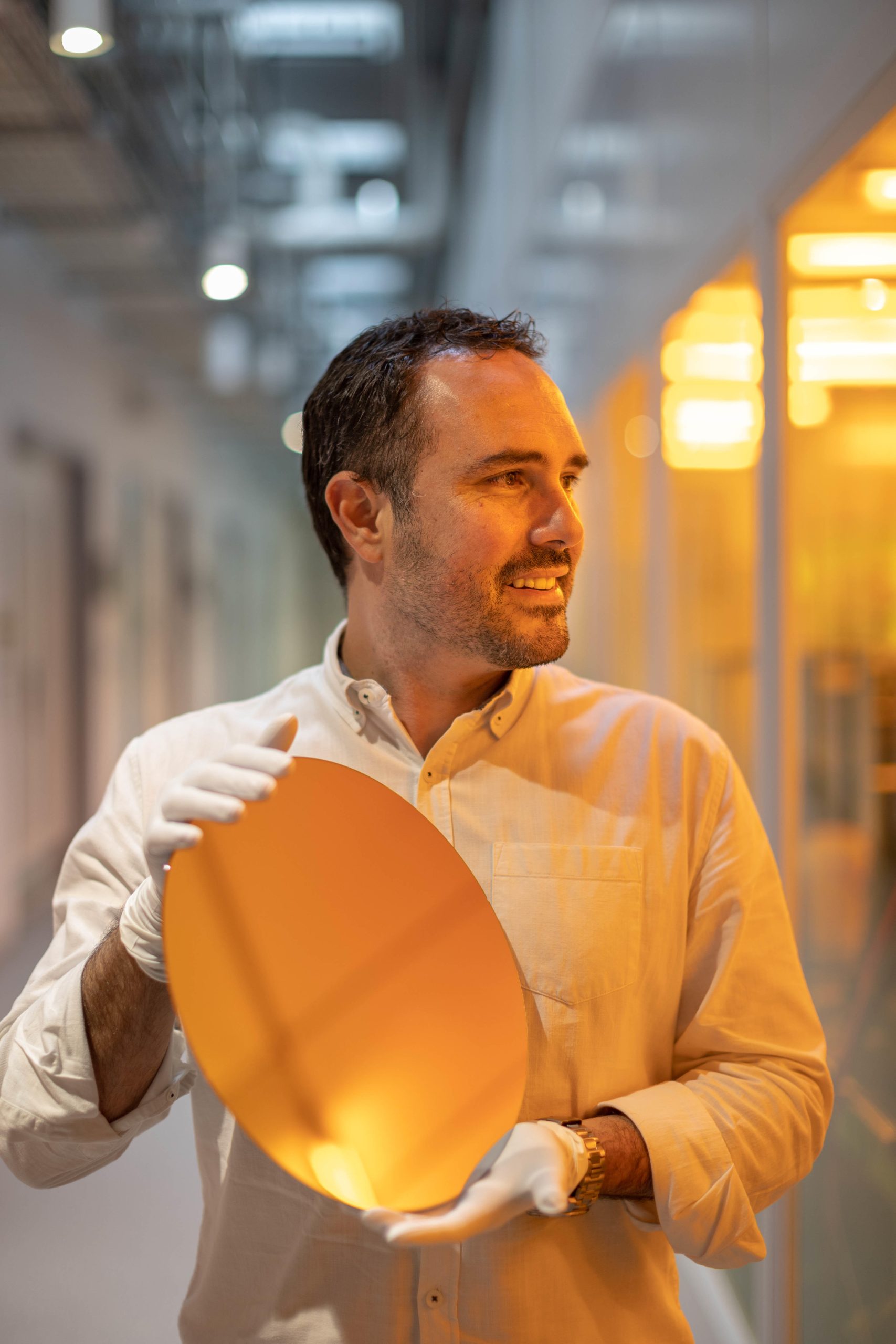
Innovative Design and Construction
The chip is built using an emerging technology in silicon photonics that allows the integration of diverse systems on semiconductors less than 5 millimeters wide. Pro-Vice-Chancellor (Research) Professor Ben Eggleton, who guides the research team, likened it to fitting together Lego building blocks, where new materials are integrated through advanced packaging of components, using electronic ‘chiplets’.
The research for this invention has been published in Nature Communications.
Dr Alvaro Casas Bedoya, Associate Director for Photonic Integration in the School of Physics, who led the chip design, said the unique method of heterogeneous materials integration has been 10 years in the making.
“The combined use of overseas semiconductor foundries to make the basic chip wafer with local research infrastructure and manufacturing has been vital in developing this photonic integrated circuit,” he said. “This architecture means Australia could develop its own sovereign chip manufacturing without exclusively relying on international foundries for the value-add process.”
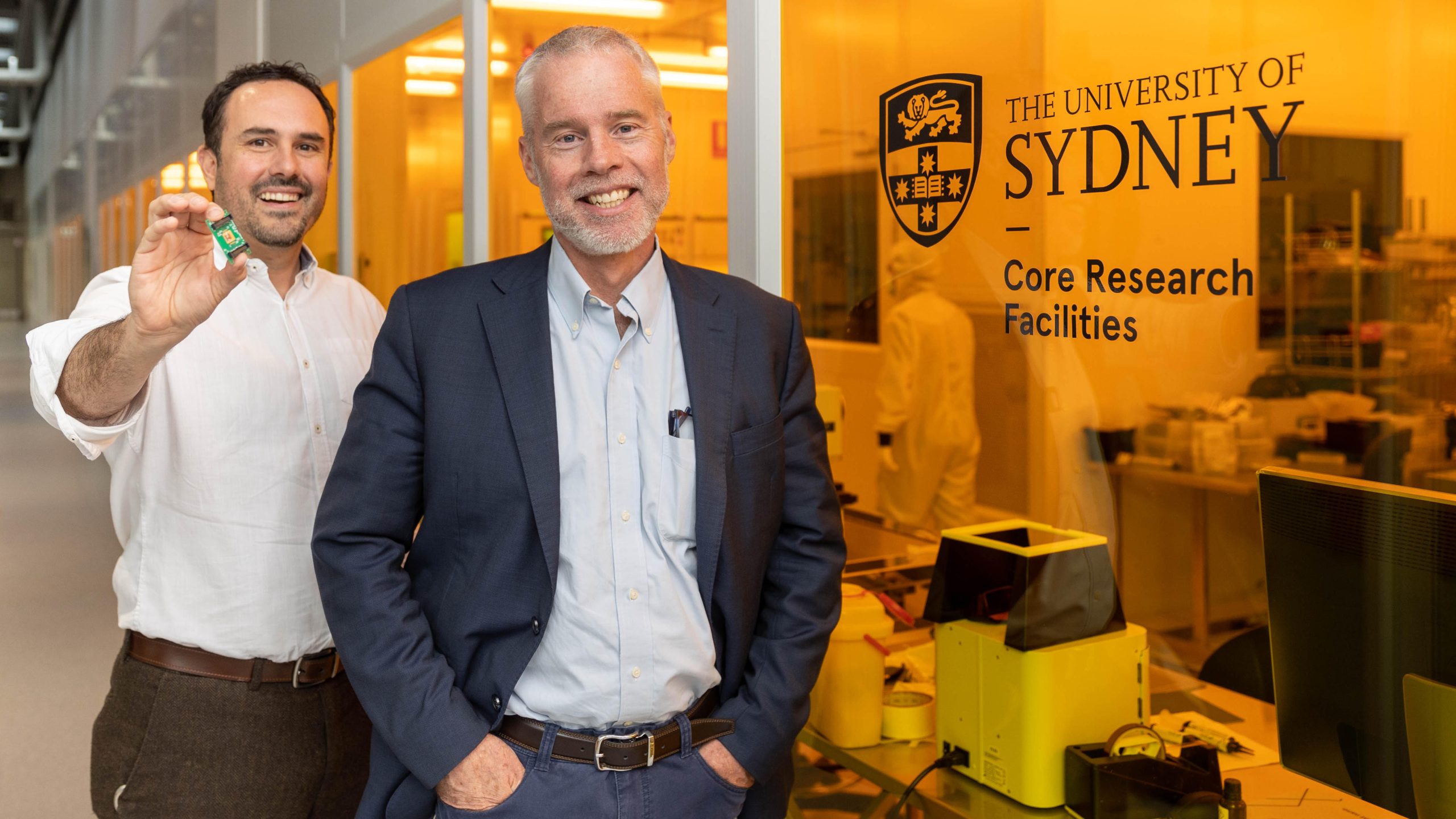
Professor Eggleton highlighted the fact that most of the items on the Federal Government’s List of Critical Technologies in the National Interest depend upon semiconductors.
Strategic Importance and Local Impact
He said the invention means the work at Sydney Nano fits well with initiatives like the Semiconductor Sector Service Bureau (S3B), sponsored by the NSW Government, which aims to develop the local semiconductor ecosystem.
Dr Nadia Court, Director of S3B, said, “This work aligns with our mission to drive advancements in semiconductor technology, holding great promise for the future of semiconductor innovation in Australia. The result reinforces local strength in research and design at a pivotal time of increased global focus and investment in the sector.”
Designed in collaboration with scientists at the Australian National University, the integrated circuit was built at the Core Research Facility cleanroom at the University of Sydney Nanoscience Hub, a purpose-built $150 million building with advanced lithography and deposition facilities.
Technological Breakthrough and Future Potential
The photonic circuit in the chip means a device with an impressive 15 gigahertz bandwidth of tunable frequencies with spectral resolution down to just 37 megahertz, which is less than a quarter of one percent of the total bandwidth.
Professor Eggleton said: “Led by our impressive PhD student Matthew Garrett, this invention is a significant advance for microwave photonics and integrated photonics research. Microwave photonic filters play a crucial role in modern communication and radar applications, offering the flexibility to precisely filter different frequencies, reducing electromagnetic interference,
and enhancing signal quality. Our innovative approach of integrating advanced functionalities into semiconductor chips, particularly the heterogenous integration of chalcogenide glass with silicon, holds the potential to reshape the local semiconductor landscape.”
Co-author and Senior Research Fellow Dr Moritz Merklein said: “This work paves the way for a new generation of compact, high-resolution RF photonic filters with wideband frequency tunability, particularly beneficial in air and spaceborne RF communication payloads, opening possibilities for enhanced communications and sensing capabilities.”
Reference: “Integrated microwave photonic notch filter using a heterogeneously integrated Brillouin and active-silicon photonic circuit” by Matthew Garrett, Yang Liu, Moritz Merklein, Cong Tinh Bui, Choon Kong Lai, Duk-Yong Choi, Stephen J. Madden, Alvaro Casas-Bedoya and Benjamin J. Eggleton, 20 November 2023, Nature Communications.
DOI: 10.1038/s41467-023-43404-x
The study was funded by the Australian Research Council.
Never miss a breakthrough: Join the SciTechDaily newsletter.
Follow us on Google and Google News.
2 Comments
Will be great if this works out. Bricks are pretty much the same. We build lots of good stuff with a properly built brick!
thank you for this