
Close Menu
    Facebook X (Twitter) Instagram
    SciTechDaily
    • Biology
    • Chemistry
    • Earth
    • Health
    • Physics
    • Science
    • Space
    • Technology
    Facebook X (Twitter) Pinterest YouTube RSS
    SciTechDaily
    Home»Space»Roscosmos Progress 87 Cargo Craft Successfully Launches to International Space Station
    Space

    Roscosmos Progress 87 Cargo Craft Successfully Launches to International Space Station

    By NASAFebruary 14, 2024No Comments3 Mins Read
    Facebook Twitter Pinterest Telegram LinkedIn WhatsApp Email Reddit
    Share
    Facebook Twitter LinkedIn Pinterest Telegram Email Reddit
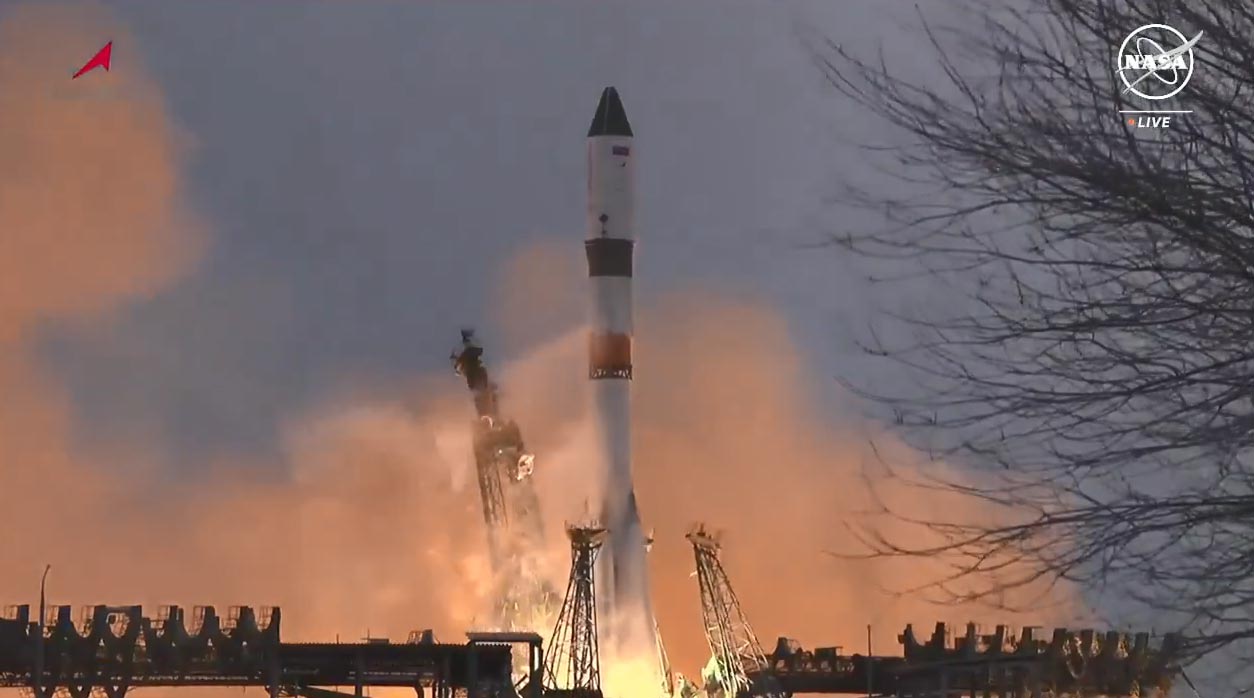
    Progress 87 Cargo Craft Launches
    The Progress 87 cargo craft launches to the International Space Station from the Baikonur Cosmodrome in Kazakhstan on February 14, 2024. Credit: NASA TV

    The unpiloted Roscosmos Progress 87 is safely in orbit headed for the International Space Station following the launch at 10:25 p.m. EST Wednesday, February 14 (8:25 a.m. Baikonur time Thursday, February 15) from the Baikonur Cosmodrome in Kazakhstan.

    The resupply ship reached preliminary orbit, and deployed its solar arrays and navigational antennas as planned, on its way to meet up with the orbiting laboratory and its Expedition 70 crew members.

    Progress will dock to the aft port of the Zvezda service module two days later at 1:12 a.m. EST on Saturday, February 17. Live coverage of rendezvous and docking will begin at 12:30 a.m. Progress will deliver almost three tons of food, fuel, and supplies to the space station.
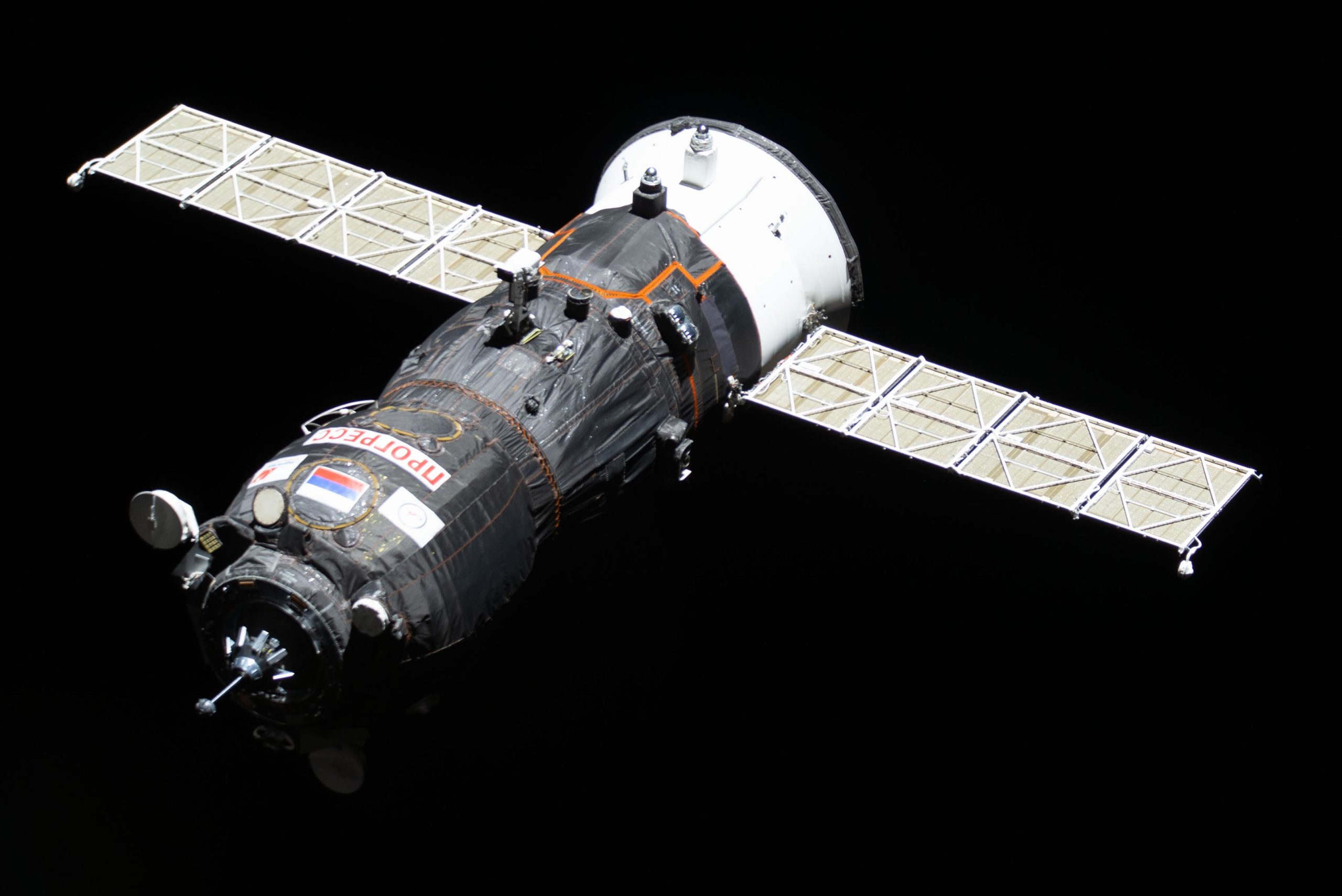
    Progress 72 Resupply Ship
    Russia’s Progress 72 resupply ship is pictured approaching the International Space Station’s Pirs docking compartment carrying 3.7 tons of food, fuel, and supplies for the Expedition 59 crew. Credit: NASA

    Roscosmos Progress Spacecraft

    The Roscosmos Progress spacecraft are a series of uncrewed cargo ships, operated by Roscosmos, the space agency of the Russian Federation. These spacecraft are designed to supply the International Space Station (ISS) with food, fuel, and other essential supplies. The Progress spacecraft are an integral part of maintaining the ISS, ensuring that the crew aboard has the necessary resources to sustain their missions in space.

    Launched from earthbound cosmodromes, Progress spacecraft dock automatically with the ISS, utilizing a sophisticated radar and docking system. After the cargo is transferred and waste materials are loaded into the Progress, the spacecraft undocks and is deorbited, burning up in the Earth’s atmosphere. This efficient cycle of resupply and waste disposal has been a cornerstone of space station logistics since the first Progress mission in 1978, supporting not only the ISS but also its predecessor, the Soviet space station Mir.

    Baikonur Cosmodrome

    The Baikonur Cosmodrome, located in Kazakhstan, is the world’s first and largest operational space launch facility. Established in 1955 by the then Soviet Union, it has been the launch site for many milestones in space exploration, including the launch of the first artificial satellite, Sputnik, and the first manned spaceflight by Yuri Gagarin. The cosmodrome is sprawling, covering an area of over 6,000 square kilometers.

    Despite the dissolution of the Soviet Union, Baikonur remains under Russian control and is used extensively by Roscosmos for a variety of space missions, including manned Soyuz flights and Progress cargo missions to the ISS. The facility includes multiple launch complexes and support infrastructure, capable of supporting a wide range of space activities. The cosmodrome’s location, near the equator, offers advantageous conditions for launching spacecraft into various orbits, making it a pivotal asset in global space exploration efforts.

    Never miss a breakthrough: Join the SciTechDaily newsletter.
    Follow us on Google and Google News.

    International Space Station NASA Roscosmos
    Share. Facebook Twitter Pinterest LinkedIn Email Reddit

    Related Articles

    93 Million Miles, 3,520 Orbits, and a 70th Birthday: NASA’s Don Pettit Returns to Earth

    Orbited Earth 3,520 Times – And Home for Cake: NASA Astronaut’s Epic Return

    Russian Spacewalk Ends Early After Battery Power Issue on Spacesuit

    International Space Station Crew Changes Command to Russian Cosmonaut

    Cosmonauts Set Up Robotic Arm’s First Motion During Spacewalk Outside ISS

    Russian Cosmonauts Exit International Space Station To Activate New Robotic Arm

    Russian Cosmonauts Complete Spacewalk To Set Up 37-Foot-Long Robotic Arm

    Russian Soyuz Space Station Crew Launch Set for Friday Following Tuesday’s Successful Spacewalk

    Cosmonauts Complete Spacewalk To Integrate Russian Prichal Module With Space Station

    Leave A Reply Cancel Reply

    • Facebook
    • Twitter
    • Pinterest
    • YouTube

    Don't Miss a Discovery

    Subscribe for the Latest in Science & Tech!

    Trending News

    New Molecule Restores the Brain’s Natural Defenses Against Alzheimer’s

    Could Creatine Boost More Than Muscles? It May Also Help Depression

    Scientists Discover a Natural Molecule That Could Help Prevent Vision Loss

    Scientists Thought Royal Jelly Made Queen Bees. They Were Wrong

    One Tiny Change May Explain How Viruses Jump From Bats to Humans

    The Secret to Healthy Aging May Be More Protein and More Exercise

    These 567-Million-Year-Old Fossils Are Rewriting the Story of Life on Earth

    The Spider-Like Creatures Helping Scientists Decode the Origins of Fatherhood

    Follow SciTechDaily
    • Facebook
    • Twitter
    • YouTube
    • Pinterest
    • Newsletter
    • RSS
    SciTech News
    • Biology News
    • Chemistry News
    • Earth News
    • Health News
    • Physics News
    • Science News
    • Space News
    • Technology News
    Recent Posts
    • Rethinking Movement Disorders: Scientists Uncover a Surprising Disconnect Deep Inside the Brain
    • Groundbreaking Study Challenges 40 Years of Beliefs About Mad Cow Disease
    • One Sugar Tells Your Brain You’re Full. Another Barely Does
    • One of Arizona’s Largest Reservoirs Is Less Than 1% Full After Snowpack Collapse
    • Scientists Detect Hundreds of Iceberg Earthquakes at Antarctica’s Crumbling Doomsday Glacier
    Copyright © 1998 - 2026 SciTechDaily. All Rights Reserved.
    • Science News
    • About
    • Contact
    • Editorial Board
    • Privacy Policy
    • Terms of Use

    Type above and press Enter to search. Press Esc to cancel.