

Researchers at McMaster University discovered eight different sex chromosomes in 11 species of African clawed frogs, revealing surprising genetic diversity.
The study found these chromosomes in genome regions with high genetic recombination, challenging existing theories about sex-determining gene evolution. This research highlights how crucial biological traits like sexual differentiation can evolve rapidly through newly developed genes.
Genetic Diversity in African Clawed Frogs
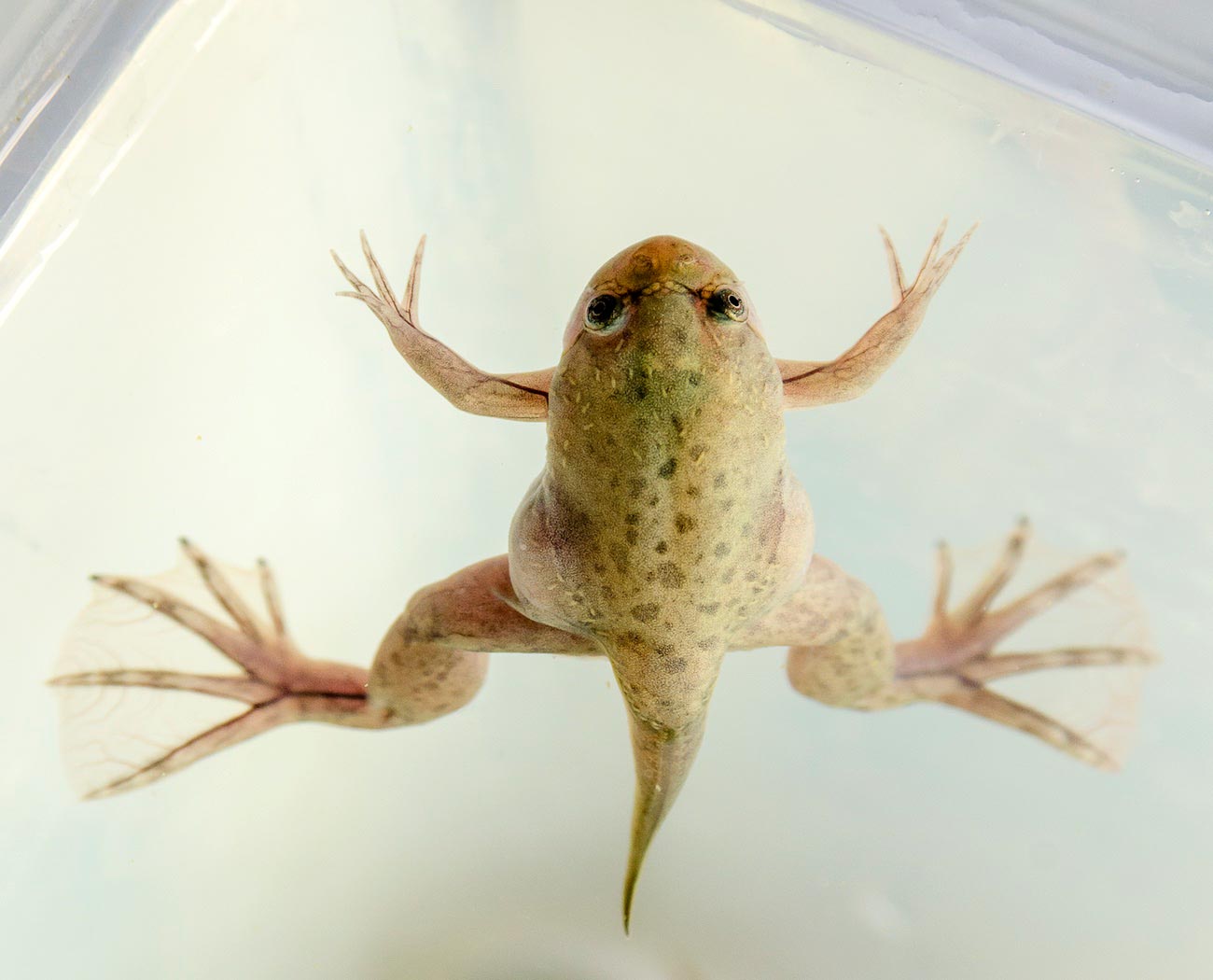
Researchers at McMaster University have discovered surprising genetic diversity in how sex is determined in the African clawed frog, one of the most extensively studied amphibians in the world.
Through genomic analysis, scientists identified eight distinct sex chromosomes across 11 species of the frog. Many of these chromosomes may carry newly evolved genes responsible for triggering male or female development.
Before this study, researchers were aware of only three sex chromosomes in the species, making this a groundbreaking discovery in the field of genetic evolution.
“In these frogs, we’ve discovered extraordinary variation even among closely related species, which allows us to explore how important things like sex determination evolve rapidly,” says Ben Evans, a professor in the Department of Biology at McMaster and lead author of a new study in the journal Molecular Biology and Evolution. Evans conducted the work with colleagues from the Czech Republic, France, the USA, and South Africa.
The African clawed frog is used as a model organism for biological research because of its close evolutionary relationship to humans, and because early development occurs externally, allowing fundamental processes to be readily observed and manipulated.
The frogs are found in sub-Saharan Africa and live in slow-moving or stagnant water. They are known for their flat bodies, vocal organs that can produce sound underwater, and claws on the first three toes of the hind feet, which they use to tear food apart.
Surprising Locations of Sex-Determining Genes
In this study, the researchers pinpointed the locations of the newly identified sex chromosomes, which added to their surprise.
Prevailing theory had suggested that sex-determining genes might typically arise in regions of the genome with a low rate of recombination – the exchange of genetic material within each parent that creates new mixtures of traits in their offspring.
Evolutionary Insights into Sex Determination
Instead, they found these newly evolved genes were almost universally located in regions where genetic recombination is high, raising questions about how and why the genetic basis of very important biological traits – such as sexual differentiation – may evolve so quickly, and how new genes and genetic function arise.
“If you conducted these same tests within some even older groups such as most mammals or all birds, you would find that their sex chromosomes are all the same,” explains Evans. “But this group of frogs — in sharp contrast — has incredible variation.”
“It is very likely that new genes arose many times in these frogs to orchestrate sexual differentiation, by acting as an ‘on-off switch’ or a ‘male-female switch’ at the top of the developmental cascade,” he says.
Historical Context and Ongoing Research
In 2015, Evans—who has studied the African clawed frog for over two decades—led a team which discovered six new species and added another back to the list of known species, providing the foundational information for this current work.
Reference: “Rapid Sex Chromosome Turnover in African Clawed Frogs (Xenopus) and the Origins of New Sex Chromosomes” by Ben J Evans, Václav Gvoždík, Martin Knytl, Caroline M S Cauret, Anthony Herrel, Eli Greenbaum, Jay Patel, Tharindu Premachandra, Theodore J Papenfuss, James Parente, Marko E Horb and John Measey, 12 December 2024, Molecular Biology and Evolution.
DOI: 10.1093/molbev/msae234
Never miss a breakthrough: Join the SciTechDaily newsletter.
Follow us on Google and Google News.