
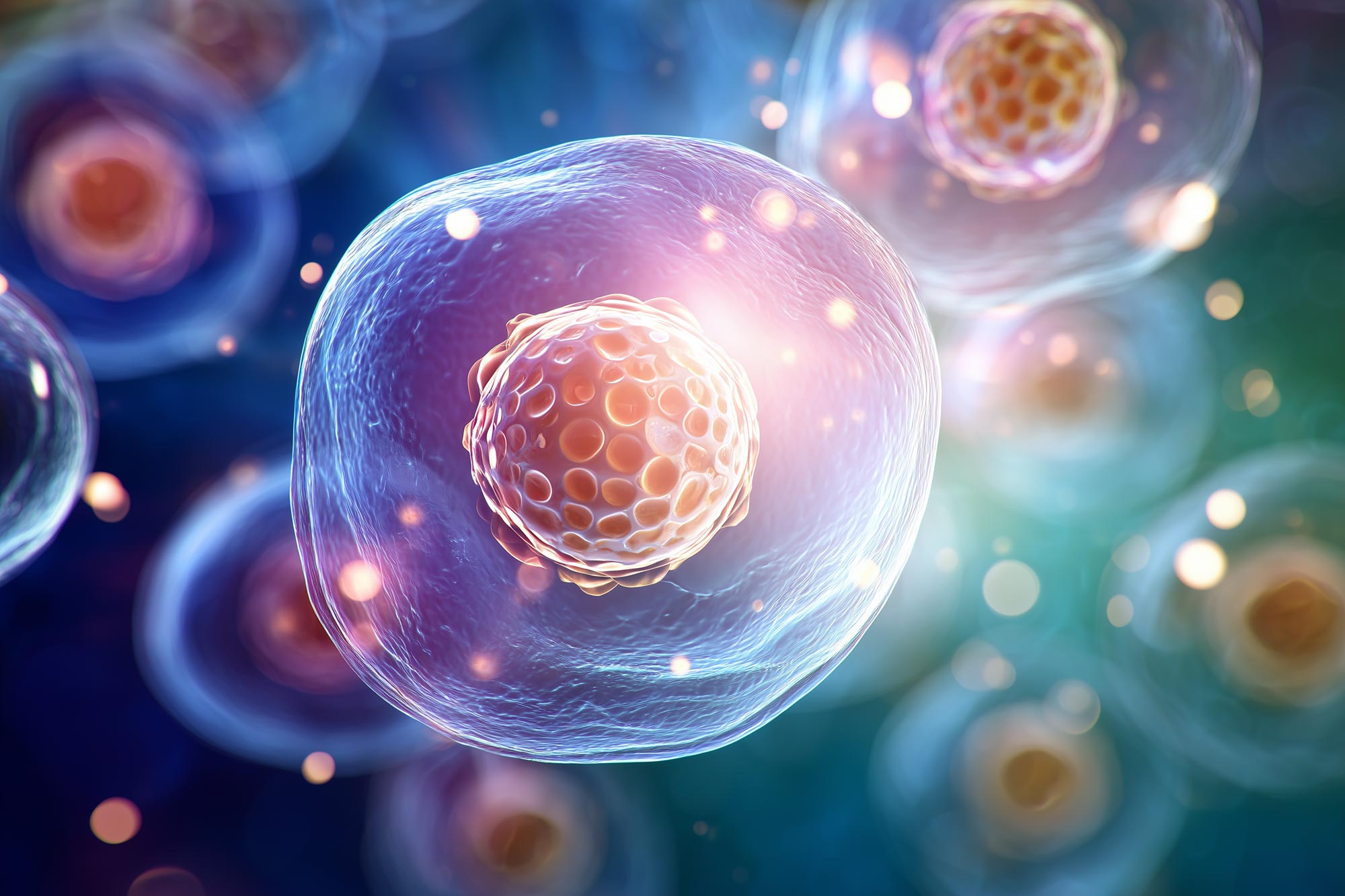
Researchers at Texas A&M have found a way to revive tired or damaged cells by giving them a fresh supply of mitochondria, the tiny structures that power cellular life.
Using special “nanoflowers” to boost stem cells, the team was able to produce extra mitochondria and deliver them directly to struggling cells, restoring their energy and resilience.
Restoring Energy by Supplying Fresh Mitochondria
Biomedical researchers at Texas A&M University report that they may have identified a way to slow or even reverse the loss of cellular energy production — a possibility that could influence many areas of medicine.
Dr. Akhilesh K. Gaharwar and Ph.D. student John Soukar, working with colleagues in the Department of Biomedical Engineering, have developed a technique that delivers new mitochondria to damaged cells. This approach brings energy output back to earlier levels and leads to major improvements in overall cell health.
Mitochondrial decline plays a role in aging, heart disease, and several neurodegenerative disorders. A method that strengthens the body’s natural ability to replace worn-out mitochondria has the potential to counter all of these conditions.
Why Failing Mitochondria Harm Cells
As people age or as cells are harmed by diseases such as Alzheimer’s or by toxic exposures like chemotherapy drugs, they gradually lose the ability to generate energy. This decline is tied to a reduction in mitochondria, the small structures within cells that produce most of the energy they rely on. Whether in the brain, heart or muscles, fewer mitochondria lead to failing cells that can no longer perform their essential tasks.
Nanoflowers Turn Stem Cells Into Powerful Donors
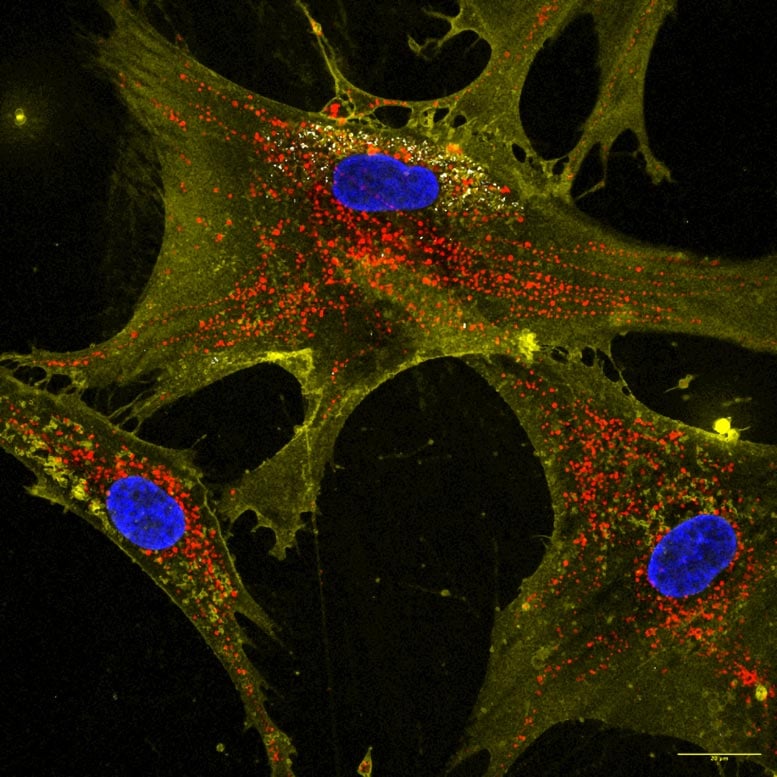
The research, published in Proceedings of the National Academy of Sciences, used microscopic, flower-shaped particles — known as nanoflowers — together with stem cells. When stem cells were exposed to these nanoflowers, they produced roughly twice as many mitochondria as usual. Once these enhanced stem cells were placed near damaged or aging cells, they transferred their extra mitochondria to their struggling neighbors.
The recipient cells recovered energy production and normal function after receiving the new mitochondria. They also became more resistant to cell death, even when later exposed to harmful agents such as chemotherapy drugs.
“We have trained healthy cells to share their spare batteries with weaker ones,” said Gaharwar, a professor of biomedical engineering. “By increasing the number of mitochondria inside donor cells, we can help aging or damaged cells regain their vitality — without any genetic modification or drugs.”
Boosting Mitochondria Transfer Several-Fold
Cells naturally exchange small amounts of mitochondria, but the nanoflower-treated stem cells, called mitochondrial bio factories, sent out two to four times more mitochondria than untreated cells.
“The several-fold increase in efficiency was more than we could have hoped for,” said Soukar, lead author of the paper. “It’s like giving an old electronic a new battery pack. Instead of tossing them out, we are plugging fully-charged batteries from healthy cells into diseased ones.”
Recipient cells (green) receive new mitochondria (red) from healthy donor cells. Credit: Dr. Akhilesh K. Gaharwar
Longer-Lasting Cellular Therapies
Other methods of increasing mitochondria inside cells do exist, but they come with limitations. Drug-based approaches rely on small molecules that are cleared from cells quickly, which requires frequent dosing. The nanoflowers are larger nanoparticles (which are roughly 100 nanometers in diameter), so they remain inside cells for longer and continue encouraging mitochondria production. This suggests that treatments based on this technology may only need to be administered monthly.
“This is an early but exciting step toward recharging aging tissues using their own biological machinery,” Gaharwar said. “If we can safely boost this natural power-sharing system, it could one day help slow or even reverse some effects of cellular aging.”
What Nanoflowers Are Made Of
The nanoflowers are composed of molybdenum disulfide, an inorganic material that can form many different two-dimensional structures at very small scales. Only a few research groups, including the Gaharwar Lab, are investigating the biomedical uses of molybdenum disulfide.
Expanding the Power of Stem Cell Treatments
Stem cells have long been central to research on tissue repair and regeneration. Enhancing them with nanoflowers could significantly increase their effectiveness and open new possibilities for treating a wide variety of conditions.
Potential for Use Throughout the Body
A major advantage of this method is its flexibility. Although the approach is still in early development, it could eventually be applied to many different tissues that have lost function.
“You could put the cells anywhere in the patient,” Soukar said. “So for cardiomyopathy, you can treat cardiac cells directly — putting the stem cells directly in or near the heart. If you have muscular dystrophy, you can inject them right into the muscle. It’s pretty promising in terms of being able to be used for a whole wide variety of cases, and this is just kind of the start. We could work on this forever and find new things and new disease treatments every day.”
Reference: “Nanomaterial-induced mitochondrial biogenesis enhances intercellular mitochondrial transfer efficiency” by John Soukar, Kanwar Abhay Singh, Ari Aviles, Sarah Hargett, Harman Kaur, Samantha Foster, Shounak Roy, Feng Zhao, Vishal M. Gohil, Irtisha Singh and Akhilesh K. Gaharwar, 24 October 2025, Proceedings of the National Academy of Sciences.
DOI: 10.1073/pnas.2505237122
The research received funding from the National Institutes of Health, the Welch Foundation, the Department of Defense, and the Cancer Prevention and Research Institute of Texas. Additional support was provided by the President’s Excellence Fund at Texas A&M University and the Texas A&M Health Science Center Seedling Grant. Other key collaborators in this study include Texas A&M researchers Dr. Irtisha Singh, Dr. Vishal Gohil, and Dr. Feng Zhao.
Never miss a breakthrough: Join the SciTechDaily newsletter.
Follow us on Google and Google News.
1 Comment
Nice