
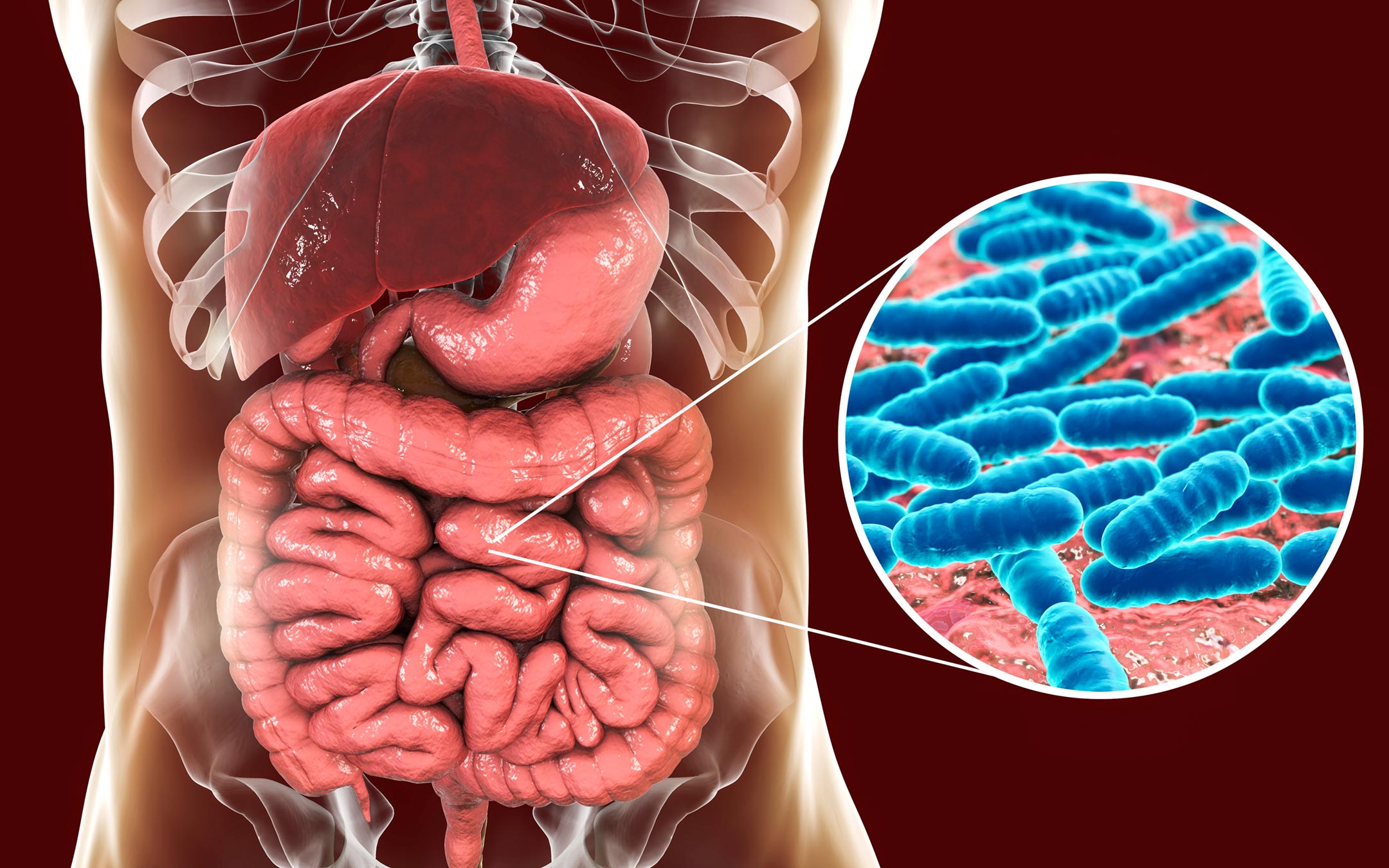
Scientists have uncovered a direct molecular mechanism by which gut bacteria inject proteins into human cells, reshaping immune responses and potentially driving inflammatory disease.
Scientists have discovered that bacteria living in the human gut can directly transfer their own proteins into human cells, influencing how the immune system responds. The work, led by researchers at Helmholtz Munich with collaborators from Ludwig Maximilians University (LMU), Aix Marseille University, Inserm, and other international partners, identifies a previously unknown form of communication between gut microbes and human cells.
This mechanism offers a new explanation for how the gut microbiome affects the body and may help clarify why shifts in gut bacteria are linked to inflammatory conditions such as Crohn’s disease.
For years, researchers have connected the gut microbiome to immune, metabolic, and inflammatory disorders. However, much of this evidence has been based on correlations, leaving the biological processes that drive these relationships poorly understood.
“Our goal was to better characterize some of the underlying processes of how gut bacteria affect human biology,” says Veronika Young, first author of the study together with Bushra Dohai. “By systematically mapping direct protein–protein interactions between bacterial and human cells, we can now suggest molecular mechanisms behind these associations.”
Protein Injection Systems in Bacteria of the Healthy Gut
The research shows that many common, non-harmful gut bacteria contain type III secretion systems, tiny molecular structures that function like syringes and allow bacteria to inject proteins directly into human cells. Until now, scientists believed these systems were found only in disease-causing bacteria such as Salmonella. The discovery reveals that even bacteria considered part of a healthy gut ecosystem can actively interact with human cells in far more direct ways than previously recognized.
“This fundamentally changes our view of commensal bacteria,” says Prof. Pascal Falter-Braun, Director of the Institute for Network Biology at Helmholtz Munich and corresponding author of the study. “It shows that these non-pathogenic bacteria are not just passive residents but can actively manipulate human cells by injecting their proteins into our cells.”
Mapping How Bacteria Talk to Human Cells
To understand what these bacterial proteins do in human cells, the researchers mapped over a thousand interactions between bacterial effector proteins and human proteins, creating a large-scale interaction network.
Their analyses showed that bacterial proteins preferentially target human pathways involved in immune regulation and metabolism. Further laboratory experiments confirmed that these proteins can modulate key immune signaling pathways, including NF-κB and cytokine responses.
Cytokines are signaling molecules that help coordinate the immune system and prevent excessive reactions that can lead to autoimmune diseases. For example, inhibiting the activity of the cytokine Tumor Necrosis Factor (TNF) is a widely used treatment for Crohn’s disease, an autoimmune disease of the gut.
Links to Inflammatory Bowel Disease
The researchers also found that genes encoding these bacterial effector proteins are enriched in the gut microbiomes of patients with Crohn’s disease.
This suggests that direct protein delivery from gut bacteria to human cells may contribute to chronic intestinal inflammation, providing a potential mechanistic explanation for previously observed microbiome–disease links.
A New Perspective on Microbiome-Host Interactions
By identifying a previously unrecognized molecular layer between gut bacteria and the human immune system, the study advances our understanding of how the microbiome affects human cells, shifting research from correlation toward causation.
It also raises intriguing questions, such as whether these injection systems evolved primarily for pathogenic purposes, or if they originally supported commensal coexistence and were later co-opted by pathogens.
Future research will aim to determine how individual bacterial effector–host interactions function in specific tissues and disease contexts, with the goal of translating these insights into more precise strategies for disease prevention and treatment.
Reference: “Effector–host interactome map links type III secretion systems in healthy gut microbiomes to immune modulation” by Veronika Young, Bushra Dohai, Hridi Halder, Jaime Fernandez-Macgregor, Niels S. van Heusden, Thomas C. A. Hitch, Benjamin Weller, Patrick Hyden, Deeya Saha, Daan K. J. Pieren, Sonja Rittchen, Luke Lambourne, Sibusiso B. Maseko, Chung-Wen Lin, Ye Min Tun, Jonas Bibus, Luisa Pletschacher, Mégane Boujeant, Sébastien A. Choteau, Lou Bergogne, Jérémie Perrin, Franziska Ober, Patrick Schwehn, Simin T. Rothballer, Melina Altmann, Stefan Altmann, Alexandra Strobel, Michael Rothballer, Marie Tofaute, Daniel Kotlarz, Matthias Heinig, Thomas Clavel, Michael A. Calderwood, Marc Vidal, Jean-Claude Twizere, Renaud Vincentelli, Daniel Krappmann, Marianne Boes, Claudia Falter, Thomas Rattei, Christine Brun, Andreas Zanzoni and Pascal Falter-Braun, 26 January 2026, Nature Microbiology.
DOI: 10.1038/s41564-025-02241-y
Never miss a breakthrough: Join the SciTechDaily newsletter.
Follow us on Google and Google News.