

Bermudensis, a newly discovered copepod, reveals Bermuda’s hidden cave biodiversity and the need for stronger habitat protection.
Bermuda’s Walsingham cave system is home to a rich variety of cave-dwelling animals found nowhere else in the world. Now, researchers from the University of Cambridge, the Bermuda Institute of Ocean Sciences, and the Senckenberg am Meer German Centre for Marine Biodiversity Research have added a new copepod species to that list.
Copepods are among the most diverse crustaceans, living in habitats ranging from freshwater ponds to the open ocean. These tiny creatures are some of the most abundant animals in marine plankton and play a vital role in global food webs. Despite their importance, much of their diversity remains unknown, especially in hard-to-reach environments like underground caves.

Discovery of Tetragoniceps bermudensis
The new Bermudian copepod, Tetragoniceps bermudensis, was first collected in 2016 by Sahar Khodami, Pedro Martinez Arbizu, and Leocadio Blanco-Bercial from the Bermuda Institute of Ocean Sciences and the Senckenberg am Meer German Centre for Marine Biodiversity Research.
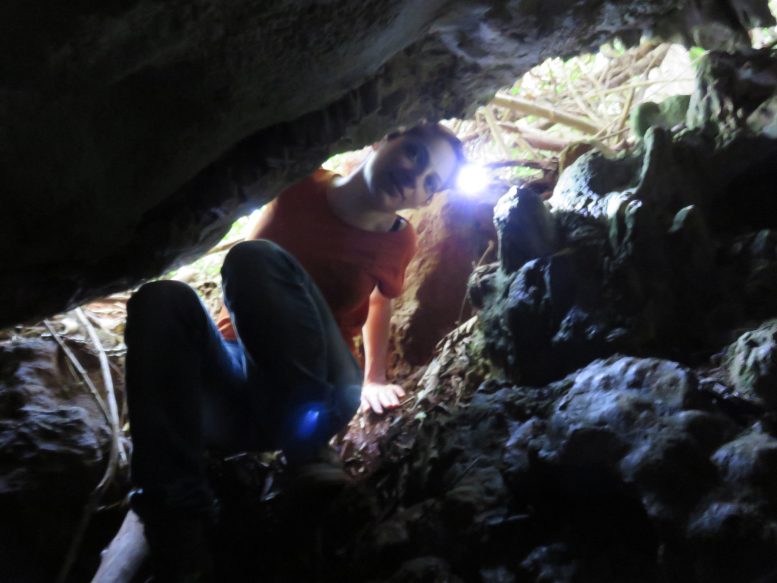
The team reached Roadside Cave through a narrow passage in Bermuda’s ancient limestone bedrock. However, it was not until 2024 that detailed analysis confirmed T. bermudensis as a completely new species.

According to the researchers, like other members of Bermuda’s cave-dwelling fauna, Tetragoniceps bermudensis—named after the country where it was found—may be an ancient, early-diverging member of its evolutionary group.
Alongside other ancient crustaceans in Bermuda’s caves, it has survived in a secluded and fragile underground ecosystem with few predators or competitors.

“The new species of copepod crustacean, Tetragoniceps bermudensis, is the first of its genus from Bermuda, as well as the first known cave-dwelling species of the genus anywhere in the world and only the second within its family, Tetragonicipitidae,” says lead author Giovanni Mussini of the University of Cambridge’s Department of Earth Sciences. “This finding from Roadside Cave adds to the great diversity of endemic crustaceans (and other cave fauna) found in the island’s network of limestone caves.”
Rare find with limited habitat
The team only found one female egg-bearing individual at Roadside Cave, a small cavern in Bermuda. It is hard to estimate just how rare the new species is based on a single specimen, but the finding “suggests a correspondingly limited area and a probable endemic status, consistent with the high degree of endemism typical of Bermuda’s cave-dwelling fauna,” the researchers write in their paper in the journal ZooKeys.

Roadside Cave, where the new species was found, may face threats from “urban development, vandalism, dumping, littering and pollution, and sediment disturbance due to unlawful access by humans and domesticated animals,” which makes protecting this small creature all the more urgent. The researchers call for formal protection of the cave and for robust enforcement of existing measures to protect its precious fauna.
“The discovery of this species highlights that there remains a cryptic diversity of cave-dwelling species still to be discovered even in a densely populated island like Bermuda, whose hidden, underground biodiversity is all too often overlooked,” Mussini says in conclusion.

Reference: “A new species of Tetragoniceps Brady, 1880 (Copepoda, Harpacticoida, Tetragonicipitidae) from an anchialine cave in Bermuda, with an updated key to the species of the genus” by Giovanni Mussini, Yuuki J. Niimi, Sahar Khodami, Terue C. Kihara, Pedro Martinez Arbizu and Leocadio Blanco-Bercial, 20 May 2025, ZooKeys.
DOI: 10.3897/zookeys.1239.144436
Never miss a breakthrough: Join the SciTechDaily newsletter.
Follow us on Google and Google News.