
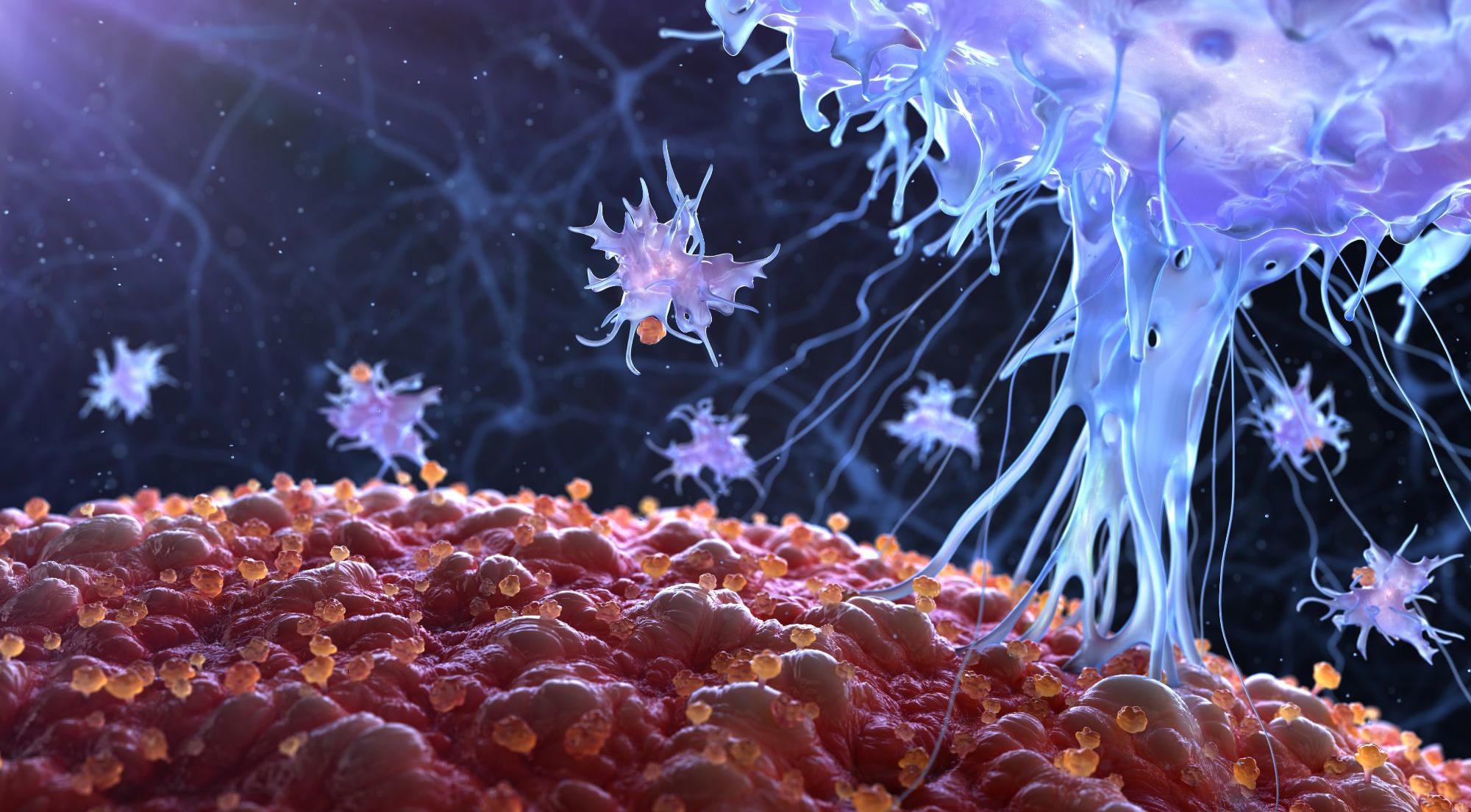
T-cell activation involves two phases, enabling a more precise immune response. This insight may boost cancer immunotherapy effectiveness.
A research team led by Wolfgang Kastenmüller and Georg Gasteiger used advanced microscopy techniques to closely observe how specific immune cells, T-cells, are activated and multiply during a viral infection.
Their findings uncovered previously unknown mechanisms, showing that the immune system expands its defensive T-cells in a much more precise and targeted manner than was previously understood.
T-Cells Proliferate and Specialize During the Immune Response
T-cells are crucial defense cells in the immune system. To effectively find and destroy infected cells in the body, rare T cells with the appropriate specificity must first proliferate, expand, and specialize. This process, known as T-cell priming, begins when T-cells encounter dendritic cells (DCs) in the lymph nodes. These cells present antigens – fragments of pathogens – to the T-cells and activate them through various signals.
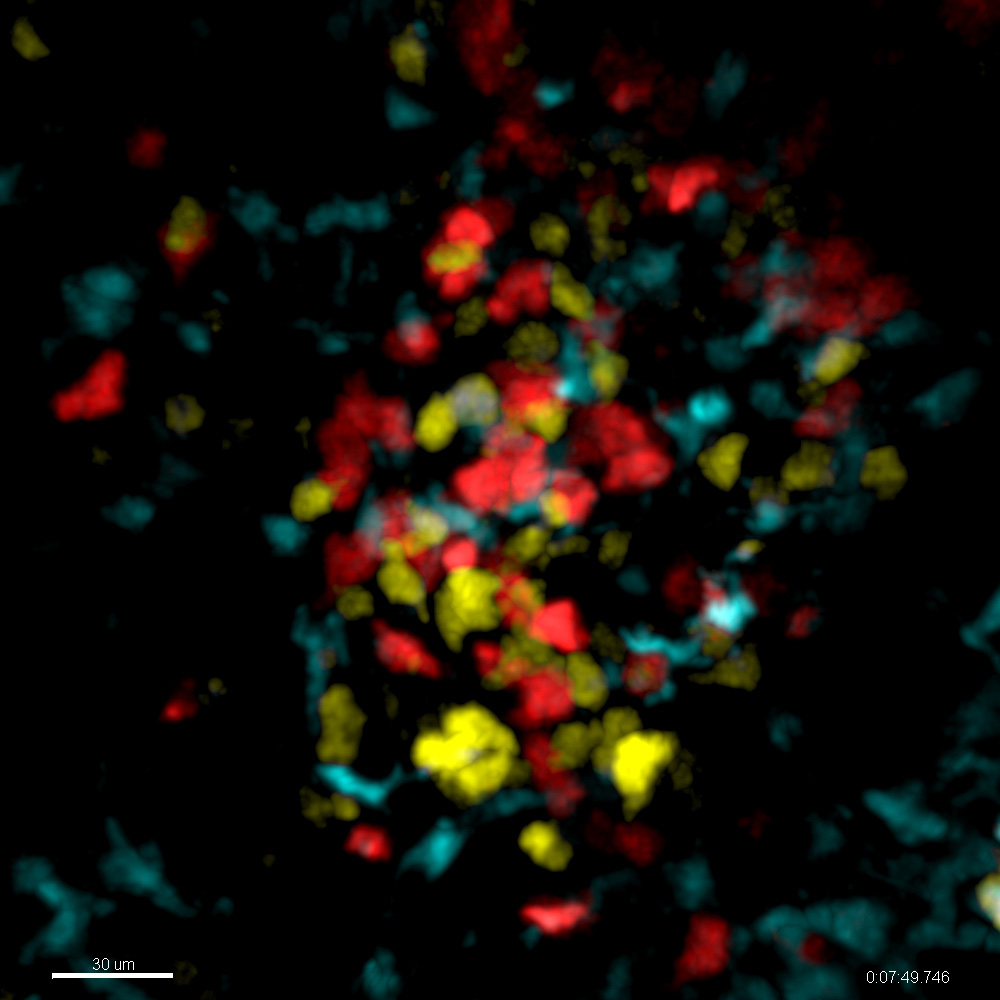
The activation process lasts about 24 hours. During this time, T-cells remain in contact with the DCs, receiving instructions to specialize. Afterward, they detach, migrate, and rapidly proliferate. Some develop into effector cells that immediately combat pathogens, while others become memory cells, enabling a rapid response in case of future infections.
Only the Most Effective T-Cells Are Selected
The immune system faces the daunting task of swiftly identifying, from an extraordinarily diverse pool of T-cells, those that can specifically recognize a given pathogen. These selected T-cells are then clonally expanded during the “priming” process.
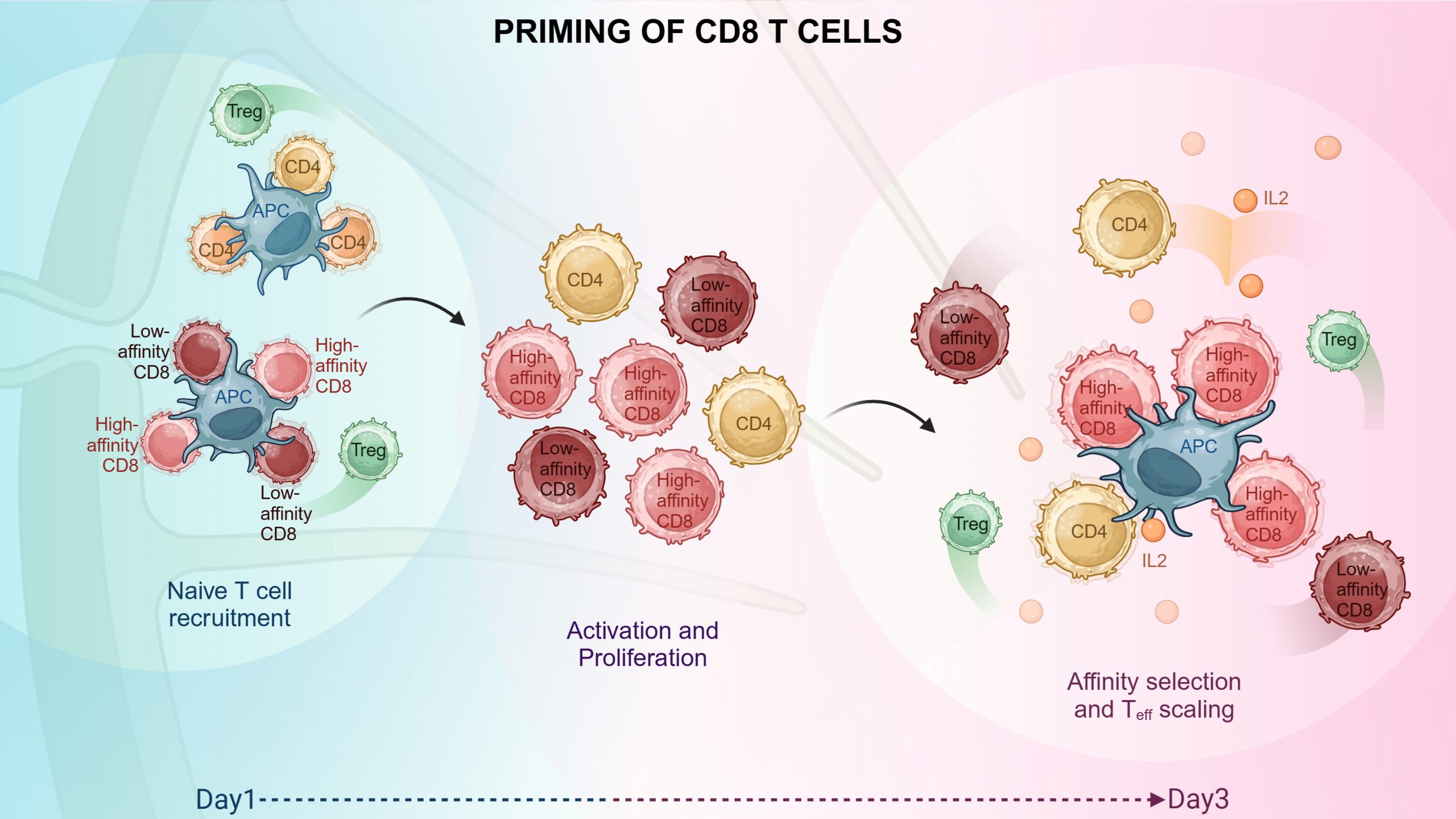
Katarzyna Jobin and Deeksha Seetharama are the first authors of the study. “We have discovered that T-cell activation involves not just one, but two distinct phases,” explains Deeksha Seetharama. “While the first phase of priming serves to activate a broad range of specific T-cells, the newly identified second phase is responsible for selecting and specifically expanding those T-cells that can recognize the pathogen most effectively. This ensures that the immune response is optimized for maximum efficiency,” Katarzyna Jobin elaborates.
“Until now, it was assumed that only one phase existed, with the initially activated cells continuing their function on ‘autopilot’,” adds Wolfgang Kastenmüller. “What was previously unknown, however, was the process by which the best-suited cells are selected.”
Findings Could Lead to Enhanced Therapeutic Approaches
The team found that the various phases of the immune response are driven by a cyclical activation process of T-cells. Following their initial interaction, T-cells undergo a period of desensitization, during which it takes two to three days before they are ready to perceive additional signals through their T-cell receptors. This marks the onset of the newly discovered second phase, in which they are re-instructed and further activated.
The scientists could show that in this second phase, T-cells re-cluster with DCs and get activated again to enhance their proliferation and specialization. This occurs in specific lymph node areas that are accessed thanks to CXCR3 expression on CD8 T cells. There, they receive IL-2 from CD4 helper T-cells. Without this signal, CD8 T-cells cannot proliferate optimally, which is why mainly CD8 T-cells with strong antigen binding dominate the second phase and are abundant at the peak of the immune response.
In chronic infections and cancer, there are recurring phases of activation and desensitization, which makes the findings particularly relevant for immunotherapies targeting cancer. This includes therapies used in certain leukemias and lymphomas, where the patient’s own T-cells are utilized. These cells are genetically modified in the laboratory and then reintroduced into the body through infusion. The modified cells, known as CAR T-cells, are designed to specifically recognize and attack cancer cells.
“We hope that our new insights will help deepen our understanding of how to optimize T-cell-based therapies, and that they will shed light on why these treatments sometimes fail,” explains Georg Gasteiger.
Reference: “A distinct priming phase regulates CD8 T cell immunity by orchestrating paracrine IL-2 signals” by Katarzyna Jobin, Deeksha Seetharama, Lennart Rüttger, Chloe Fenton, Ekaterina Kharybina, Annerose Wirsching, Anfei Huang, Konrad Knöpper, Tsuneyasu Kaisho, Dirk H. Busch, Martin Vaeth, Antoine-Emmanuel Saliba, Frederik Graw, Alain Pulfer, Santiago F. González, Dietmar Zehn, Yinming Liang, Milas Ugur, Georg Gasteiger and Wolfgang Kastenmüller, 11 April 2025, Science.
DOI: 10.1126/science.adq1405
Never miss a breakthrough: Join the SciTechDaily newsletter.
Follow us on Google and Google News.