
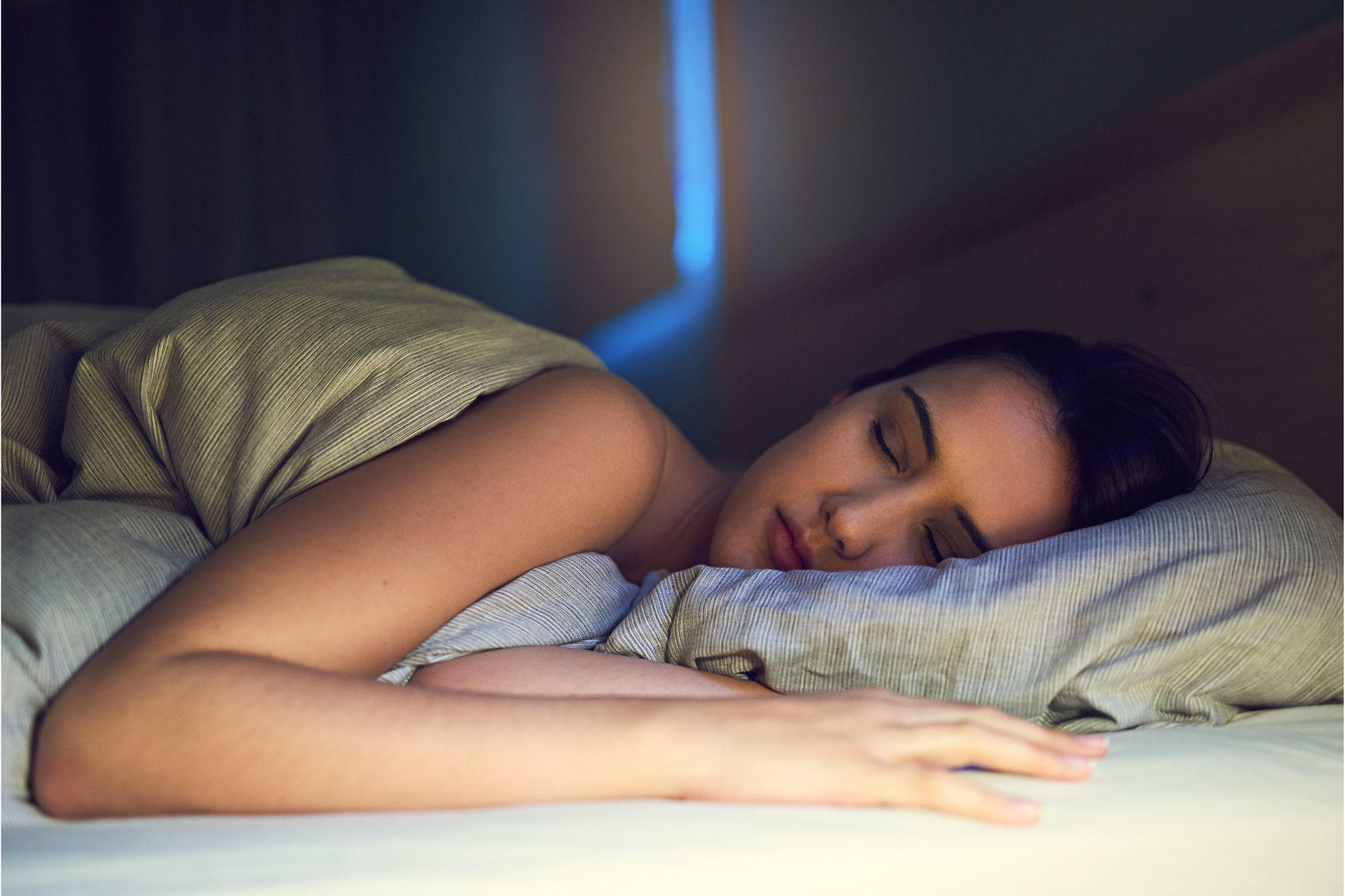
Exposure to bright light at night significantly increases the risk of developing type 2 diabetes by disrupting circadian rhythms and affecting insulin secretion and glucose metabolism, according to a study by Flinders University.
A study from Flinders University suggests that avoiding bright light at night may be an easy way to lower your risk of diabetes.
The study published in the prestigious journal The Lancet Regional Health – Europe reveals the compelling relationship between exposure to light and the risk of developing type 2 diabetes.
Type 2 (acquired) diabetes is a chronic condition that affects how the body uses insulin. It develops over many years, is difficult to treat, and is usually related to lifestyle factors such as inactivity and obesity.
Key Findings from the Study
“We found that exposure to brighter light at night was associated with a higher risk of developing type 2 diabetes,” says senior author Associate Professor Andrew Phillips from the College of Medicine and Public Health.
In the large modeling study, the research team investigated whether personal light exposure patterns predicted the risk of diabetes using data from approximately 85,000 people and around 13 million hours of light sensor data.
The participants – who did not have type 2 diabetes – wore devices on their wrists for one week to track their light levels throughout the day and night.
They were then tracked over the following nine years to observe whether they went on to develop type 2 diabetes.
Impact of Light Exposure on Circadian Rhythms
“Light exposure at night can disrupt our circadian rhythms, leading to changes in insulin secretion and glucose metabolism,” he says.
“Changes in insulin secretion and glucose metabolism caused by disrupted circadian rhythms affect the body’s ability to regulate blood sugar levels, which can ultimately lead to the development of type 2 diabetes.”
Having more exposure to light at night (between 12:30 am and 6:00 am) was linked to a higher risk of developing type 2 diabetes, and this was true regardless of how much light people were exposed to during the day.
Importance of Reducing Nighttime Light Exposure
The research accounted for other factors associated with type 2 diabetes, such as lifestyle habits, sleep patterns, shift work, diet, and mental health.
Even after taking these factors into account, the findings showed that getting more light at night was still a strong predictor of developing diabetes.
“The results showed that exposure to brighter light at night is associated with a higher risk of developing diabetes, with a dose-dependent relationship between light exposure and risk,” says Associate Professor Phillips.
“Our findings suggest that reducing your light exposure at night and maintaining a dark environment may be an easy and cheap way to prevent or delay the development of diabetes,” he adds.
Reference: “Personal light exposure patterns and incidence of type 2 diabetes: analysis of 13 million hours of light sensor data and 670,000 person-years of prospective observation” by Daniel P. Windred, Angus C. Burns, Martin K. Rutter, Chris Ho Ching Yeung, Jacqueline M. Lane, Qian Xiao, Richa Saxena, Sean W. Cain and Andrew J.K. Phillips, 4 June 2024, The Lancet Regional Health – Europe.
DOI: 10.1016/j.lanepe.2024.100943
This research was conducted using data from UK Biobank (Project ID: 6818). We thank the participants for their time, and the UK Biobank team for the ongoing development and maintenance of this resource. This research was conducted with funding support from the Australian Government Research Training Program, the National Heart, Lung, and Blood Institute (R21HL165369), and the Australian Research Council (DP210102924 and DP220102812).
Never miss a breakthrough: Join the SciTechDaily newsletter.
Follow us on Google and Google News.
2 Comments
Alternatively, cut out sugar and minimise high-carb foods. Is it really that difficult?
This info raises all kinds of questions about risk assessment, genetic proclivity, and human behavior. Ask yourselves, should I leave the light on for a kid at night?
Should I work swing and/or graveyard shifts? How long of a dark session is needed to reinforce natural circadian cycles? And, are all, or just some needing to be concerned?